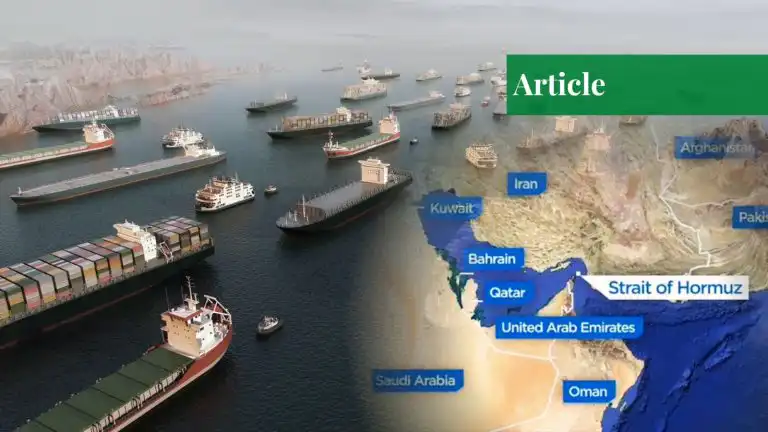
Burning oil infrastructure, disrupted shipping routes, and a sharp fall in maritime flows are only the first visible signs of the current US-Israel-Iran conflict. The next effects may be felt far from the Gulf, in the form of higher prices for wheat flour, edible oil, and fertilizers. For agrarian economies like Pakistan, Hormuz can no longer be seen only as an oil chokepoint. It must now be understood as a food-security risk.
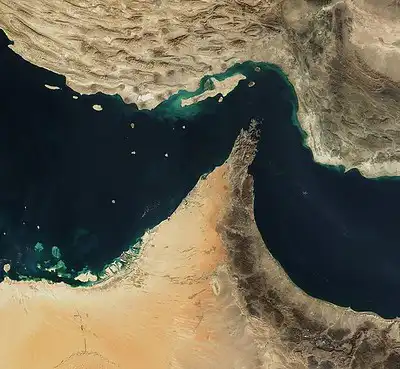
According to UNCTAD’s March 2026 assessment, the Strait of Hormuz carries around a quarter of global seaborne oil trade and substantial volumes of liquefied natural gas (LNG) and fertilizers. Its data show that, in 2024, about 84% of crude oil and 83% of LNG transported through the Strait went to Asian markets, while one-third of global seaborne fertilizer trade passed through this corridor.
In early March 2026, daily ship transits through Hormuz dropped by 97% from the pre-conflict average. This matters because modern food systems run on energy and fertilizer before they run on grain. Beyond energy, the Gulf is central to the global fertilizer industry: UNCTAD notes that countries in the region account for 13% of global nitrogen exports and 9 percent of phosphate-fertilizer nutrient exports. Hence, the drivers of food security are being compromised by the ongoing conflict.
FAO’s Chief Economist cautioned that if the conflict stretches beyond 40 days while input costs remain high, farmers may be forced to use fewer inputs, plant less, or shift to less fertilizer-intensive crops. The FAO Food Price Index averaged 128.5 points in March 2026, up 2.4% from February, while international wheat prices rose 4.3%, partly on expectations of reduced plantings linked to higher fertilizer costs. FAO’s own agrifood assessment of the conflict notes that disruptions through Hormuz are raising energy and agricultural input costs worldwide, with fertilizer shortages and higher energy prices threatening crop yields.
In Pakistan and South Asia, this disruption is badly timed. Wheat harvesting is followed by preparation for Kharif crops such as cotton, rice, and maize. Pakistan’s Economic Survey 2024-25 defines the Kharif season as April-September and notes that fertilizer use is split almost evenly across Rabi and Kharif, with major crops including wheat, cotton, rice, maize, and sugarcane. This is exactly when fertilizer stocks, procurement decisions, and farm credit arrangements become critical.
As Kharif sowing and input planning accelerate, higher fertilizer prices or delayed supply would translate into suboptimal fertilizer application by farmers, delayed sowing cycles, and reduced yields for staple and cash crops, especially rice and cotton. Weakened nutrient management during Kharif can also have knock-on effects for the subsequent Rabi wheat cycle, creating a ripple effect into the next harvest year.
Countries like Pakistan rely on imported fuel to run irrigation systems, transport crops, and power food supply chains. When energy prices spike because of maritime disruption, the cost of producing and moving food rises almost immediately, turning a distant maritime crisis into a very real challenge at the dinner table.
UNCTAD estimates that 27% of Pakistan’s seaborne fertilizer imports in 2024 originated in the Persian Gulf region. Pakistan’s agriculture sector still contributes 23.5% to GDP and employs over 37% of the labor force. The Pakistan Economic Survey 2024-25 also records that DAP availability for Kharif 2025 was estimated at 687,000 tonnes against the projected demand of 788,000 tonnes, indicating a shortfall of 201,000 tonnes. A prolonged Hormuz disruption would therefore hit not only petroleum costs but also the input chain behind wheat, rice, cotton, and sugarcane.
The conflict also damages food security at the ecological level. UNEP has warned that pollution from uncontrolled fires can enter soil and water, leach into groundwater, and be absorbed by crops, contaminating food supplies; it has also warned that strikes on desalination plants risk catastrophic consequences for communities that depend on them for water. For a region where energy infrastructure, ports, desalination systems, and coastal ecosystems are tightly connected, environmental damage can become food-chain damage.
Pakistan’s food security remains structurally vulnerable despite adequate national food production. WFP notes that nearly half of an average Pakistani household’s monthly expenditure goes towards food and that 82% of the population cannot afford a healthy diet. It also reports that 18% of children under five suffer from acute malnutrition and around 40% are stunted. This means that shocks such as higher fuel prices, fertilizer unavailability, and increased freight costs do not remain abstract macroeconomic problems; they directly affect affordability and nutrition.
In this scenario, Islamabad should use every available diplomatic channel, the UN, the IMO, Gulf capitals, Tehran, and Washington to push for de-escalation and secure navigation. At home, it should establish a Hormuz contingency cell linking the ministries of finance, commerce, national food security, petroleum, and maritime affairs.
Pakistan’s response must begin with urgent economic and logistical preparedness. It should diversify fertilizer sourcing, expand emergency reserves of DAP and edible oil, secure trade-finance and shipping insurance support, and establish a fast-track customs and port-clearance system for agricultural inputs.
The second priority is social protection. The government should prepare targeted support for small farmers if input prices rise sharply and build automatic relief measures for low-income households through existing cash-transfer systems.
The third is maritime resilience: stronger spill-response capacity around Karachi and Gwadar, improved coastal monitoring, and a standing plan to protect fisheries and coastal livelihoods if shipping disruptions worsen.
If instability in Hormuz persists, Pakistan will feel the effects not first in strategic briefings but in the price of food. That is why a maritime crisis in the Gulf must now be treated as a food-security emergency at home.
If you want to submit your articles and/or research papers, please visit the Submissions page.
To stay updated with the latest jobs, CSS news, internships, scholarships, and current affairs articles, join our Community Forum!
The views and opinions expressed in this article/paper are the author’s own and do not necessarily reflect the editorial position of Paradigm Shift.

Dr. Mureed Kazim is a research fellow at the National Institute of Maritime Affairs (NIMA).