As Pakistan marks one year since Marka-e-Haq, New Delhi is rushing in S-400 batteries and $1.2 billion on Russian beyond visual range (BVR) Astra missiles. That is a message. But it is also an admission.
There is a particular kind of announcement that arrives dressed as confidence but reveals something closer to its opposite. India’s procurement of a fourth S-400 air defence battery is expected in Rajasthan by mid-May, timed precisely to the first anniversary of Marka-e-Haq. So do reports of Indian interest in ultra-long-range air-to-air capabilities such as the R-37M, a weapon designed to hunt the AWACS, the tankers, and the flying command centers that make an air campaign possible. The Indian defence establishment would describe these as upgrades. They may also be interpreted as an acknowledgment that last year’s crisis exposed operational gaps that New Delhi is now seeking to address.
Let us be precise about what happened in May 2025, because precision matters here in ways that triumphalist accounts on both sides prefer to avoid. India launched Operation Sindoor, a set of missile strikes it described as counter-terrorism into Pakistani territory. What followed was not the punitive demonstration of Indian power that its political leadership had promised. Pakistan responded with Operation Bunyan-un-Marsoos, which Pakistan reported striking multiple Indian military targets in a single operational day. The S-400 batteries at Adampur and Bhuj, the crown jewels of India’s air defence, were among the targets. The ceasefire that followed was brokered not by India’s diplomatic network, not by its BRICS chairship, not by its relationship with Washington, but by US President Donald Trump.
Indian Military Installations Struck In Operation Bunyan-Un-Marsoos
The R-37M — NATO designation: Axehead is worth examining on its own terms, because the logic of its acquisition tells you something important about how last May’s conflict recalibrated Indian strategic thinking. The missile carries a range of over kilometres and is designed not to shoot down enemy fighters but to destroy the platforms that make those fighters lethal: the airborne early warning aircraft, the aerial refuelling tankers, the flying command centers that provide targeting data. It is, in other words, a weapon built to collapse an adversary’s entire air battle management architecture before the first dogfight begins. Indian defence planners walked away from Sindoor with a specific lesson: Pakistan’s J-10C and JF-17 Block III fighters, armed with Chinese PL-15 missiles, could engage Indian aircraft before India could fire back. The R-37M is designed to change that equation by eliminating the platforms that make PL-15 employment possible in the first place.
The public messaging around this deal has been carefully bifurcated. India Today’s headline frames the R-37M as a weapon “built to blind China and neutralize Pakistan’s air force.” The Hindustan Times frames the fourth S-400 as a system that puts “Pakistan on notice.” Both framings serve a domestic political function that readers will recognize instantly: the announcement of military procurement as political theatre, calibrated to a domestic audience that needs to see its government responding forcefully to the humiliation of last May. The timing, one week before the first anniversary of Youm-e-Marka-e-Haq, is not coincidental. These announcements are scheduled, their newsworthiness engineered, their headlines anticipated.
Spending $92 billion annually on defence while the S-400s you already own got taken out in 96 hours is not a position of strength. It is a description of a strategic problem that no procurement cycle has yet solved.
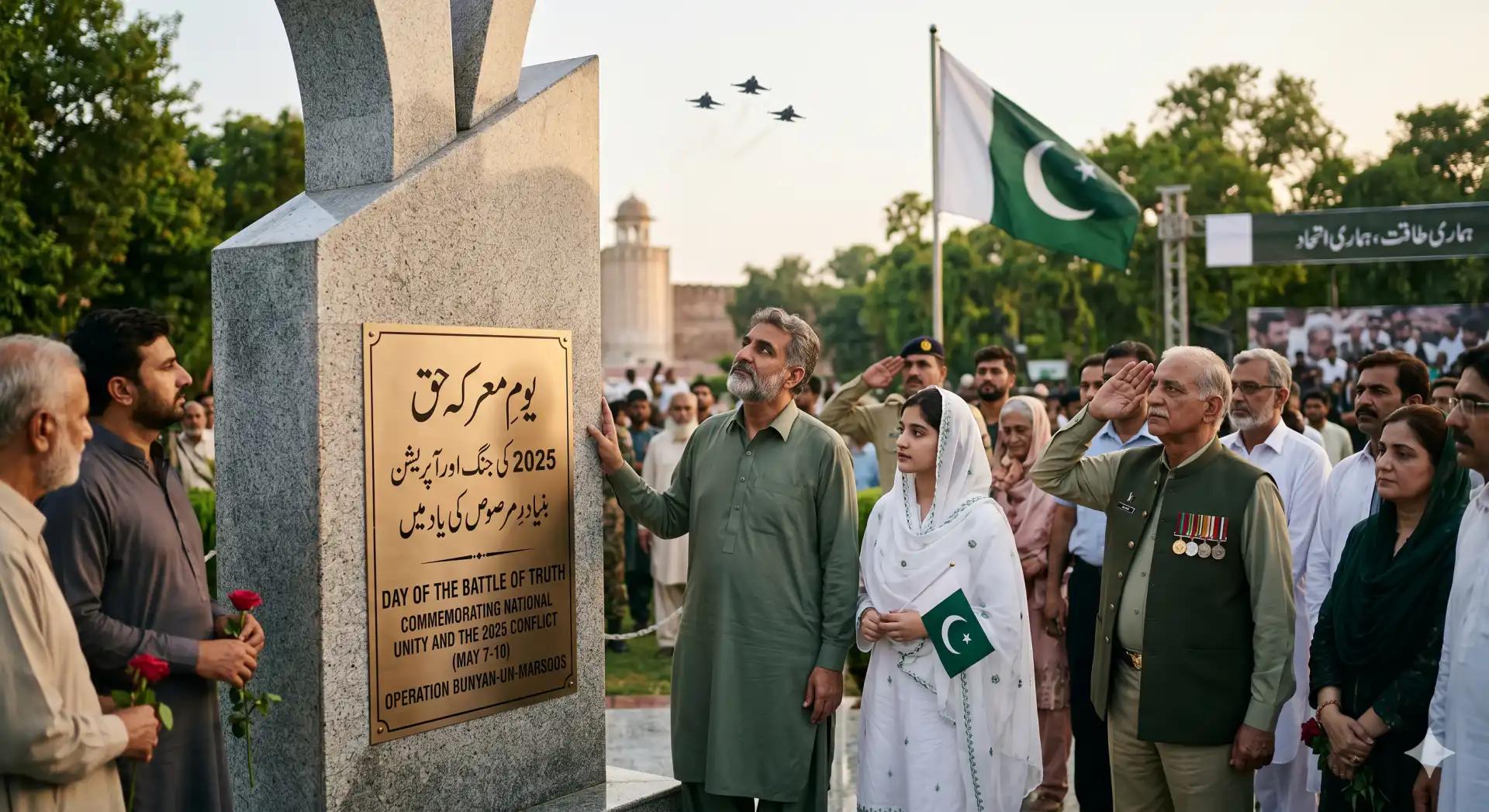
But set aside the messaging and examine the structure underneath it. SIPRI’s latest data places India as the world’s fifth-largest military spender, at $92.1 billion in 2025, an 8.9 percent increase driven largely by emergency procurements after Sindoor. Pakistan, by comparison, spent $11.9 billion, ranking 31st. The ratio is roughly 8 to 1. And yet the military outcome in May 2025 was not an 8-to-1 result. Pakistan, operating on a fraction of India’s defence budget, managed a cross-domain operation that neutralized key elements of India’s air defence architecture, struck targets deep inside Indian territory, and contributed to a rapid escalation that necessitated diplomatic intervention. That discrepancy between the resource ratio and the operational outcome is the central strategic fact that India’s current procurement binge is trying to address.
Pakistan’s military planners understand the R-37M announcement. They are not naive about what it means operationally: a weapon of this range, if successfully integrated and operationally effective, changes the geometry of air combat over contested territory.
The Deterrence Paradox
Here is what this moment looks like from Pakistan’s vantage point, one year on. A country that India’s strategic community had long treated as a manageable, financially stressed adversary demonstrated, in 96 hours, that it could execute a coordinated operation across air, land, and cyber domains with precision that surprised military analysts across the ideological spectrum. The British American Security Information Council described Islamabad’s response as among the most extensive conventional operations in decades. In the aftermath, Pakistan’s diplomatic standing rose; the very COAS Field Marshal who commanded Bunyan-un-Marsoos became the mediator of the Iran war ceasefire, the man whom Trump called “my favourite field marshal.” The country that India sought to punish emerged from the encounter with greater strategic relevance than it had entered it with.
The lesson of Marka-e-Haq was not that Pakistan is stronger than India. It was that strength, measured in procurement budgets and hardware lists, does not automatically translate into strategic outcomes, and that a country prepared to absorb risk and impose cost can hold even a vastly larger adversary to a standstill.
If you want to submit your articles and/or research papers, please visit the Submissions page.
To stay updated with the latest jobs, CSS news, internships, scholarships, and current affairs articles, join our Community Forum!
The views and opinions expressed in this article/paper are the author’s own and do not necessarily reflect the editorial position of Paradigm Shift.

Filza Asim is a journalist specializing in South and Central Asian security and diplomatic affairs, focusing on Pakistan's evolving strategic posture