Introduction
“Public diplomacy” refers to a state’s strategy when engaging international audiences for the purpose of cultivating mutual understanding, trust, and ties, all while simultaneously shaping perspectives. Unlike traditional diplomacy, which operates through official negotiations via hard power, public diplomacy is implemented through soft power such as cultural diplomacy, mediation, and perception management. In international relations, strategic states like Norway, despite limitations on military force, have positioned themselves as intermediaries embodying “quiet diplomacy,” where soft power tools are leveraged to build gradual and lasting influence.
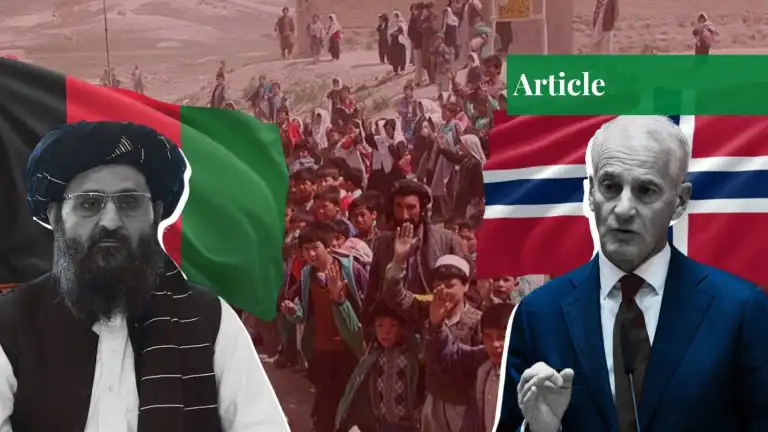
This approach can be seen in Afghanistan, a country confronting internal disarray, foreign interventions, and human rights violations. Norway has maintained sustained relevance in Afghanistan from 2001 to 2021, ultimately shifting the trajectory and reshaping calculations of the wider international community.
In essence, Norway was a neutral mediator that helped push for better prospects for Afghanistan through political influence, humanitarian dialogue, and financing. Yet, while it may build credibility through its careful efforts, there were outcomes that weren’t able to come into fruition, which underscored the structural limits of soft power and the confluence of local conditions, perception, and subtle subjugation, thereby leading to a multifaceted experience in a conflict-ridden state like Afghanistan.
Small States and Soft Power Mediation
Public diplomacy is akin to the engine of a state’s soft power, where attraction, ethics, and narratives are used to achieve policy outcomes and relational power. For smaller states, public diplomacy becomes more of a strategy to carve out a niche identity, leverage flexibility, and navigate power hierarchies. Due to being structurally weaker, their main assets arise through consistent credibility and impartiality. Within this framework, peace mediation is one key approach that involves the facilitation of talks between conflicting parties via a neutral intermediary.
This is to prevent misinformation and breakdown of order, making it beneficial for small states to maintain relevance in the international system, where dominant powers may be perceived as symbolic or having vested interests. By positioning themselves as dependable, they are able to convert their role into diplomatic capital. However, mediation is only conducive when there is receptiveness, adaptation, and acumen. Devoid of this, one remains limited, particularly in high-stakes issues where power politics hide.
Norway’s Mediation Approach
Norway’s mediation approach is a framework of public diplomacy led by the Norwegian Ministry of Foreign Affairs, an institution that projects its values internationally, such as peace, dialogue, and human rights. Rather than overt coercion, Norway operates through a subtle facilitation process. The values projected are then embedded in partnerships, development programs, and networks that cultivate a holistic web of collaboration. Norway’s model rests on its embeddedness in NATO alliances and is sustained through a separation of military, humanitarian, and political roles, producing various, partially convergent representations of neutrality across its external undertakings.
This method is also reinforced by Norway’s broader image as a peace nation, which is upheld by domestic foreign policy and a consistent emphasis on both dialogue and humanitarian forms of engagement. Because Norway’s model is non-coercive, it enables legitimacy at home and credibility abroad, thereby enhancing its diplomatic capital, which further facilitates access into various types of mediation spaces and provides the justification for a country’s investment in diplomacy while simultaneously stabilizing its national identity.
Case Study: Afghanistan
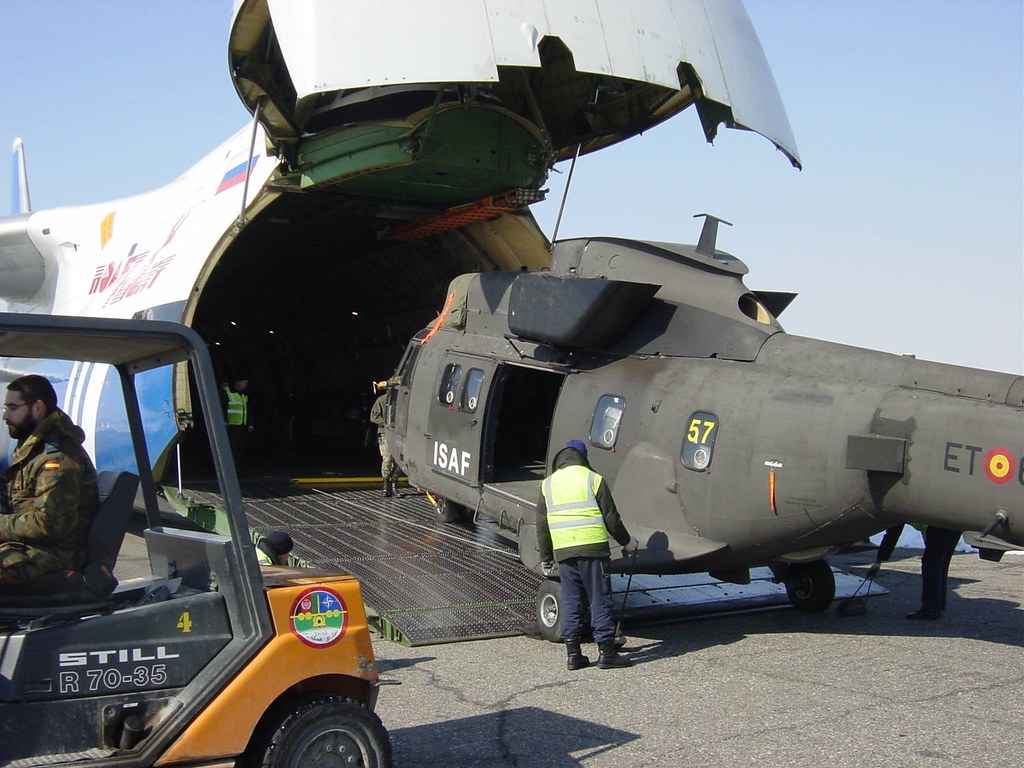
Norway’s engagement in Afghanistan was primarily facilitated by its dual role as both a peace mediator and NATO member as part of the International Security Assistance Force. During the mid-2000s, Norway had participated in facilitating negotiations between different Afghan administrations, namely those of Hamid Karzai and Ashraf Ghani, alongside maintaining an indirect backchannel by acting as a bridge between the US and the Taliban. The key objective was to broker a deal between the conflicting parties through a consensus-building approach.
Meanwhile, a defense operation headed by Norwegian soldiers was deployed to Kabul, where they engaged in active combat against Taliban insurgency, trained the Afghan National Army, and provided a form of protection during events like the Loya Jirga. Mazar-i-Sharif came to become a strategic base for Norwegian armed forces, marking a transit point, and served as a solidification of Norwegian diplomacy alongside maintaining an alliance with Germany. These efforts also coincided with societal reforms like funds for education, infrastructure, and institutional rebuilding.
Additionally, its role was further highlighted in discrete regional and international forums. This included engagement in Afghanistan’s peacebuilding process, as seen in its involvement in the Doha Peace Talks (2020-2021) in partnership with Qatar to help mobilize support. Yet, subsequent to the Taliban’s rise to power, Norway continued to maintain its role in engaging the Taliban while supporting Afghan civil society. However, these efforts did not translate into full legitimization of the Taliban government. Nonetheless, Norway still kept various modes of communication with different segments of Afghan society and urged international partners to see engagement in Afghanistan as a comprehensive strategy rather than selective recognition.
Limits of Soft Power
Despite its active role in diplomacy, Norway’s engagement in Afghanistan highlights the latent capability of small states when faced with structural limitations within conflict-ridden environments. The “Godal Report” in 2016, led by former foreign minister Bjorn Tore Godal, was an evaluation of Norway’s intervention in Afghanistan. There were three main goals of the mandate: firstly, to remain a close ally of the US and a member of NATO; secondly, to prevent Afghanistan from becoming a safe haven for terrorists; and thirdly, to contribute to the rebuilding of society.
Norway’s engagement in Afghanistan was structured through a US strategy and foreign hosting arrangements, with timing and political sensitivities. This model is reflected through the strengthening of its ties with NATO and the fragility of mediation, all while the intended agenda for Afghanistan remained largely ineffective. Certain outcomes were shaped by external factors, particularly the involvement of foreign powers like the U.S. with established historical connections, along with the broader shift towards counterinsurgency in the region, thereby positioning Norway in a secondary role. And from this position, a dilemma emerges of trust juxtaposed with insufficient independent strategic power to translate efforts into tangible outcomes, as engagement in Afghanistan came with instability alongside complex dynamics, informal networks, and power politics.
Ground efforts, which included Norway’s oversight of the Provincial Reconstruction Team (PRT) in Faryab, reflected challenges in separating military force from development efforts and raised issues with productivity and coordination. Along with this, there were clashes in short-term security versus long-term development, often leading to a stalemate, while reconstruction and funding efforts were largely shaped through donor mechanisms and were politically driven rather than need-based, which underscored that building a liberal democratic state alongside an ongoing crisis is difficult and cannot substitute the importance of informed awareness of grounding engagement within Afghanistan’s history and political realities. Moreover, conditions in Afghanistan often meant that hard power strategy was prioritized over diplomatic ones and that various competing factions dispersed coherence and narrowed the space for effective negotiations. This resulted in insufficient strategies and shows how soft power mechanisms struggle to operate meaningfully in conflict zones that demand transparency, thereby rarely shaping outcomes.
Conclusion
In all, Norway’s experience shows that diplomacy can simultaneously bring in access, influence, and credibility; yet, they do not necessarily translate into operational impact on the ground. In spite of Norway being a trusted intermediary in peace dialogues among Afghan and foreign stakeholders, it nonetheless lacked contextual understanding, the capacity to ensure compliance, and overall shape the trajectory of the process. Hence, this highlights how soft power tools may have the ability to generate goodwill but are ultimately constrained in terms of meaningful impact, particularly in conflict-ridden states, where effort must be aligned with acceptability and feasibility. Ultimately, the Afghan case study remains an account of Norway’s execution of its reputational standing, which yielded short-term gains as opposed to substantive structural transformation, thereby amounting to little change in Afghan realities.
If you want to submit your articles and/or research papers, please visit the Submissions page.
To stay updated with the latest jobs, CSS news, internships, scholarships, and current affairs articles, join our Community Forum!
The views and opinions expressed in this article/paper are the author’s own and do not necessarily reflect the editorial position of Paradigm Shift.