At the core of India’s current situation is a striking discrepancy: the country’s most commercially successful film franchise is devoted to the notion of Indian omnipotence, while its actual foreign policy lies in the rubble of a conflict that it was unable to resolve diplomatically. Dhurandhar, the two parts of the Aditya Dhar-directed film series, which starred Ranveer Singh and were released in December 2025 and March 2026, have become India’s highest-grossing Hindi film series ever. With the unmistakable grammar of state-sponsored mythology, heroic sacrifice, evil neighbours, and a narrative arc in which India triumphs every time. It tells the story of an Indian intelligence agent dispatched to Karachi to destroy a network of gangsters and terrorists. That plot has more than just a cinematic issue. The actual world was telling a completely different story during the same months that the movie was setting box office records, and neither version of India’s favoured story was being heard by the rest of the world.
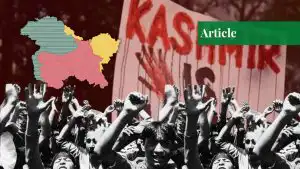
There was no political void when the Dhurandhar franchise first appeared. It is the latest and most commercially potent instalment in a decade-long trend of what critics have called muscular nationalist cinema that has flourished under the BJP government since Narendra Modi came to power in 2014. The prime minister himself was clearly enthusiastic about movies like Uri: The Surgical Strike, The Kashmir Files, The Kerala Story, and Article 370, all of which were box office successes with overtly political themes. It is no longer possible to write off the trend as coincidental. Modi directly praised Dhar’s Article 370. His Uri turned into a nationalist catchphrase. And Dhurandhar, which debuted just months after India’s worst military conflict with Pakistan in 20 years, portrays a fictional intelligence chief who is strikingly similar to Modi’s real National Security Advisor Ajit Doval, right down to his involvement in the 1999 hijacking crisis. The political purpose of the movie is not subtext, as stated by Indian opposition leader Akhilesh Yadav, who described the sequel as “a paid propaganda” intended to support the ruling party prior to state elections.
It is important to look closely at what the movie does to Pakistan because its complexity is more destructive than its simple depiction. Karachi is portrayed as a city that seems incapable of having a single modern structure or a moment of everyday life, a place of continual bomb blasts, criminal dens, and disintegrated state authority. Indian film critic Mayank Shekhar said that the movie was “performed, written, directed by those who haven’t ever stepped foot in Karachi and perhaps never will,” comparing it to how Hollywood depicts the brown world in post-apocalyptic sepia tones when it needs a setting for its protagonists. In a video titled “The Karachi you see in Dhurandhar vs the Karachi I saw last week,” journalist Haroon Rashid of the BBC Asian Network expressed the same idea more viscerally by juxtaposing the dystopian setting of the movie with the city’s music, food vendors, and the lived texture of its districts. This is intentional dehumanisation, not artistic license, and it has serious repercussions for how millions of Indian moviegoers and members of the diaspora around the world form their perceptions of the neighbouring country.
Additionally, the movie significantly alters history in ways that further a particular political agenda. The 1999 IC 814 hijacking, the 2001 Parliament attack, and the 2008 Mumbai attacks are all blended into a false story that only credits the BJP era with India’s achievements against terrorism. Indian academic H. Srikanth highlights the fundamental dishonesty of this strategy. The operations portrayed in the movie, which include individuals like Rehman Dakait and Uzair Baloch, were actually carried out between 2004 and 2014 during the Congress government, but the screenplay creates a history in which they could only have occurred under Modi. In the sequel, demonetization, a measure that independent economists generally view as an economic catastrophe, is reframed as “Operation Green Leaf,” a masterfully planned intelligence operation against networks of counterfeit money. This interpretation is not artistic. Rewriting a government’s record and avoiding electoral accountability is the use of film as a weapon. Himanta Biswa Sarma, the Chief Minister of Assam, is confirming what opponents of the movie had long assumed when he openly states that everyone who watches Dhurandhar will vote for the BJP.
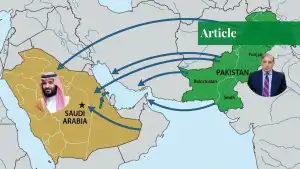
The way Dhurandhar was received internationally is an unintentional testament to the boundaries of India’s aspirations for soft power. All six Gulf Cooperation Council nations — Saudi Arabia, the UAE, Qatar, Kuwait, Bahrain, and Oman — banned the film, citing its political framing against Pakistan, before it could be approved for release. One of Bollywood’s most lucrative international marketplaces is the Gulf, and India has been actively pursuing strategic and commercial partnerships with the same governments that outlawed Dhurandhar. Both Saudi Arabia and the United Arab Emirates have signed significant investment agreements with New Delhi. However, six states with sizable Pakistani expatriate populations and strong historical ties to Islamabad conveyed a clear message when shown a movie that turns a neighbouring country with a majority of Muslims into a terrorist training ground: India’s domestic narrative does not travel. The prohibition exemplifies the “dissonance between Indian domestic political narratives and the region’s geopolitical priorities.” All of the sequel’s positive reviews on Rotten Tomatoes came from Indian magazines, while all of the reviewers from other countries condemned it. The world is witnessing a different movie than India believes it is producing.
This cinematic inability to present a believable story overseas is more of a symptom than a cause. The deeper failure, which occurred months before Dhurandhar’s release, is diplomatic. Following the April 2025 attack on Pahalgam, which claimed the lives of twenty-six tourists in Indian-occupied Kashmir, the Modi administration initiated what it called Operation Sindoor, which involved missile strikes into Pakistan along with a concerted diplomatic campaign aimed at Washington, Paris, London, Moscow, and Brussels in the hopes of receiving international support. According to the Strategic Vision Institute, none of the nations supported New Delhi’s assertions or held Pakistan accountable. While expressing support for India’s counterterrorism efforts, the US firmly refused to place the blame on Pakistan. The international community “opted for neutrality,” leaving India’s diplomatic effort with a lot of noise but little real outcome.
The diplomatic aspect was exacerbated by the military aspect. Operation Bunyan-ul-Marsoos, Pakistan’s precise and well-documented reaction, hit 26 military targets in both mainland India and Indian-occupied Jammu & Kashmir, including air force bases, BrahMos storage sites, and an S-400 battery at Adampur. Pakistan’s fighter jets have shot down multiple Indian jets, including Rafale, during the conflict, a claim that India disputed but was unable to properly refute given its silence on its own losses. These reports were extensively reported in the international media. Asia Times described India as “humbled and humiliated,” highlighting the problem in credibility brought on by “battlefield losses and diplomatic capitulation.” Speaking in parliament, Rahul Gandhi, the head of India’s opposition, expressed the strategic failure in an unusually straightforward manner: “We have been unable to isolate Pakistan on the international stage.” In actuality, it has only become a more significant actor. That evaluation was made by India’s own parliamentary opposition rather than Pakistan’s foreign ministry, which is a more significant indicator of a government’s diplomatic failure than any critical remarks from overseas.
The East Asia Forum claimed that the Pahalgam incident had “re-hyphenated” India and Pakistan on the international scene, destroying years of meticulous diplomatic work to position India as a rising Indo-Pacific force apart from its rivalry with Pakistan. The retaliation reversed years of diplomatic progress. It compelled India to shift its diplomatic, military, and financial resources away from the Indo-Pacific architecture it had spent ten years building and toward the Pakistan front. China’s public support of Pakistan’s sovereignty and territorial integrity, Pakistan’s appointment to chair the UNSC Taliban Sanctions Committee, and India’s inability to prevent an IMF loan to Pakistan despite strong lobbying were all diplomatic facts that ran counter to the triumphalist narrative Dhurandhar was concurrently creating on Indian cinema screens. In the movie, Indian operatives prevailed in Karachi. In the actual world, India lost in Riyadh, Geneva, and New York.
In the context of political science, propaganda is more than just spreading false information. It is the deliberate favouring of a preferred narrative over an accountable one, and its most harmful impact is on domestic audiences rather than foreign ones. It teaches citizens to expect victories that their government is unable to provide and to distrust the evidence when those victories do not materialise. A statement condemning “coordinated abuse and personal attacks” against critics who labelled Dhurandhar’s propaganda was released by India’s Film Critics Guild. The experience was “illuminating” in the worst way, according to critic Sucharita Tyagi, who was so harassed that she deleted comments on YouTube and Instagram: “To see how many people refused to engage with a point of view that was not aligned with theirs.” When the national narrative clashes with reality, a population that is incapable of critically analysing its own story will not be able to hold its leaders accountable.
In this narrative, Pakistan is not a passive subject. Support for a rebuttal movie was declared by the Sindh government. Karachi-based content producers, who grew up watching the Lyari gang warfare from the windows of their schools, responded to social media with the authority of personal experience. The Express Tribune said, with a mixture of self-awareness and disgust, that Pakistani filmmakers had essentially given up on the profession; Bollywood had filled the void created by a home industry hesitant to tell its own tales, messily and with a political agenda. We’re not going to share this tale. Why? The issue of Dhurandhar is not unique to India. Additionally, it is a call for Pakistan to take back its own history from those who are now recounting it on its behalf.
In the end, Dhurandhar exposes the structure of a certain type of national instability. It usually doesn’t take two four-hour reels a year to remind its own populace of its greatness if a state is truly confident in its worldwide stature.
In addition to producing films like Zero Dark Thirty and Saving Private Ryan, the United States also produced films that critically examined its own wars. Such probing is not acceptable in India’s current cultural situation. On social media, critics are harassed. The work of reviewers is removed. A movie is endorsed as an election tool by the chief minister of a political party. In light of this, the fact that every international critic denounced Dhurandhar, that the entire Gulf refused to certify it, and that India’s biggest military conflict in decades ended in a ceasefire mediated by Washington rather than the victory depicted in the films are not isolated embarrassments. They are the logical resurgence of a reality that cannot be permanently suppressed by box office receipts or the number of sepia-toned Karachi streets on Indian movie screens. The screen makes a lot of noise. It’s a pretty tranquil planet. With every week that goes by, the gap between India’s perception of itself and its real status widens.
If you want to submit your articles and/or research papers, please visit the Submissions page.
To stay updated with the latest jobs, CSS news, internships, scholarships, and current affairs articles, join our Community Forum!
The views and opinions expressed in this article/paper are the author’s own and do not necessarily reflect the editorial position of Paradigm Shift.

Abdul Basit | MS International Relations | Researching soft power, cultural diplomacy and global politics | Writing on geopolitics, foreign policy and defence affairs.