There was a time when India and Canada considered each other close allies to the degree that their similarities overshadowed their differences in the international realm of politics. Their relations were known by the values they promoted through diplomatic cooperation, trade, and shared values as democracies. Globally, both countries were recognized for their commitment to United Nations-based multilateralism, peacekeeping missions, and promotion of a rule-based order. However, tensions between the two nations, which slowly had been escalating, nosedived with Canada lately expelling top Indian diplomats on allegations that India was involved in the killing of Hardeep Singh Nijjar, a seek Sikh separatist, in 2023. This particular incident has considerably strained ties between the two, with India also following the harsh rhetoric of engaging in Canadian diplomatic expulsion. These sudden developments have raised concerns over the country’s future diplomatic and security consequences.
Murder of Sikh Leader Hardeep Singh Nijjar

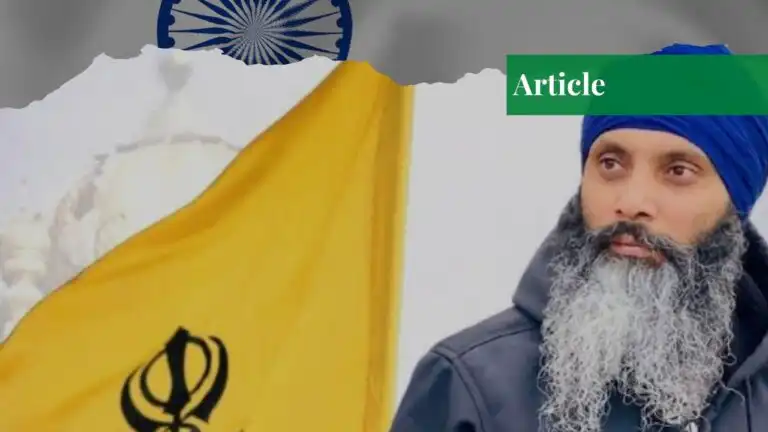
Canadian Prime Minister Justin Trudeau accused Indian agents of conducting the murder of Hardeep Singh Nijjar, quoting intelligence reports linking Indian agents to “homicides, extortion, and violent acts,” eventually leading to subzero temperatures in Indo-Canadian relations. This allegation ignited a diplomatic fallout, leading both countries to oust diplomats—Canada withdrew its officials, while India deferred visa services for Canadian citizens. This blame was backed up by Trudeau’s sayings that emphasized that Nijjar’s killing was part of a broader targeting of pro-Khalistan activists, who are advocating for a Sikh homeland in India’s Punjab region.
In addition to this, the Royal Canadian Mounted Police (RCMP), the national police force of Canada, revealed that since the murder in 2023, there have been ongoing investigations into Indian involvement in criminal activities, including extortion and threats against the Khalistan movement. However, India rejected these claims, condemning Trudeau for pandering to Canada’s Sikh vote bank and alleging a lack of credible evidence.
Canada is one of the countries with a sizable Sikh diaspora population. According to a 2021 consensus, the population increased to 7.71 lakh, which constitutes about 2.1 percent of the total Canadian population. Most of the Sikh community has an increased affiliation with the one who advocates for the Khalistan movement, which has become the boiling pot for the conflict as well. India views this as troublesome to its security and sovereignty as it is a product of Sikh extremism. With both nations embedded in their strict stances, this diplomatic row reflects broader geopolitical concerns surrounding national security and separatist movements.
It is to be noted that India-Canada relations have been steadily deteriorating, with many key events starting in 2018, which have been mounting frictions till now. The tension surfaced when Justin Trudeau participated in an official dinner hosted by the Canadian High Commissioner in New Delhi. The visit intended to ease tensions between India and Canada, mainly over India’s concerns about perceived Canadian support for Sikh separatism, specifically the Khalistan movement.
The situation turned sour when a convicted former member, Jaspal Singh Atwal, of the International Sikh Youth Federation, declared a terrorist organization in Canada and received an invitation to the dinner. Controversy also brewed when Atwal was photographed at an event with Trudeu’s then wife-Sophie. Atwal’s name spurred a backlash in India as he was known for being involved in the failed assassination attempt on an Indian cabinet minister in 1986. Although Trudeau made the mistake of inviting him, the damage had already been done, weakening the relations between the two nations.
Rising Tensions Between Modi and Justin Trudeau
Atwal later apologized, stating he no longer supports Sikh separatism and has reconciled with India. The incident stirred the pot of diplomatic strains between the two countries, overshadowing Trudeau’s goals of improving bilateral relations.
Diplomatic relations were further stressed when Trudeau’s comments supporting India’s farmers’ protests against new agricultural laws angered Delhi in late 2020. India’s Ministry of External Affairs criticized Trudeau’s remarks, labelling them as “ill-informed” and proclaiming that they interfered in India’s internal affairs. However, the turning point came in June 2023, with the assassination of Sikh separatist leader Hardeep Singh Nijjar in Canada. Nijjar had been declared a terrorist by the Indian government in 2020 due to his support for a referendum on Sikh independence in India. Trudeau’s accusations that Indian agents were involved set off a significant diplomatic clamour.
Shortly after, Canada unexpectedly paused trade talks with India in September 2023, and tensions were palpable during the Group of 20 summit. The diplomatic rift deepened as Indian Prime Minister Narendra Modi snubbed Trudeau during bilateral meetings.
Following this, Canada further postponed a trade mission to India. By mid-September, diplomatic relations soured further when Ottawa expelled an Indian diplomat, alleging Indian government involvement in Nijjar’s murder. India retaliated by expelling a Canadian diplomat and accused Canada of interfering in its internal matters.
Last year, Canada extracted 41 diplomats from India after India proclaimed it would revoke their immunity, quoting the apprehensions over Canada’s diplomatic presence and disturbance. While, Mélanie Joly, Canadian Foreign Minister, condemned this move as a clear violation of international law but maintained a diplomatic stance, asserting that her government would continue engaging with India. However, later in May 2024, three men were arrested and charged with Nijjar’s murder, and the investigation is ongoing. The Royal Canadian Mounted Police (RCMP) indicated that more individuals might be involved, pledging to bring them to justice.
Recent key events highlight the rising tensions between India and Canada. These events point to a widening diplomatic fissure that could have far-reaching consequences for their bilateral ties and global geopolitics, potentially opening a can of worms for both nations. The events also accentuate how serious the situation has become. If both countries continue down this path of hostility, it could lead to a prolonged diplomatic freeze, adversely affecting trade, collaboration in international forums, and cooperation in sectors such as education and technology.
Moreover, the strain is especially concerning in a globalized world where India’s economic and geopolitical influence is growing, and Canada relies heavily on international trade.
In many ways, the current Canada-India issue also serves as a warning signal to the entire Western alliance, which sees India as a crucial partner in countering China’s growing influence in the Indo-Pacific region. It is worth noting that the expulsion serves as a stark reminder of the tensions that continue to emasculate Western efforts to forge a closer partnership with India. India’s size, geopolitical position, and role as a democratic nation make it an important ally for Western nations, especially in balancing China’s expanding influence. This shows the potential hypocrisy between India and China relations and Western foreign policy. While they seek to cultivate stronger ties with India for strategic and economic reasons, there is growing concern about the country’s growing authoritarian tendencies under Prime Minister Modi, which leads to a dilemma and raises a question of how Western powers should now navigate a balancing act with India.
Thus, the diplomatic estrangement between Canada and India illustrates the risk for the broader Western alliance, warning them of the challenges and risks of engaging with nations whose domestic policies may contradict democratic principles and human rights values, which the West claims to champion.
If you want to submit your articles and/or research papers, please check the Submissions page.
The views and opinions expressed in this article/paper are the author’s own and do not necessarily reflect the editorial position of Paradigm Shift.
She is a student of international relations, pursuing a bachelor’s degree in the field from Bahria University. With a deep interest in global affairs, she writes on topics related to geopolitics and international dynamics, aiming to contribute thoughtful analysis on contemporary global issues.