Much to Delhi’s chagrin, its accusations of Pakistani meddling in Kashmir received little to no support from neighbours and Western capitals during recent tensions. Is India losing its standing as a respected global power?
It did not take long for India’s ruling BJP government under Prime Minister Narendra Modi to resort to drastic measures and downgrade the already fragile ties with Pakistan after an attack in Indian-administered Kashmir’s Pahalgam region, where armed men killed 26 tourists. The Indian government, in its politically motivated move, blamed Pakistan for orchestrating the assault; the attack was linked to the Resistance Front (TRF), an armed group that Indian officials claim is an offshoot of the Pakistan-based militant wing Lashkar-e-Taiba. Islamabad categorically denied any involvement in the attack. It blamed the hostile public statements from Indian officials for significantly heightening tensions, accusing India of political point-scoring and staged provocation as India launched attacks inside Pakistan in the build-up to tensions. Pakistan retaliated with its own set of strikes. Many feared hell breaking loose with two nuclear-armed neighbours going on a full-fledged, protracted war amidst intense air battles and missile and drone strikes in major cities until the United States intervened and brokered a ceasefire, as confirmed by US President Donald Trump himself on multiple occasions.
While India expected solidarity from its allies and neighbouring countries — small and big powers alike — after the Pahalgam attack and made diplomatic efforts at the United Nations and in its briefings with foreign dignitaries to build its case in going “after terror” inside Pakistan, it fell short of receiving a unified, unequivocal front. It was instead met with calls to show restraint and indulge in dialogue. Neighbouring countries like Bangladesh, Nepal, and Sri Lanka adopted a largely neutral stance and avoided supporting India’s unilateral actions altogether. The high-level meetings between Dhaka and Islamabad in recent years, despite Bangladesh’s neutrality, along with the resumption of direct trade and relaxation of visa policies, indicate that relations between the two countries are thawing— a blow to the strides made in India-Bangladesh ties before Sheikh Hasina’s dismissal.
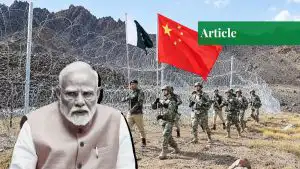
China, with its history of complex bilateral ties with New Delhi, called for restraint, stood by Pakistan, supported it militarily and backed Islamabad’s call for an “impartial investigation” into the attack. The role of the South Asian Association for Regional Cooperation (SAARC) during the crisis remained largely insignificant, but it revealed India’s limitations in extending its influence in mobilizing regional participants against its arch rival Pakistan.
The Western states, too, emphasized dialogue and refrained from offering Delhi carte blanche for its strikes. Despite condemnations over the loss of lives in the terrorist attack, the US response to Pahalgam and the subsequent situation was balanced. In his first reaction after the diplomatic escalation between the South Asian rivals, President Trump said he is close to both India and Pakistan, and they will have to find a solution “one way or the other.” Vice President JD Vance, too, expressed concern but called for restraint, falling short of taking a one-sided position as New Delhi, being a strong US ally, had hoped for — in sharp contrast to the full-fledged solidarity that Washington extended to its other important ally, Israel, after the October 7 terrorist attacks.
The message from the European Union to both parties was also one of restraint. The EU’s top diplomat, Kaja Kallas, urged Indian and Pakistani foreign ministers to de-escalate and described the tensions as “alarming,” drawing a response from Indian Minister of External Affairs Jaishankar, who said his country needs “partners, not preachers.”
Brussels, which extends its unflinching solidarity to Ukraine and backs it militarily and diplomatically in the war against Russia, refrained from adopting even a mildly similar stance of steadfast support to New Delhi in the latter’s action against militant groups’ hideouts on Pakistani soil. The European response was one of indifference, a blow to India’s image as a major power, making it evident that Europe and the US, despite many recent trade agreements, do not necessarily see Delhi as a credible moral voice or a strategic counterweight.
While the standoff revealed the fragility of regional alliances, India also faced a setback in its endeavour to diplomatically isolate Pakistan, as several countries and blocs, from Turkey to Azerbaijan and the Organisation of Islamic Cooperation (OIC), backed Pakistan’s position. The escalation once again put a spotlight on one of South Asia’s complex, multifaceted, and long-standing issues centred in Kashmir at a time when players like China, an ironclad, all-weather ally of Pakistan, and India, eyeing more geopolitical influence in the region. The divide between the West and Beijing also deepens, as evident in China’s stance on the Russia-Ukraine conflict, which is at odds with that of Western and European elites.
India finds itself walking a tightrope between presenting its case to the world, addressing terrorism, and avoiding geopolitical confrontations while facing a credibility conundrum among its neighbours. It is sending all-party delegations to different parts of the world, including the US, as part of an outreach to “inform partners of the zero-tolerance policy for terrorism emanating from Pakistan.” Even its traditional supporters and allies, such as the United States, pursue their interest-driven foreign policy, falling short of giving New Delhi unequivocal support and instead aligning it with Pakistan, an outcome from the war that India, seeing itself as a global geopolitical heavyweight, disapproves of. Trump hinted that trade incentives to both Pakistan and India could be the driving force behind de-escalation, as he praised the leadership of both countries.
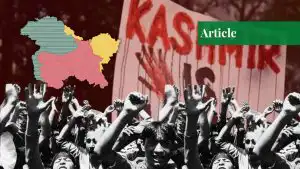
With the blame game and a fixation on Pakistan without any substantial proof, the present Indian state’s stance failed to take into account the discontent and disenfranchisement of an ordinary Kashmiri living under the Indian occupation. Article 370 — a constitutional provision that granted special status and a high degree of autonomy to the state of Jammu and Kashmir — was abrogated by the Modi regime in 2019, erasing even the slightest illusion of Kashmiri autonomy. The UN resolutions calling for a plebiscite, determining the final status of the territory, have been rejected by India, preventing the Kashmiri people from having a say or self-determination — a promise that remains unfulfilled.
Kashmir remains a spectacle for scoring political points and fanning the flames of nationalism at home, with no resolution in sight. At the same time, India’s biggest obstacle to its regional dominance and diplomatic standing is its own jingoism and rights violations against minorities that it persistently fails to address, including in Kashmir. The internationalization of the Kashmir issue due to recent events and Trump’s offer as a third party to mediate is a blow to India’s long-standing policy of treating the dispute as a strictly bilateral matter. It indicates a weakening of its position on foreign policy objectives amidst the isolation it faces regionally and indifference from its allies on charges of cross-border terrorism on a global level.
If you want to submit your articles and/or research papers, please visit the Submissions page.
To stay updated with the latest jobs, CSS news, internships, scholarships, and current affairs articles, join our Community Forum!
The views and opinions expressed in this article/paper are the author’s own and do not necessarily reflect the editorial position of Paradigm Shift.

The writer is a journalist and an Erasmus Mundus scholar with a Master’s in Journalism, Media and Globalisation from Denmark and the Czech Republic. Her work is published in national and international media like TRT World, The New Arab, The Diplomat, The Times of Israel, EU Observer, The Express Tribune, The News, DW News and more.