Introduction
“Pak-China friendship is higher than the Himalayas, deeper than the ocean, sweeter than honey, and stronger than steel.”
PM Shehbaz Sharif
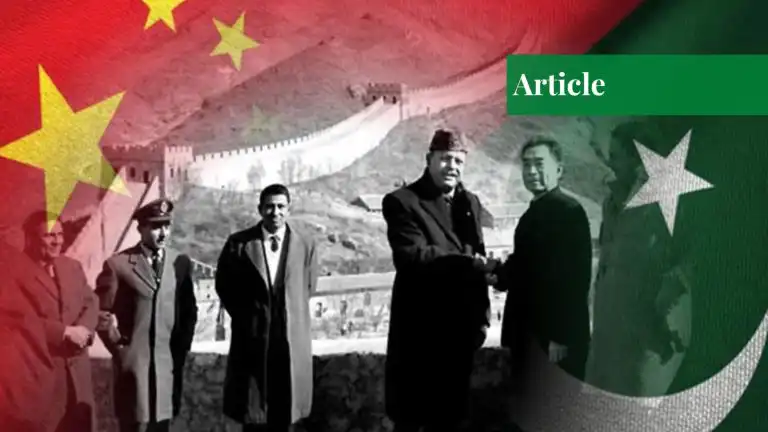
The “all-weather” friendship between China and Pakistan, which we witness now, has emerged after facing serious ups and downs throughout the course of history. It was not as simple as we think now that soon after the emergence of the People’s Republic of China (PRC), Pakistan recognized the country, and since then, their ironclad relation started. Rather, the historical facts posit something quite opposite. Sino-Pakistan rapprochement in the Ayub Khan era clearly illustrated that prior to this, the relations were politically strained. Therefore, it is important to critically analyze the basis of current friendly relations between China and Pakistan. What was the rationale behind this friendly policy followed by both countries and its implications for their future relationship?
Dawn of Diplomatic Ties
While the Pakistani government was dealing with domestic problems during the 1950s, Pakistan’s political relations with China were not good. Pakistan was caught in a dilemma over the recognition of the PRC. Firstly, the two had ideological disagreements, with Pakistan siding with the capitalist alliance. Secondly, both nations were nearly ignorant of one another’s existence. It was challenging to recognize an unknown country since there were no government officials familiar with Chinese. Thus, Pakistan was attempting to stay out of major power politics by avoiding giving full support to any one party.
Finally, as the United States did not recognize China, the Pakistani government was unable to jeopardize its relationship with the West. Nevertheless, Pakistan became the first Muslim nation to recognize communist China in 1951. Despite the serious obstacles, Pakistan acknowledged China on the condition that China would support Pakistan’s stance on Kashmir in the United Nations Security Council (UNSC) after China got the United Nations’ seat and veto power.
Thaw in Relations
According to Farhat Mahmud in his book “A History of US-Pakistan Relations” published in 1991, Field Marshal Ayub Khan came into power in Pakistan through a military coup in 1958, and he then entered into a defense agreement with America permitting the entry of US soldiers into Pakistan. The action by the Pakistani government has been met with condemnation by China, whose sovereignty has been compromised. Mahmud writes that Pakistan “was following the US plot to create two Chinas.”
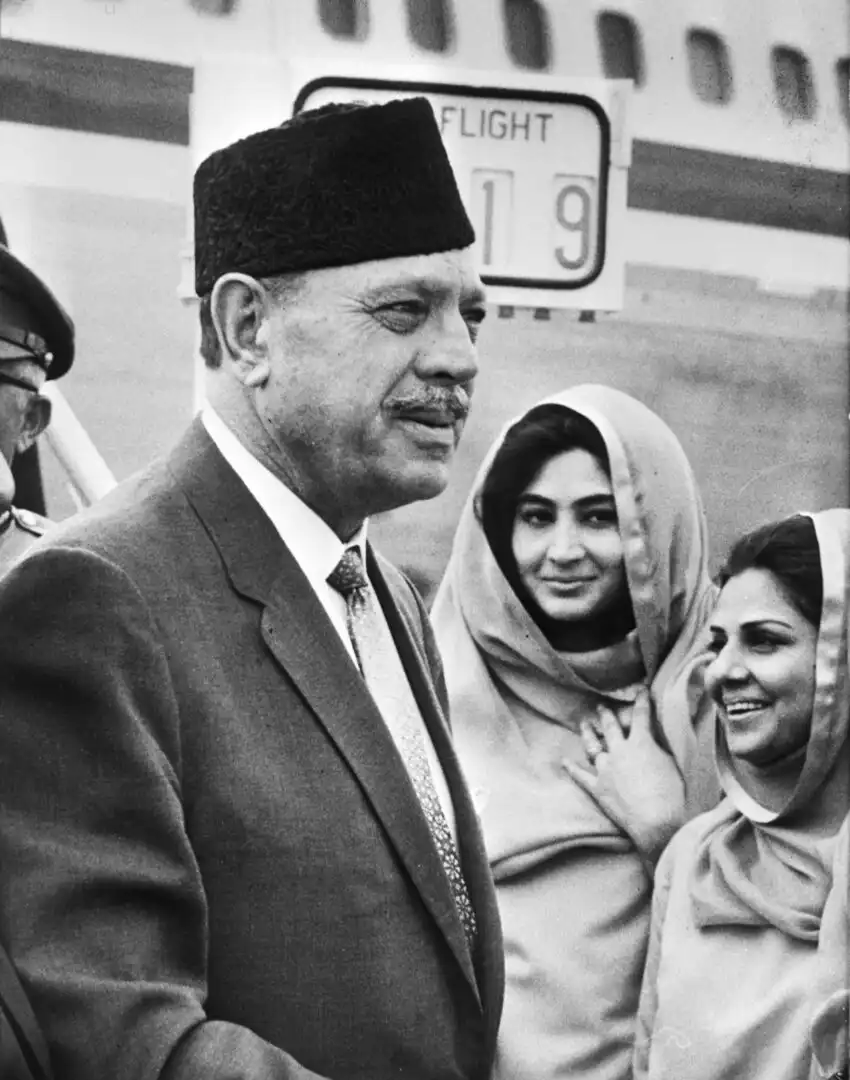
Likewise, in 1959, India was offered a joint defense agreement from Pakistan to thwart off external threats collectively. This further increased Chinese anxiety and raised alarms in the PRC’s strategic circles against Pakistan. Anwar H. Syed, in his 1974 book “Diplomacy of an Entente Cordiale,” writes that in 1959, some Chinese Muslims stationed at Karachi on their way to Saudi Arabia for pilgrimage purposes were forced to give anti-communist regime comments in China.
Moreover, according to some official sources, President Ayub showed a map to the Pakistan Foreign Office, which, according to him, was sent by the PRC. The map represented some territories of Pakistan as part of China. Later on, Ayub Khan offered peaceful negotiations to the PRC over the territorial issues while holding the stance that Pakistan would not compromise on its territorial integrity.
It becomes very fascinating to observe that despite the fact that China was destined to have its first fight in this region with India in 1962, it was actually the Pakistani government that had developed enough confidence in itself owing to its strengthening relation with America, which was ready to declare war on China.
Sino-Indian Dispute
As political relations between China and Pakistan under Ayub Khan were deteriorating at an alarming rate, the Sino-Indian clash of 1962 provided ample opportunity for Pakistan to resolve its issues with the PRC. The fight occurred in areas of Ladakh and the North East Frontier Agency (NEFA). The war exposed Indian defense vulnerabilities, with the PRC acquiring most of the Indian territory. During the war, Pakistan maintained a neutral stance while diplomatically condemning India. From the PRC’s lens, this step by the government to Pakistan was perceived as a goodwill gesture and provided an impetus to recalibrate ties between the two states.
Contribution of Bhutto
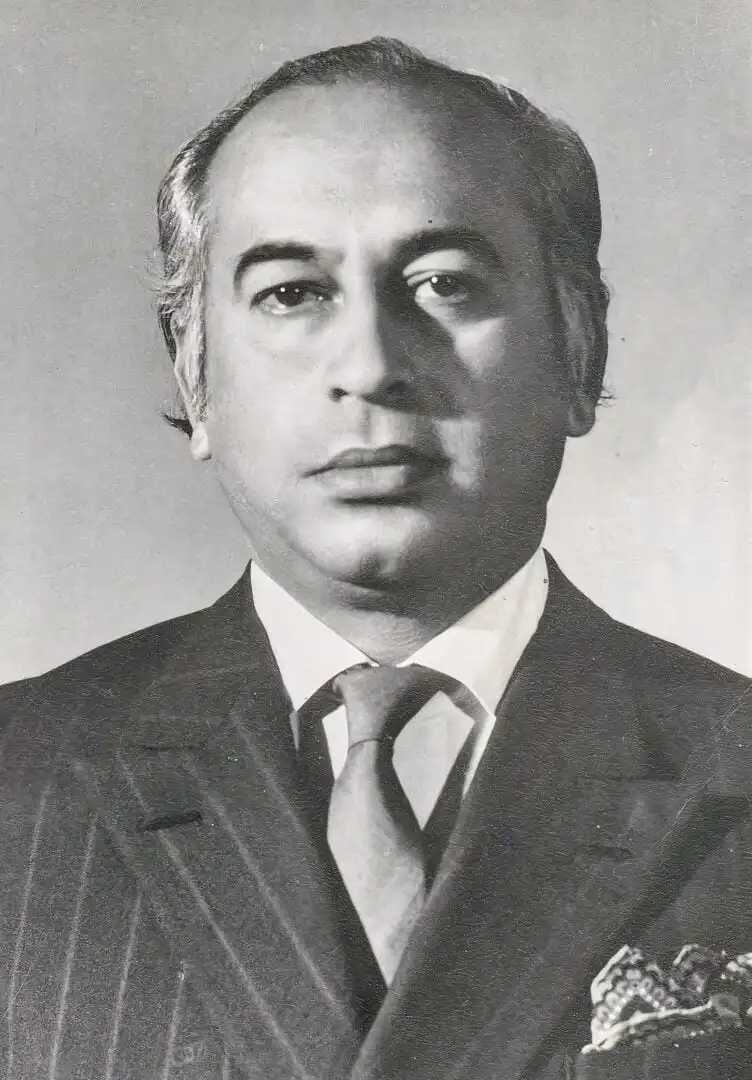
The role of the foreign minister Z.A. Bhutto in the rapprochement of Pakistan and China is crucial. He was amongst the few members of Ayub Khan’s cabinet who wanted to improve relations with China. He warned Ayub Khan of the dire consequences of his hostile policy towards China and convinced him to improve his relations with China and at the same time with the US. He also informed Ayub Khan about the secret support of the US to India, which might be used against Pakistan.
Pak-China Boundary Agreement
Ayub Khan then adopted a flexible approach with all great powers, including the US, USSR, and China, under his “Strategy of Bilateralism.” Likewise, Ayub recommended a “give and take” strategy, as Pakistan was interested in the demarcation of its border with China. Eventually, on 2 March 1963, China and Pakistan signed a boundary agreement with Pakistan acquiring 1,942 sq km of land while China got 5,180 sq km. This agreement resulted in extreme Indian and American condemnation.
President Ayub’s Visit to China
With his entourage, President Ayub Khan departed for an eight-day trip to China on March 2, 1965. China and Pakistan were united to eradicate all forms of colonialism and imperialism. Because it entails sacrifices on the part of China in order to foster self-reliance in a fellow Asian nation, Pakistan was granted a $60 million loan from China as well. By opposition, they resisted the proposal to bring nuclear weapons into the Indian Ocean. Regarding the Kashmir problem, they reaffirmed that the conflict should be settled “as pledged to them by India and Pakistan” in accordance with the will of the people of Kashmir. Foreign Minister Chen Yi promised the Pakistani journalists traveling with Ayub that “China will resist the aggressors since, if our friends perish, how can we survive?”
Pak-China Strategic Partnership
China overtly supported Pakistan in the Indo-Pakistan war of 1965. Not only did China support Pakistan’s stance on Kashmir, but China also strongly condemned India for its criminal aggression against Pakistan. The trade treaty between China and Pakistan is based on the ‘most-favored nation treatment’ in trade, business, and shipping. To foster stronger economic ties in 1963, China provided an interest-free loan of US $50 million to Pakistan. Furthermore, Beijing was visited by some of the top-ranking military and naval authorities from Pakistan. Consequently, in 1968, China supplied machinery valued at 15 million rupees to the Heavy Mechanical Complex at Taxila. As a result, Pakistan quickly understood that the ties between the US and China differed significantly.
Conclusion
The improved relations between China and Pakistan have resulted from geopolitical dynamics, regional rivalries, and political influences of important players. Relations between China and Pakistan have always been excellent since the 1960s due to the peaceful and friendly nature. Be it in the UN chambers or battlefields, China and Pakistan have always rendered each other immense support. The prevailing geopolitical situation serves as a good indication. This way, the Ayub Khan era formed the foundation of what is seen currently, a solid bond between the two countries.
“I don’t believe any country should doubt China’s resolve to safeguard and defend Pakistan’s legitimate interests.”
Victor Gao
If you want to submit your articles and/or research papers, please visit the Submissions page.
To stay updated with the latest jobs, CSS news, internships, scholarships, and current affairs articles, join our Community Forum!
The views and opinions expressed in this article/paper are the author’s own and do not necessarily reflect the editorial position of Paradigm Shift.

Syed Hammad Ali is pursuing a BS in International Relations programme from the International Islamic University, Islamabad, and has a keen interest in research works, policy analysis, defence and strategic studies, and conflict resolution.