The Struggle for Intellectual Property Rights in Pakistan
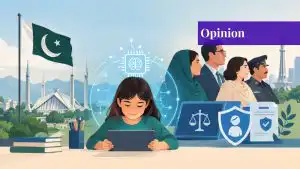
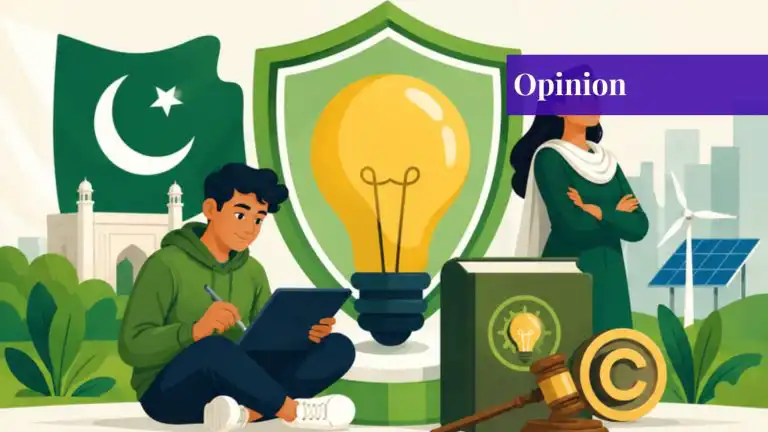
Pakistan frequently speaks of becoming a knowledge economy, a regional technology hub, and a youthful state driven by innovation. Yet one of the country’s most neglected crises remains the absence of an efficient and trustworthy system to protect the ideas of its young people.
Across universities, startups, research institutions, and even government departments, countless students and innovators quietly share the same fear: that their ideas may be appropriated before they are ever recognized. For many young Pakistanis, the greatest obstacle is no longer creativity or technical capability but the lack of institutional confidence that their intellectual labor will remain protected.
It is not merely an administrative weakness but a national development failure that leads to the withholding of thousands of creative ideas by students fearing either intellectual theft or institutional backlash.
In advanced economies, intellectual property protection forms the backbone of innovation. The United States transformed small inventors into industrial giants because ideas could legally be defended. South Korea industrialized state-backed innovation mechanisms during its economic rise.
Pakistan, meanwhile, still forces many innovators to navigate an exhausting bureaucratic maze merely to secure basic ownership rights over their work.
The Intellectual Property Organization of Pakistan was created to regulate intellectual property rights, yet the broader framework remains inaccessible for ordinary youth. Patent procedures are slow, legal processes are expensive, technical guidance is limited, and institutional outreach is weak. A university student or young medical student lacks both the financial means and legal expertise required to navigate the system.
Killing Innovation and Creativity
The problem, however, extends beyond financial rights alone. For many young innovators, the deeper pain lies in watching their concepts quietly absorbed, reused, or presented elsewhere without acknowledgement. Even if commercial ownership becomes disputed, delayed, or institutionally difficult, the creator deserves recognition that the idea originated from him.
This culture quietly kills innovation before it matures.
Many talented individuals now hesitate before sharing ideas publicly. Others increasingly seek foreign incubators, foreign investors, and foreign patent systems because they believe their innovations are safer abroad. This contributes directly to Pakistan’s widening brain drain. When innovators lose confidence in domestic institutions, nations eventually lose industries alongside talent.
More troubling, there exists a widespread perception among young people that influential individuals or senior office holders can absorb ideas without accountability.
What Does Pakistan Need?
Pakistan now requires a modern, youth-oriented innovation protection architecture operating alongside the existing legal framework rather than merely repeating it. The current structure remains overly bureaucratic, legally intimidating, and insufficiently integrated with universities and young creators.
If specialized commissions and regulatory authorities can exist for multiple sectors of governance, then there is a strong justification for establishing a dedicated Youth Innovation Protection and Facilitation Commission under parliamentary or prime ministerial oversight. Such a body should not merely consist of bureaucratic appointments. Young thinkers, engineers, researchers, and entrepreneurs should be represented in advisory and evaluative capacities. A country that repeatedly calls its youth the future must also trust them enough to involve them in shaping innovation policy.
Equally important is educational reform. Most students graduate without understanding how patents function, how intellectual property can be documented, or how legal recognition can be established.
Thirdly, a national digital “Idea Registry Portal” should be created where innovators securely upload concepts, prototypes, and research drafts with automatic timestamp verification for recognition purposes even before patent filing. Moreover, specialized intellectual property facilitation centers should be established inside major universities, engineering and medical colleges, not limited to students of those colleges but more about the relevant field, i.e., an intellectual property facilitation center in NUST should not only be for their students or faculty but for anyone who prepares anything relevant.
Pakistan should establish state-supported intellectual property legal aid panels to assist low-income innovators unable to afford attorneys and consultants. Lastly, annual innovation recognition reports should publicly acknowledge notable youth inventors, researchers, and creators even before commercial success emerges.
To conclude, Pakistan possesses immense intellectual potential. What it lacks is a system capable of fully protecting, recognizing, and empowering it. Unless institutional confidence is restored, many of the country’s brightest minds will continue taking their ideas elsewhere.
If you want to submit your articles and/or research papers, please visit the Submissions page.
To stay updated with the latest jobs, CSS news, internships, scholarships, and current affairs articles, join our Community Forum!
The views and opinions expressed in this article/paper are the author’s own and do not necessarily reflect the editorial position of Paradigm Shift.

Dr. Osama Jaffer Goraya is an MBBS graduate of Army Medical College whose research interests focus on public policy, governance, strategic affairs, and pragmatic policy solutions. He achieved 16 straight A grades in O Levels, setting a college record at Cadet College Hasan Abdal, and earned a World Distinction in World History. He has served as a researcher at the Army Institute of Military History (AIMH) and the Islamabad Policy Research Institute (IPRI). His work primarily examines youth reforms, governance, geopolitics, and South Asian security, with particular interest in the 1971 Bangladesh War of Separation, the Kashmir and Balochistan issues, and regional strategic dynamics.