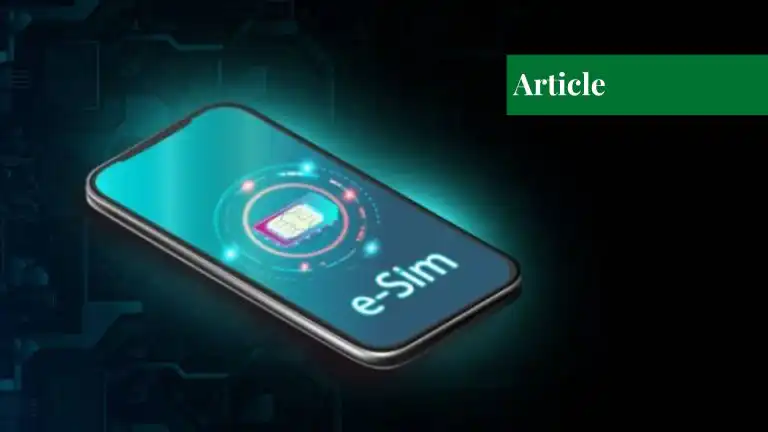
eSIM Inside Device Hardware
SIM trays are disappearing from many recent smartphones. The function stays, but it moves into the device itself. eSIM sits there as an embedded module that holds carrier credentials.
Setup usually comes through a QR scan or a carrier app download. The profile is written into the phone and then works like a normal mobile line.
Carrier credentials stay inside a secure area of the device rather than on a removable card. Once activated, the profile remains in place until the user decides to replace or remove it through software settings.
Manufacturers have steadily expanded eSIM support beyond smartphones. Tablets, smartwatches, connected laptops, and industrial IoT devices increasingly rely on the same approach. Managing connectivity through software simplifies deployment, particularly when hundreds or thousands of devices are involved.
Some devices store multiple profiles at the same time. A consultant working across several countries, for example, might keep separate profiles for different markets and switch between them without replacing any hardware.
Carrier Provisioning Flow
A request goes out from the device to the operator. The system checks it, then sends back a signed configuration package.
Inside that package sit authentication keys and network rules. Once it reaches the secure element, the line becomes active.
Operators handle the entire process remotely. Profiles can be issued, suspended, replaced, or reactivated depending on account status.
Most of the work happens on carrier infrastructure rather than on the device itself. Activation times vary. Some profiles become available almost immediately, while others depend on additional validation steps, regional requirements, or network conditions.
The same framework supports plan changes, device upgrades, and secondary line activation without requiring a new SIM card shipment.
Combined Usage Layer
Some platforms, including eSIM Plus, place eSIM services and virtual numbers under a single account interface while keeping the underlying systems separate.
Carrier APIs manage provisioning. VoIP infrastructure manages communication routing. Both continue operating independently.
Users interact with one dashboard instead of several disconnected systems. Behind that interface, provisioning, routing, authentication, and account management continue to run through separate environments.
This model has become more common as businesses adopt digital-first communication tools. Companies increasingly expect connectivity, voice services, and account management to sit in the same workspace rather than across multiple platforms.
Virtual Phone Numbers in VoIP Systems
Virtual numbers do not rely on SIM hardware. Providers assign them through VoIP platforms where calls and messages travel through internet-based infrastructure.
The number belongs to an account rather than a specific device.
That difference changes how communication can be managed. Calls may ring on a mobile application, a desktop client, and a browser session at the same time. Team members can access the same communication channel from different locations.
Servers store messages centrally and synchronize them across connected devices. A user can move from a laptop to a smartphone without losing access to conversations or call history.
The model appears across customer support operations, SaaS platforms, online marketplaces, delivery services, and verification workflows. A software company serving customers in several countries may use local virtual numbers for onboarding and support while managing all communication from one location.
Customer support teams often work the same way. Customers see a familiar local contact number, while agents operate remotely across different cities or countries.
Security and Identity Separation
An eSIM profile sits inside a protected hardware area of the device. Removing or duplicating it involves controlled processes defined by the operator and device manufacturer.
Virtual numbers address a different challenge. They create separation between public communication channels and a person’s primary mobile number.
That distinction matters in recruitment, customer support, consulting, temporary projects, and online registrations. Employees can communicate externally without exposing personal contact information.
Both technologies rely heavily on cloud infrastructure. Subscription management, authentication, routing, monitoring, and logging take place across distributed systems designed to support large numbers of users and devices.
The systems perform different roles, which helps maintain operational independence. A routing issue in a communication platform does not automatically affect mobile connectivity, and vice versa.
Practical Usage
Travel remains one of the most visible examples of eSIM adoption. A profile can be installed before departure and activated after arrival without visiting a mobile store or replacing a SIM card.
Virtual numbers solve a different operational problem. Businesses often need dedicated contact points for regions, departments, campaigns, or support teams.
A startup expanding into new markets may launch local customer support numbers before opening physical offices. Customers interact with a local contact point while employees continue working remotely.
Many organizations combine both technologies. eSIM provides network access. Virtual numbers manage communication. Together they support distributed teams, international operations, and mobile work environments without requiring additional hardware.
Telecom System Direction
Telecom infrastructure continues moving toward software-based management. Physical SIM distribution remains part of the industry, but remote provisioning is becoming standard across a growing number of devices and services.
eSIM reduces dependence on inventory, shipping, and physical replacement processes. Virtual numbers remove many of the location-based limitations traditionally associated with business communication.
For telecom providers, that means lower operational overhead and greater flexibility when delivering services. For businesses, it means employees, support teams, and customers can stay connected without being tied to a specific device, location, or mobile network contract.
If you want to submit your articles and/or research papers, please visit the Submissions page.
To stay updated with the latest jobs, CSS news, internships, scholarships, and current affairs articles, join our Community Forum!
The views and opinions expressed in this article/paper are the author’s own and do not necessarily reflect the editorial position of Paradigm Shift.

Paradigm Shift is an official staff account.