Introduction
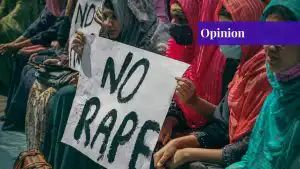
Over the years, due to social media and other digital communication platforms, awareness regarding sexual abuse, specifically rape, has considerably increased, even in jurisdictions such as Pakistan, where talking about such issues remains culturally sensitive. However, another form of sexual abuse that remains largely underexamined in both public discourse and legal frameworks is incest.
In its basic sense, incest refers to sexual relations with people within the prohibited degree of kinship. Incest happens readily in our society but is often silenced due to honor, shame, and numerous legal and societal aspects. The Pakistani legal system does not distinctly define it; incestuous conduct is prosecuted under broader provisions related to sexual violence. In contrast, Islamic jurisdictions such as Malaysia expressly define incest and have legal provisions related to it in their criminal legal framework. This blog post highlights that incest should be recognized as a distinct offense under Pakistani law and how inspiration can be drawn from Malaysian laws in this regard.
What Is Incest?
Traditionally, incest has been construed as sexual intercourse with a person who is a blood relative. Islamic jurisprudence similarly approaches incest through clearly defined prohibitions concerning familial and marital relations commonly referred to as Mahram relationships, encompassing those relatives with whom marriage is permanently prohibited.
The Holy Quran, in Surah Nisa, establishes a normative legal framework that explicitly enumerates all prohibited degrees of kinship. These prohibitions extend to several categories, including fathers and mothers, sons and daughters, brothers and sisters, fathers’ brothers or sisters, mothers’ brothers or sisters, and daughters of brothers and sisters. milk mothers, who nursed you, brothers and sisters through nursing, wives’ mothers, the daughters of the wives with whom one has consummated marriage, and the husbands and wives of one’s children.
In comparative legal statutes, Section 376A of the Malaysian Penal Code defines incest as follows:
“A person is said to commit incest if he or she has sexual intercourse with another person whose relationship to him or her is such that he or she is not permitted, under the law, religion, custom, or usage applicable to him or her, to marry that other person.”
In contrast, within Pakistan, incest is dealt with under provisions related to rape, unnatural offenses, and the hudood provisions. Due to the lack of a separate legal provision in our criminal jurisprudence, critical elements such as the abuse of trust, dependency, and coercion, which may be absent in cases of rape by a stranger but are often inherent in cases of incest, are overlooked by the law.
Legal Status of Incest in Pakistan
Apart from the statutory deficiency, the bigger problem faced by Pakistan’s legal framework is the inadequacy of the existing laws to cover all the elements of incest sufficiently. Currently, Section 375 (Rape) and the Anti-Rape (Investigation and Trial) Act, 2021, deal with non-consensual sexual intercourse but do not cover the abuse of familial authority and grave breach of trust specific to incest.
Section 377 of the Pakistan Penal Code was aimed at covering sexual intercourse primarily with species other than humans; hence, it is not suitable to address intra-familial abuse. Similarly, hudood provisions deal with sexual relations with consent or outside the ambit of marriage without specifically mentioning incest. Consequently, despite the existence of multiple provisions, incest remains a highly harmful, unrecognized offense. The absence of distinct legal provisions means that the law still focuses on the sexual act itself, while in incest, the familial breach of trust involved is of great importance.
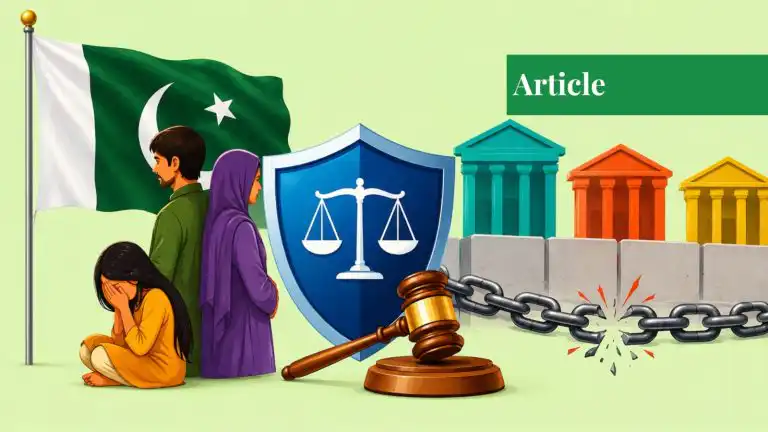
The need for a distinct legal framework addressing incest extends beyond remedying a lacuna in Pakistan’s criminal law; it is also essential to fulfilling the constitutional guarantees enshrined in the supreme law of the land. The Constitution imposes a positive obligation on the State to safeguard the fundamental rights of its citizens. In particular, Articles 9 and 14 guarantee the right to life and the inviolability of human dignity. A criminal justice system that fails to recognize and address sexual abuse occurring within the family structure falls short of these constitutional obligations, as it does not adequately protect victims whose rights to life, dignity, and personal security are violated by incestuous abuse.
The Societal Dynamics of Incest
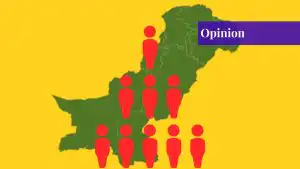
Incest as an offense has deep-rooted psychological and social implications. In societies like ours, joint family systems make it easier for crime to penetrate faster. According to the latest Cruel Numbers Report published by Sahil, a leading child protection NGO, 1,956 cases of child abuse were reported between January and June 2025, up from 1,630 in the first half of 2024, which is proof of the deep-seated existence of the issue.
In common familial settings, the misconduct commonly originates during early childhood and continues for years, resulting in the child normalizing the abusive behavior as a customary aspect of the relationship. Due to a trusted relationship with the perpetrator, the dynamics of incest become completely different from those of rape. As rape in most cases is committed by strangers, violation by a trusted or respected family member, and that too not once but over a long period of time, has a deep impact that often alters the upbringing of the survivors.
Barriers to Disclosure and Reporting
The troubling nature of abuse, often continuing for years, results from delayed reporting, fear of societal exclusion, and the victim’s lack of power within the household, as most victims are children, frequently girls, with little to no means of escape. In some cases, even when the abuse is disclosed, it is usually first shared with female family members, most often the victim’s mother.
However, the responses are rarely supportive. Stigma, fear of retaliation, financial dependence, and pressure to preserve family “honor” discourage victims from pursuing formal complaints. In some cases, intimidation and threats of murder and acid attacks emerge as a recurring mechanism employed by perpetrators to maintain control and suppress reporting, ultimately ensuring the survivor’s continued submission. This prolonged submission often develops borderline personality symptoms and tendencies for suicide, self-harm, or substance abuse, along with severe trauma in the victims. However, after suffering for a long period of time, when victims finally choose to ask for justice, the gaps in the current justice system make it more difficult for them.
The Judicial and Institutional Barriers
Pakistan’s justice system lacks adequate victim safeguards. Victims are made to wait in crowded court areas alongside the accused for extended periods, which can heighten fear, intimidation, and emotional distress during an already difficult process. At the stage of registering a crime with the police, victims encounter significant hurdles due to mishandling and judgment. Police frequently place judgment and suspicion on the victim by passing remarks such as that Pakistan is an Islamic country; therefore, such occurrences are not possible.
They question the character of the person reporting the incident and urge internal family resolution to preserve honor. This delay and reluctance in lodging FIRs often prove fatal to the victim at a later stage of the proceedings. Consequently, during evidence collection after lodging the FIR, the officers’ insufficient training results in incompetent medical examinations, poor counselling, and flawed testimonies that weaken cases.
In Pakistan, the medico-legal officers (MLOs) lack the resources to properly deal with the victims of sexual abuse, especially incest victims, making it more difficult for the victims. The hardships faced by victims do not end here. Further in court proceedings, survivors are often subjected to insensitive cross-examinations, where defense counsel question their motives, behavior, and even their past sexual history.
Comparative Perspective: Lessons from the Malaysian Legal Framework
Although Malaysia and Pakistan are both Muslim-majority countries, Malaysia has been a step ahead in acknowledging incest through law, whereas Pakistan currently lacks explicit legislation. Initially, incest was treated under the rape laws in Malaysia, but due to increasing prevalence and the unique nature of intra-familial abuse, it was eventually criminalized as a separate crime in 2002.
Section 376A of the Malaysian Penal Code defines incest by prohibiting sexual intercourse between persons who are legally prohibited from marrying each other. The definition adopts a broad approach by determining prohibited relationships through the applicable law, religion, custom, or usage, thereby encompassing multiple legal and social bases for identifying incestuous relationships. Rather than limiting the offense to biological ties alone, the provision recognizes that incest arises wherever the parties’ relationship places them within a category of persons barred from marriage under the applicable normative framework.
The explicit recognition of the relation between the perpetrator and victim is what differentiates incest from general rape laws, and this is precisely what is absent from the Pakistani legal system. By distinctly defining incest, Malaysian law has drawn a line between incest and other sexual offenses. Similar approaches can also be found in other Muslim-majority jurisdictions such as Turkey and Egypt, where the scope of provisions dealing with sexual offenses has been broadened to include abuse committed by persons occupying positions of trust, such as doctors, adoptive parents, educators, or religious figures.
The aggravated form of sexual assault, coupled with the psychological harm emerging from the abuse of trust, requires that the offense and the relations involved should be defined and dealt with in a clear-cut manner without any ambiguity. Though the above-mentioned provision does not explicitly mention the prohibited relations, these can be identified through other Malaysian legislation, including the Law Reform (Marriage and Divorce) Act 1976 for non-Muslims and the Islamic Family Law (Federal Territory) Act 1984 for Muslims.
Initially, the Malaysian Penal Code provided for a punishment ranging from 5 to 20 years’ imprisonment; however, later on, through amendment, the country moved towards a 30-year maximum sentence, highlighting the legislature’s recognition of the gravity of the offense. While harsher punishments cannot always guarantee reduced occurrence of any offense, targeted deterrence, along with institutional fixes, always has a huge impact. The Pakistani legal framework, on the other hand, suffers from the discrepancy of still dealing with incest under general rape provisions without any targeted measures against it.
Another important element is the relevance of “consent” utilized in the Malaysian incest laws. The Malaysian Penal Law approaches incest as a crime where a minor is incapable of consent, excluding consent as a defense in specified age groups. Malaysia’s amendments made clear that sexual acts involving children, for instance, females under 16 and males under 13, cannot be legitimized by alleged consent. Similarly, Pakistan should adopt unambiguous language that defines prohibited relationships, specifies minimum ages below which consent is legally invalid, and remove consent-based defenses in incest cases so perpetrators, especially those who exploit parental authority, cannot evade accountability.
Suggestions
For the work to eliminate incest, the first and foremost step required by Pakistan is recognition of the offense through a distinct statutory definition accompanied by a list of relations falling within the prohibited degrees. Secondly, steps must be taken to improve the process of dealing with victims to provide them comfort and security and to save them from secondary victimization. Thirdly, accessible mechanisms to provide counselling and victim support should be established to encourage timely reporting and provide immediate psychological assistance.
Fourthly, specialized care and incest-sensitive training should be provided to the police officers, investigators, and medico-legal officers to make the judicial process easy for the victims. Fifthly, in order to decrease the social stigma around the offense awareness campaigns in educational institutions, the government should launch them through its social media handles, or the PTA should be launched. Lastly, proportionate and sufficiently stringent punishments must be put in place to help deter the crime effectively.
Conclusion
Pakistan can no longer afford to treat incest as merely another form of rape. The Malaysian legal framework demonstrates that expressly criminalizing incest through a separate statutory provision allows the law to recognize the unique abuse of trust, authority, and dependency inherent in intra-familial sexual violence. The most urgent reform for Pakistan is, therefore, the enactment of a distinct legal provision defining incest and prohibited relationships, accompanied by victim-centered institutional safeguards and specialized investigative procedures. Such reforms are essential not only to address an existing gap in the criminal law but also to uphold the constitutional guarantees of life, dignity, and equal protection for survivors.
If you want to submit your articles and/or research papers, please visit the Submissions page.
To stay updated with the latest jobs, CSS news, internships, scholarships, and current affairs articles, join our Community Forum!
The views and opinions expressed in this article/paper are the author’s own and do not necessarily reflect the editorial position of Paradigm Shift.

Maham Nasir is a practicing lawyer whose interests span public law, family law, regulatory affairs, arbitration, and legal policy. Her work examines contemporary legal questions through the lens of law, society, and evolving public policy.

Anisa Iftikhar is a final-year law student and law & policy researcher drawn to the intersections of family law, criminal justice, constitutionalism, and international humanitarian law, with a particular focus on the rights and protectionof children and juveniles.