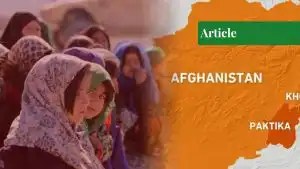
In a world marked by humanitarian crises, human rights violations, and conflict, millions are forced to leave their homeland in search of dignity and protection. The 1951 Refugee Convention and 1967 Protocol relating to the Status of Refugees serve as a shield against persecution and oppression. Emerging from the ashes of World War 2, which displaced millions of people from Europe, the Convention Relating to the Status of Refugees was adopted on 28th July 1951. Initially, the scope of the Convention was confined to geographical limitations, but the 1967 Protocol removed these restrictions, transforming the Convention into a universal codified document. The global refugee protection framework finds its practical expression in the states that host refugees. Developing countries like Pakistan have continued to welcome refugees since their inception and are finding it difficult to cope with the rapid influx. Pakistan hosts nearly 3 million refugees, making it among the largest refugee-hosting countries globally, according to the official report of the United Nations High Commissioner for Refugees (UNHCR).
Understanding the Term “Refugee”
UNHCR has defined refugees as people who flee their homelands and cross an international border to find safety in other countries. International law has clearly defined the term refugee and also guarantees the protection of their basic rights.
The 1951 Convention on Refugees is the international key principle document that defines refugees as:
“Any person who is unwilling or unable to return to their origin country because of a well-founded fear of persecution for reasons of race, nationality, religion, political opinion or any kind of association with a particular sector or group”.
International Law: A Universal Basis for Protection
International law protects refugees in many ways, including safety from being returned to danger and efficient asylum-seeking procedures. Pakistan is among those countries that have been hosting millions of refugees since its Inception. The influx of refugees in Pakistan commenced in the late 1970s and early 1980s, mainly due to the conflicts and political instability in Afghanistan. Afghans began fleeing their homeland and seeking refuge in neighboring countries. A huge number of Afghans fled the violence of the communist-led government in the late 1970s, followed by the invasion of the Soviet Union, leading to the progressive rise in the number of refugees. UNHCR, the UN Refugee Agency, and the government entered into an international agreement to provide humanitarian assistance to manage the huge influx of Afghan refugees.
Refugees in Pakistan are, in general, dealt with in accordance with the Foreigners Act 1946, as Pakistan is neither a party to the 1951 Refugee Convention nor the 1967 Protocol. Refugee Status Determination in Pakistan is carried out under the guidelines of the UNHCR mandate, which includes the Resolution 428 (V) (General Assembly) of 14 December 1950 and the 1993 Agreement between UNHCR and the Government of Pakistan, respectively. In the absence of a national refugee law, Pakistan has still maintained the tradition of hospitality by hosting millions of Afghan refugees.
International Refugee Law (1951 Convention and 1967 Protocol) provides the definition of refugees and highlights their rights; however, it does not clearly define how the state should treat refugees. Parties have the right to determine whether an individual fulfills the criteria for refugees or not. The United Nations General Assembly has mandated the international community and the United Nations High Commissioner for Refugees (UNHCR) to provide protection and seek solutions to the global crisis. Pakistan is not a signatory to the 1951 Convention; however, certain parts have the formal status of Customary International Law.
Non-Refoulement Principle: The Core Value of Refugee Law
A significant part of the 1951 Convention is the “Principle of non-refoulement”, mentioned in Section 1 of Article 33:
“No Contracting State shall return or expel (“refouler “) a refugee in any manner whatsoever to the frontiers of territories where his life or freedom would be threatened on account of his religion, race, membership of a particular social group, political opinion or nationality.
Non-refoulement is at the heart of International Law principles and precludes states from returning the refouled to the place where they might face persecution or torture. It has a norm-creating character and has significantly become the rule of “jus cogens”, which cannot be violated for any reason due to its non-derogable nature. It is a customary rule, which is binding on all states irrespective of whether or not they are party to the Convention. Under this universal rule, the states are under an obligation to allow the refugees to cross the borders, remain in the territory, and also prohibit them from removing themselves from the state’s jurisdiction. The international community established a regime for the protection and safety of refugees. The rights and duties of the refugees are enshrined in other Human Rights instruments as well. Article 14(1) of the Universal Declaration of Human Rights guarantees the right to asylum (seek and enjoy), while the non-refoulement principle is clearly highlighted in Article 3 of the Convention against Torture and in Article 22(8) of the American Convention on Human Rights.
The member state is obliged under international law to abide by these rules and regulations. Even the non-member states have a duty under the law to protect the rights of citizens under the 1951 Refugee Convention.
Pakistan’s Balancing Act: Managing International Humanitarian Commitments with National Realities
The rapid influx of Afghan refugees has resulted in several social and economic implications. Pakistan has faced several short-term and long-term implications in terms of hosting refugees. Commemorating World Refugee Day on 20th June 2026, the Prime Minister of Pakistan has. highlighted that peace in Afghanistan is a crucial factor for the dignified repatriation of Afghan Refugees. Reflecting upon the humanitarian traditions, he claimed that Pakistan has been the host to one of the largest refugee populations, providing safe living conditions. Pakistan has always reflected its concern for the safety, security, and betterment of Afghan refugees, but the current economic, social, and security crisis puts the state in a condition where it becomes difficult to host refugees.
Pakistan struggles to balance economic priorities and international security with its international humanitarian obligations. The current situation is extremely challenging for Pakistan due to the absence of a cohesive domestic refugee law governance framework. Despite subsequent partnerships with USAID and UNHCR, there is no national-level legislation. UNHCR operates based on the principles of the 1951 Refugee Convention and its 1967 Protocol, and Pakistan is still not a signatory to either of the international documents. The Afghan refugee crisis in Pakistan, which spans over decades, presents a complex web of challenges to the host state and the refugees themselves.
Not only has the prolonged presence of Afghan refugees caused an exacerbating crisis, but it has also complicated Pakistan’s diplomatic relations with Afghanistan and other neighboring countries, particularly in terms of security concerns. The disconnect between Pakistan and the international partner organization poses humanitarian, security, and governance risks to the region. Pakistan must formulate a cohesive piece of domestic legislation that abides by both the local governance framework and international obligations. It is the need of the hour to take into account actionable steps for sustainable and humane policies.
A rights-based approach and multifaceted repatriation strategies would improve Pakistan’s international standing, aligning its policies with global refugee protection standards and attracting more support from international organizations and donor countries. The recommendation emphasizes the need for better and more strategic collaboration between Pakistan and other international organizations to ensure long-term solutions for Afghan refugees and the host countries as well.
If you want to submit your articles and/or research papers, please visit the Submissions page.
To stay updated with the latest jobs, CSS news, internships, scholarships, and current affairs articles, join our Community Forum!
The views and opinions expressed in this article/paper are the author’s own and do not necessarily reflect the editorial position of Paradigm Shift.