
The first things that enter the minds of people when they think of Balochistan are probably the kaleidoscopic sand dunes, the uncompromising mountains, and the harsh climate. But included in the depths of this sprawling province, one will find a surprising surprise: seas of blue water held between cliffs with palm trees, which gives the impression of such a peaceful sight that it will seem as though it were something out of this world. Khuzdar has oases redefining the thinking of this rural region. Two of them are particularly amazing gems, Moola Chotok and Charo Machi, both of which represent staggering beauty and a feeling of peace.
Moola Chotok: Jewel of Khuzdar
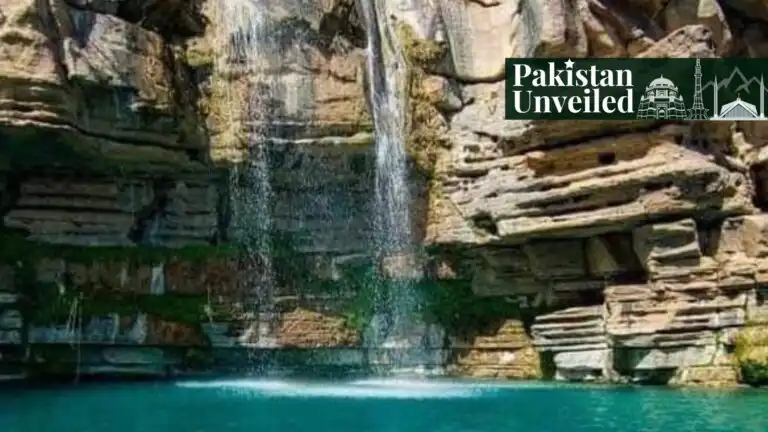
Also commonly known by the locals as a simple Chotok, and approximately 105 kilometres northeast of Khuzdar town, is an astonishing ravine range system consisting of both waterfalls and turquoise pools known as Moola Chotok. This isolated natural attraction lies at an altitude of approximately 1,237 meters, and this makes its green environment even more conspicuous amid the otherwise dry environment. A trip to Moola Chotok is as if someone has taken you to a parallel world. There are rugged cliffs that rise unexpectedly on either side of the valley, and through that narrow valley flows a river called Moola that runs down and can be traced all through the year.
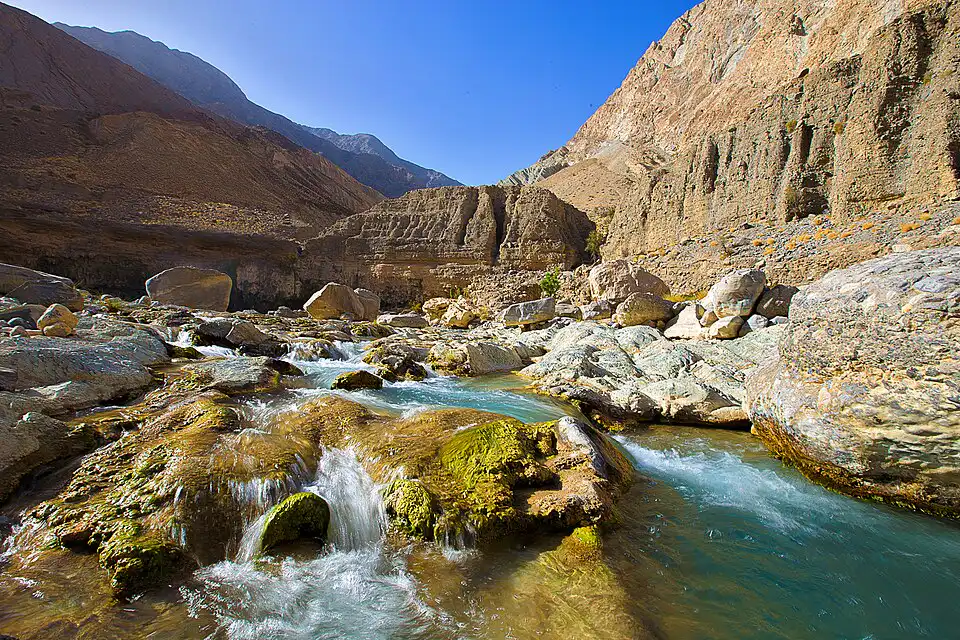
Strangely enough, the name of the waterfall is Chotok, which is the local word waterfall, in the Brahui language. The stream flows in a cascade manner down a rocky edge, and its water flows in some deep blue pools. Their water transparency and colour are almost trance-inducing as they are produced by a combination of mineral-rich limestone rocks mixed with fresh mountain spring water and sunrays behind the steepened canyon walls.
This region had not been known in many parts of the world in the past few centuries. It was mainly visited by local shepherds and farmers who used its water to drink and irrigate the land. Only in recent years, when there has been increasing interest in eco-tourism, Moola Chotok began to appear on the maps of those who travel in Pakistan and seek adventure.
Charo Machi
Totally spectacular, and as difficult to access as Moola Chotok is Charo Machi, another off-the-track hidden in the arid mountains of Khuzdar. However, contrary to an easy picnic place, Charo Machi requires tenacity and endurance on the part of the people visiting it. The trek consists of a drive over minimalized roads and half an hour of uphill climbing on hilly, rough terrain with the danger of encountering steep mountains. Nevertheless, the payoff is worth the toll for those who are willing to work hard. The attractive feature of this is a cascade of clear pools fed by natural springs whose waters are said to be cold even in the hot summer months of Khuzdar. The water is not only clean at Charo Machi, as in many other streams in the area, but also fresh and drinkable, which is very important and useful to the population in the surrounding settlements. The wilderness that surrounds them and the calm pervading the elements, not disturbed by the chatter of people, only by the falling cascade of water, adds an untouched, almost mystical feeling to Charo Machi that stays with you long after you are gone.
Why Are These Waters So Blue?
The deep blue of the waters in Khuzdar, particularly Moola Chotok and Charo Machi, is a natural phenomenon established as a result of a combination of geological and environmental conditions. The water comes through fresh mountain springs and underground streams through limestone rocks, which have mineral deposits. When it flows through these rocks, it is filtered of the impurities, and it becomes crystal clear. The overall reflection on sunlight due to the high mineral content (calcium carbonate) particularly brings blue and turquoise. The colors are also enhanced by the depth of the pools and by the angle of sunlight penetrating through the twisting ravines, giving the colors a surreal effect at some times of the day. Added to the cleanliness of having no pollution and sediment, this is what makes it ideal so that the waters of Khuzdar glimmer in a mixture of deep blues and deep greens.
Ecosystems and Cultural Value
Those oases are not only a spectacular beauty but are ecologically and culturally valuable. The valley is irrigated by the Moola River, where the local farmers cultivate tomatoes, pumpkins, okra, and grains. Palm trees can also be used as shade and raw material for crafting. The pools host indigenous freshwater fish, and now and then, migratory birds can be found when on seasonal flights (Beauty of Pakistan).
Both Moola Chotok and Charo Machi are a part of the Brahui language-speaking communities culturally. Green tea (kahwa) or simply a story about the history and folklore of the area may be waiting at the door of the local inhabitants, welcoming the visitor to the region traditionally.
Blue Waters: What to Know When Paying a Visit
A journey into the blue waters of Khuzdar, be it Moola chotok or Charo Machi, is a quest that involves proper preparation and a lot of zeal. The two locations are far in the depths of rocky lands, and access is not easy. In the case of Moola Chotok, the tourists are to prepare to have several hours of out-of-the-road vehicle riding over bumpy untold roads, culminating in an excursion by walking through rocky tracks and amid high cliffs. Charo Machi is a comparable vacation spot that requires a difficult trek; you would have to spend a lot of hours on rugged roads, followed by several minutes of rock climbing hill hike before the secret pools are exposed.
It is necessary to be prepared. Cell phones do not work so well in such remote locations, and to keep safe and find your way, you may want to hire a local guide or a reliable tour company. Fill your backpacks with everything you need, such as drinking water, snacks, sun
protection, hard shoes, and camping gear in case you will be staying there overnight. The starry skies of Khuzdar are too good to be passed, and sleeping under the stars is an unforgettable experience for people who dare, especially with the background tune of the rushing water. In either case, the water is cool, refreshingly so in the depth of summer, and at Charo Machi is fresh and wholesome. Swimming could be done without recommendations to the confident swimmers because of the uneven depths of the pool and slippery rocks. There are basically no facilities, and visitors have to be self-contained and, above all, exercise great caution in leaving no trace behind as these delicate ecosystems are at stake. All we need is to respect land, local culture, and people so that the blue waters of Khuzdar can remain blue to be enjoyed by coming generations as well.
Environmental Challenges and Conservation
People are increasingly becoming concerned about the sustainability of these blue waters as more of them open up to these waters. Mere littering, uncontrolled tourism, and excessive utilization of water pose a risk of destruction of these delicate ecosystems. Global warming is also a major potential danger, whose climatic variations in rainfalls and temperature levels alter the water supply (Geo News).
The local activists and environmental organizations are demanding improved management of these sites, such as avenues of waste disposal, education of visitors, and sustainable tourism. What tourists can do is adhere to a no-trace philosophy and patronize local greener businesses.
If you want to submit your articles and/or research papers, please visit the Submissions page.
To stay updated with the latest jobs, CSS news, internships, scholarships, and current affairs articles, join our Community Forum!
The views and opinions expressed in this article/paper are the author’s own and do not necessarily reflect the editorial position of Paradigm Shift.

Mohammad Urva Rind is a student of Defence and Strategic Studies at Quaid-i-Azam University, Islamabad, with a keen interest in South Asian security and diplomacy, along with painting a positive image of Pakistan.