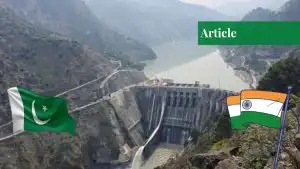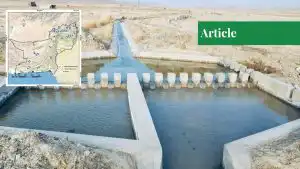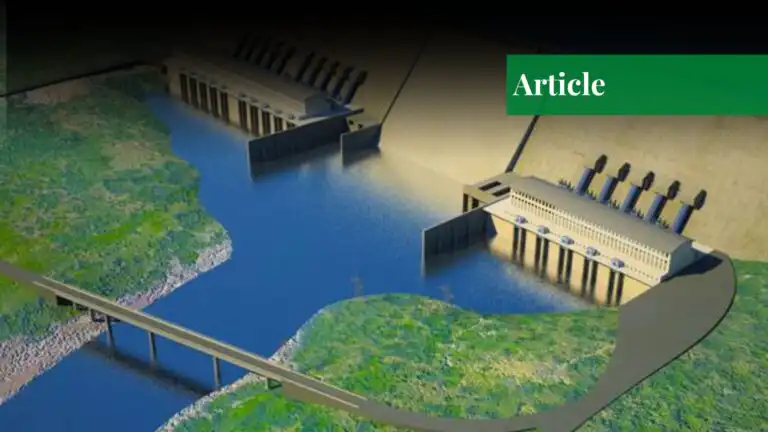
In the history of the development of Pakistan, only a few projects evoke as much discussion, controversy, and conflict as Kalabagh Dam. Once put forward as a solution to the water management and energy crisis of Pakistan, Kalabagh now stands as an unfortunate symbol of national disintegration and clashes. It is as if the irony in the name has been taken too seriously. Kalabagh, the hybrid of kala (dark/black) and bagh (garden), suggests a place full of hope clouded in the shadows of skirmish. In many ways, the Kalabagh Dam remains a stark representation of the polarization and complexities surrounding the country. What was once considered a garden of national progress is now remembered as a dark emblem of shattered dreams and political divisions.
Background and Vision
The Kalabagh Dam project, first proposed in the 1950s, was originally conceived as a multipurpose hydroelectric dam addressing the issues of water flooding and power crisis. The anticipated site of construction was the Indus River at Kalabagh in the Mianwali district of Pakistan. The government secured the approval of the World Bank to finance the project. Experts envision that the dam would:
- Generate 3,600 MW of hydropower.
- Prevent devastating floods
- Irrigate the arid lands of Sindh, Balochistan, and KPK
- Store 6 to 6.5 million acres feet of water
Studies suggest that the dam could alleviate energy and water deficits of Pakistan, providing hydropower at Rs. 3 per unit as compared to the much higher price of thermal power. Yet, despite the continuous validations and reports, the project stalls due to provincial discontent.
Water Politics and Mistrust
The opposition to the Kalabagh Dam has been the loudest in Sindh. Being a lower riparian province, it fears that the construction of the dam would risk its already low share of the Indus water, disrupting the agriculture and drinking water availability. The 1991 Water Appointment Accord, which was specifically entered into to resolve the issues surrounding the dam, has been consistently criticized by Sindh for being violated. It alleges that Punjab has disproportionately diverted water, and Kalabagh in this context is only a mechanism of control incited to threaten the province’s ecology and economy.
One of the most serious fears of Sindh involves the Indus Delta. Decreased freshwater flow will lead to sea intrusion and destroy mangrove forests. It will displace the communities dependent on farming and fishing, thereby endangering a whole ecosystem. Though in many ways, the project prioritizes the province by making it a main recipient of water needed for cultivating its barren land, the opposition to the dam has been a unanimous stance of all Sindhi nationalist parties, uniting them across political divides.
Khyber Pakhtunkhwa’s narrative is also against the construction of the dam. Their opposition is based on the fear of backwater flooding. It is believed that the reservoirs of the dam would result in the drowning of regions such as Nowshera, Mardan, Charsaddah, and some parts of Peshawar. While technical studies from WAPDA have tried to counter this claim, the hostility towards the project has only continued to grow. The residents have feared displacement and destruction of cultural sites, worsening their sense of marginalization. Awami National Party, along with other political stakeholders, has continuously positioned the Kalabagh Dam as a threat to their provincial rights.
While often overlooked, the stance of Balochistan is also not in favor of the Kalabagh Dam. As Pakistan’s most water-scarce province, Balochistan was expected to welcome the project. However, its opposition towards the dam comes from a place of marginalization. Often ignored in national planning and receiving the smallest allocation under the 1991 Accord, Balochistan has raised its concern over its exclusion and the threat of undermining its water share in the post-Kalabagh scenario. This resistance has further complicated the contentious atmosphere surrounding the project.
The perspective of Punjab, where the dam would physically be located, is only in favor of the project. The province considers it a dire need to build the dam to eliminate the water and power crises in the country. The stakeholders argue that the dam would serve national interests by expanding our water reservoirs, increasing energy generation, and providing the southern side of Punjab with water needed for irrigation. They state that the benefits of the dam are not exclusive to Punjab. Rather, the downstream provinces will receive water during the lean seasons, which will help in their agriculture. They also underscore the urgency of the project by highlighting its cost-efficiency and the loss of billions of rupees in annual energy losses.
Yet, Punjab’s enthusiasm has proven to be not enough. Rather than inculcating trust, it has only added to the threat of political dominance of one province. The provincial discord, along with the concerns of location, environmental degradation, and human resettlement, has ensured that the project stays a blueprint instead of a reality.
A Wake-up Call
Pakistan is a water-stressed country teetering on the brink of absolute scarcity. The Tarbela and Mangla dams are unable to counter the water shortage and silting concerns, leaving the country vulnerable in the face of flooding and drought. Energy shortage and low water supply for irrigation further destabilize the economy. Low per capita water, rapid urbanization, and climate change have turned the issue of the Kalabagh Dam into a survival question. It has become a metaphor for the potential being wasted by non-realization and divisions.
Kalabagh Dam exposes the inability of the state to build consensus among the units of the federation for a smooth developmental process. Studies, reports, and debates alone cannot resolve this conflict deeply enrooted in political mistrust. The need of the hour is not only to address the issue on technical grounds, but also to maneuver the political atmosphere intelligently. A framework including environmental guarantees, technical arbitration, provincial co-ownership, and political consensus must be built to secure the national interests of the country. Unless Pakistan can bridge its internal divides and foster a cohesive model, the garden of progress will continue to face wither.
If you want to submit your articles and/or research papers, please visit the Submissions page.
To stay updated with the latest jobs, CSS news, internships, scholarships, and current affairs articles, join our Community Forum!
The views and opinions expressed in this article/paper are the author’s own and do not necessarily reflect the editorial position of Paradigm Shift.

Laiba Khalid is a university student and emerging content writer with a keen focus on socio-political issues, governance, and policy. With a background in English and an interest in current affairs, she brings a critical and youth-driven perspective to contemporary debates. Laiba is particularly interested in bridging academic insight with real-world challenges. She writes with a commitment to clarity and research-based analysis.