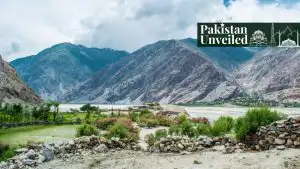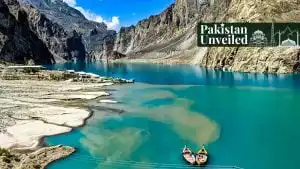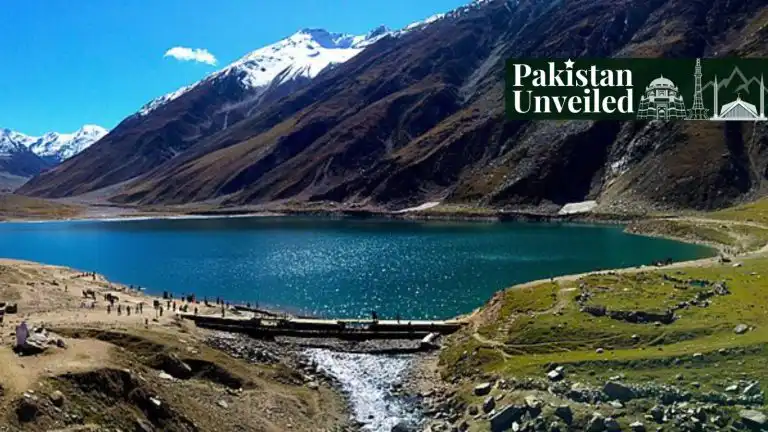
Saif ul Malook Lake, located around 9 kilometers north of Naran city in the Mansehra District of Khyber Pakhtunkhwa, is one of the most magnificent and scenic tourist destinations in Pakistan. Every year, around 200,000 local and international tourists visit this mesmerizing place. This famous alpine lake is located at an elevation of 10,578 feet (3,224 meters) above sea level, making it one of the highest lakes in Pakistan. The peaks of the Kaghan Valley, including Malika Parbat (Queen of the Mountains), that surround the lake enhance the beauty of this famous tourist destination.
Geological Formation of Saif ul Malook Lake
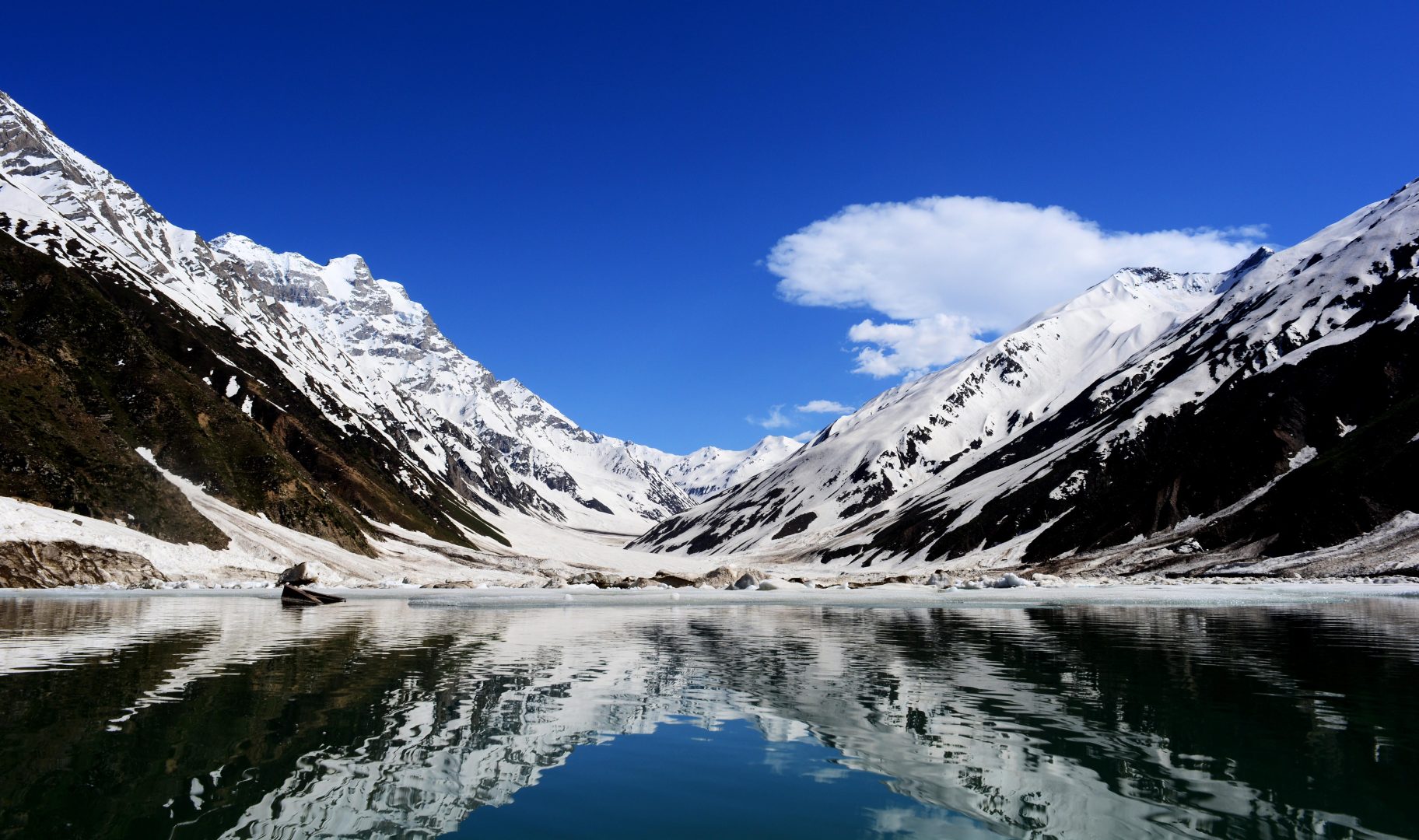
Saif ul Malook Lake derives its primary inflow from glacial melt originating in the encircling peaks. Due to the high altitude, the lake remains frozen for most of the year, with the surface fully thawed only from June to October. The reflection of surrounding snow-capped peaks in the pristine emerald-green waters of the lake creates a spectacular and serene view.
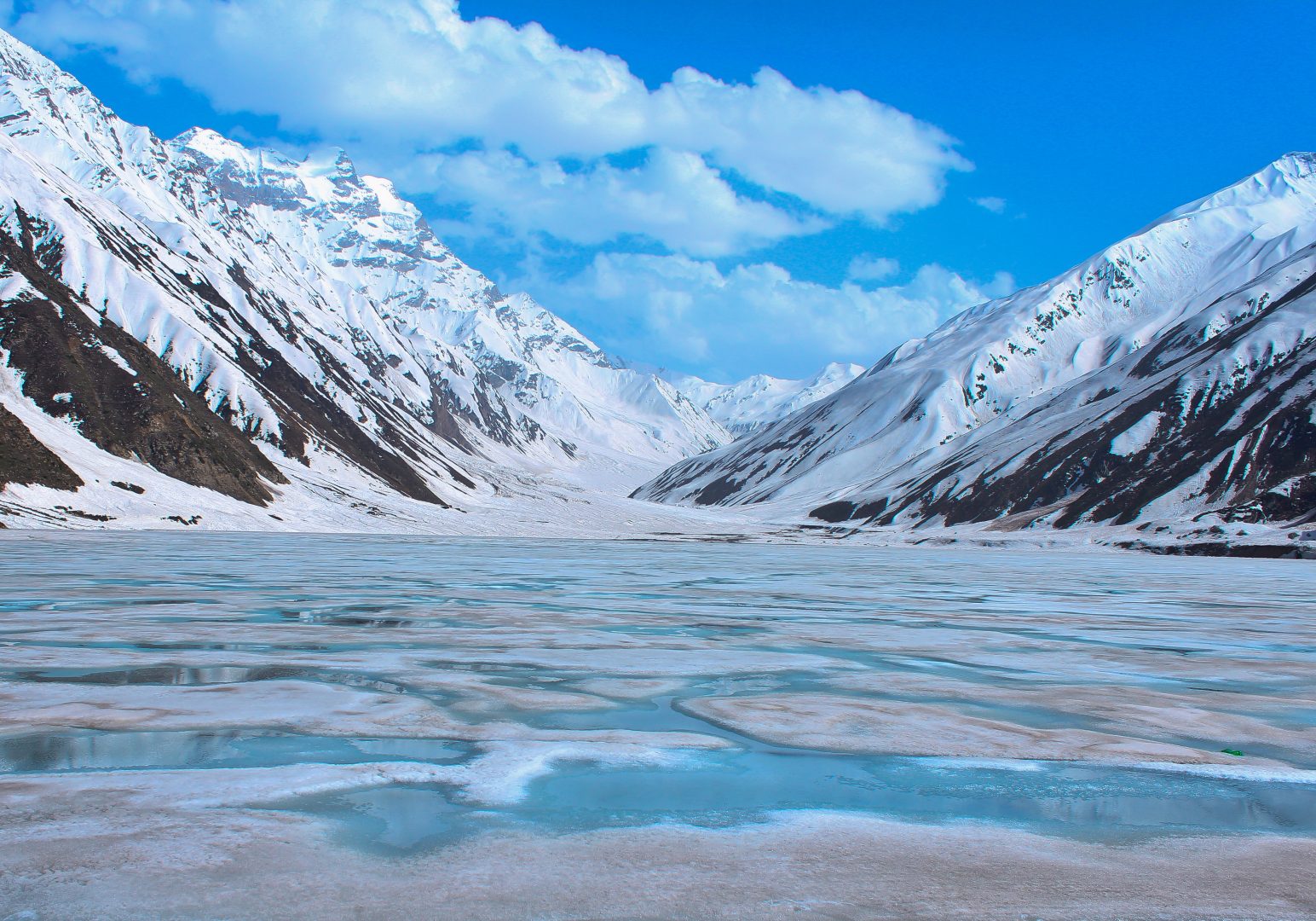
According to some accounts, the lake was created roughly 300,000 years ago during the Pleistocene period. As the glaciers advanced and retreated during this period, they carved large basins into the Earth, which were later filled with meltwater.
Myths and Folklore of Lake Saif ul Malook
The Egyptian Prince and the Fairy
Saif ul Malook also has historical and literary significance, as its name is derived from the name of an Egyptian prince called Saif, who is the main character of the famous “Qissa Saif ul Malook” by the great Sufi saint Mian Muhammad Bakhsh. This poetic tale tells the story of an Egyptian prince who fell in love with a fairy named Badi ul Jamal. Although many take this story in its literal sense, in reality, it reflects the spiritual journey of the soul in quest of divine love, making it an allegory deeply rooted in Sufism. According to many locals, Saif ul Malook Lake is the very site where all the events of this legendary and famous love story transpired.
According to folklore, Prince Saif dreamt of some beautiful fairies of Koh-e-Kaaf standing around a magnificent lake. One of these fairies, Princess Badi ul Jamal, eclipsed them all in beauty. He fell in love with her and started searching for her. During six years of continuous search for the place and the fairy, he even lost himself. This quest turned him into a madman and a beggar roaming around in the streets of Egypt, forgetting his royal roots. One day, he stumbled upon an old, holy man who stated, “I’ve been waiting for you, Prince Saif.”
The old man gave him a cap, advising him never to give up. The cap became famous as the Sulemani Topi. Upon wearing this magical cap, the prince was immediately transferred to Lake Saif ul Malook. The old man also sent a helpful jinn with Prince Saif to help him. The jinn told him that he would have to pray and fast for 40 days to be capable of seeing the fairy Badi ul Jamal. After 40 days, the prince finally saw the fairies coming to the lake. He asked the jinn to hide Badi ul Jamal’s wings while she was bathing in the lake. Upon learning that the princess had lost her wings, her friends abandoned her.
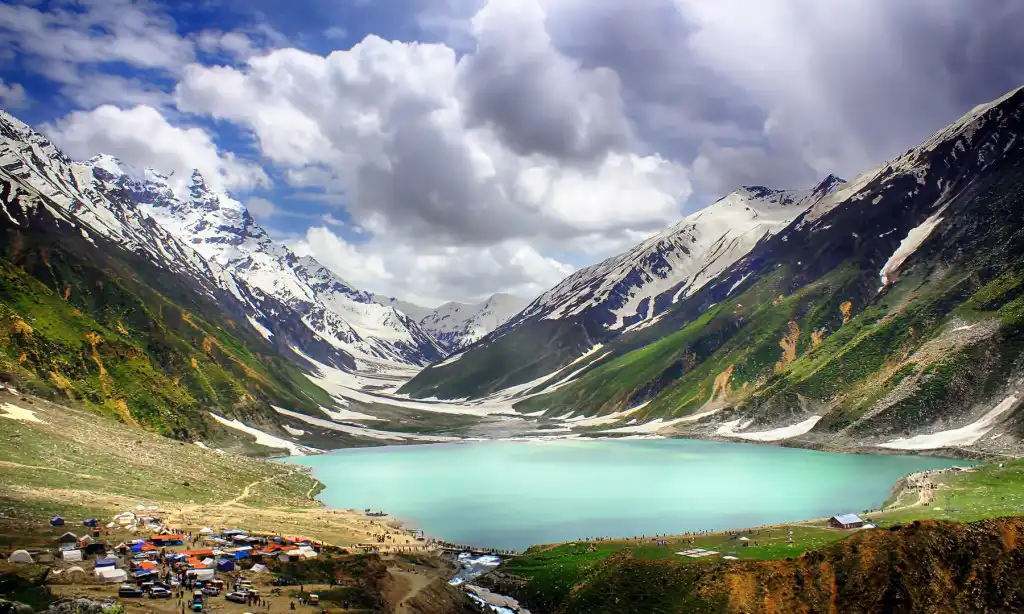
Meanwhile, Prince Saif mustered the courage to speak to her and confess his love for her. He thoroughly explained everything to Badi ul Jamal. She confessed that she also had the same dream, but also showed concerns over the wrath of Deo Safed, the master of fairies in Koh e Kaaf. However, both decided to stay together. Deo Safed got infuriated upon learning that she lost her wings. He set out on a search for Badi ul Jamal. Due to his giant steps, his footsteps were audible from a long distance. His footsteps caused a great storm on the lake. The couple got scared and started praying to God. With God’s assistance, both of them found a calm, safe, and dry tunnel under the lake. It is said that the couple is still in that tunnel and surfaces on every full moon to commemorate their love.
The Depth Myth
Another famous local myth related to the lake is that the depth of the lake cannot be measured. Locals believe that anyone who tries to measure the depth of this lake meets a tragic death. Many also believe that anyone who tries to swim in this lake will meet the same end. However, no evidence has ever been found of these claims and myths. The commonly cited approximate depth of the lake is around 34 meters (113 feet).
Travel Guide to Saif ul Malook Lake
Lake Saif ul Malook lies in the Kaghan Valley of Pakistan. However, tourists need to book jeeps from Naran to visit the lake. The drive from Islamabad to Naran is around 5 hours. One can easily reach Naran by car. However, it is mandatory to visit the majestic Saif ul Malook. The fare for jeeps from Naran changes every season and depends on fuel prices. As per reports, the fare for a jeep from Naran to Saif ul Malook Lake was around 6,000 rupees. People can also hike a 9-kilometer trek to the lake. However, it could be highly challenging due to high elevation.
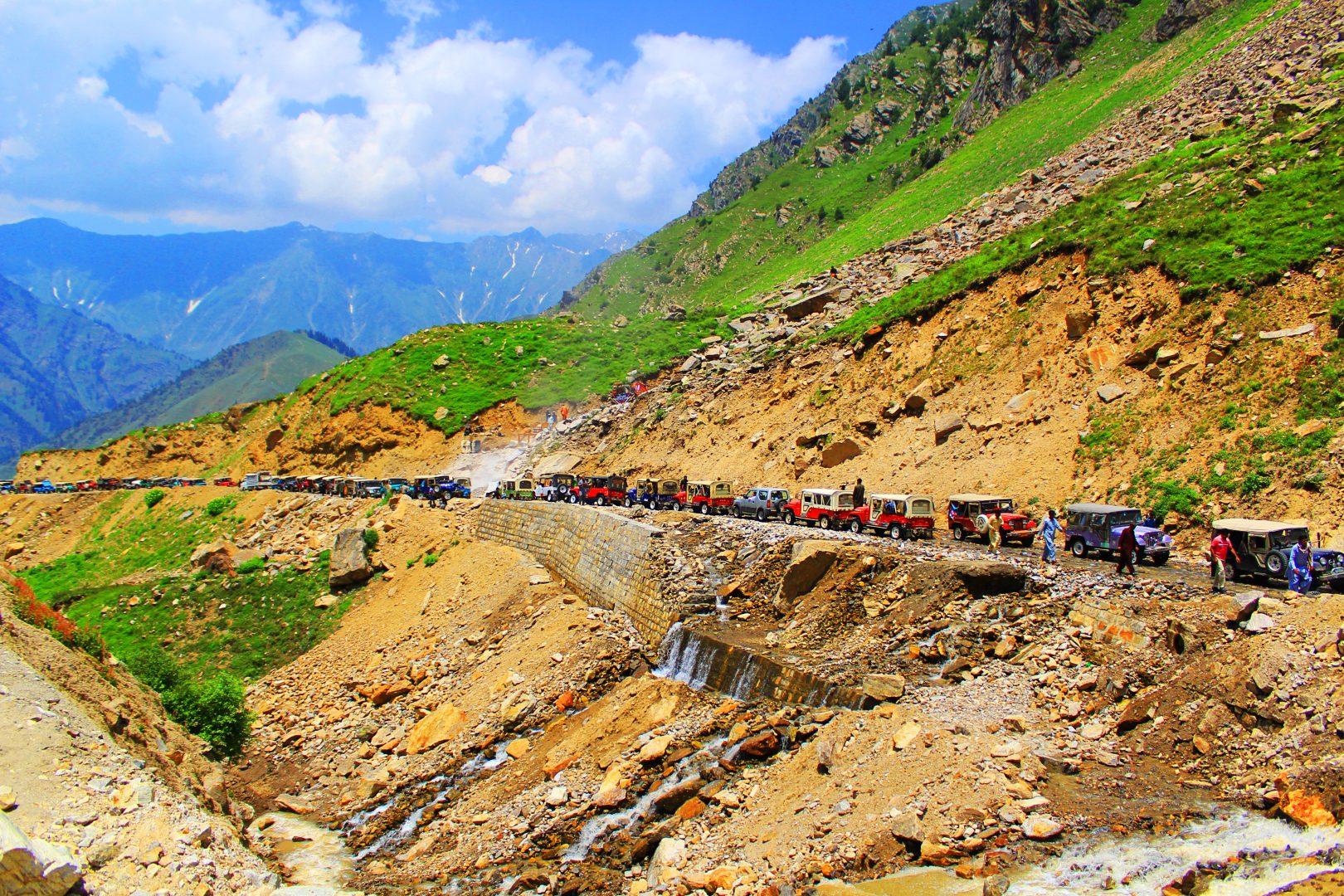
Basic facilities, including shops and hotels, are available at Saif ul Malook Lake. Tourists can also enjoy the boating facility at the lake. Locals also provide horses for riding around the famous lake. Tourists can also trek to Ansoo Lake from Saif ul Malook. However, due to the harsh terrain, it is advised to book a local tourist guide while trekking to Ansoo Lake.
People visiting Naran Kaghan this summer must enjoy fresh trout fish at Lake Saif ul Malook. National and international tourists must include Saif ul Malook Lake in their travel list this season.
If you want to submit your articles and/or research papers, please visit the Submissions page.
To stay updated with the latest jobs, CSS news, internships, scholarships, and current affairs articles, join our Community Forum!
The views and opinions expressed in this article/paper are the author’s own and do not necessarily reflect the editorial position of Paradigm Shift.

Muhammad Hamza Tanveer is a political analyst specialising in South Asian and Middle Eastern affairs. His work focuses on religious nationalism, regional security, and minority rights. He has been featured in Stratheia, Pakistan Today, Pakistan Observer, and the Asian Mirror. He is also working as a research analyst and political commentator for Paradigm Shift and contributes to the monthly magazine of Nearpeer.