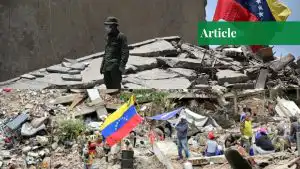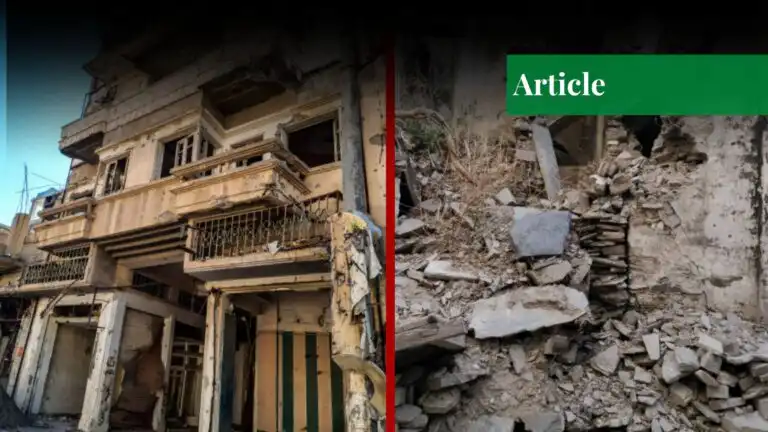
A five-storey residential block in Lyari, Karachi’s densely packed, low-income district, suddenly collapsed on 5th July 2025, burying dozens of residents under the rubble. Rescue teams worked around the clock for three days to pull bodies from the debris. By Sunday evening, officials confirmed that 27 people had died (including women, men, and children) and ten others were injured. The building on Fida Hussain Shaikha Road in Lyari’s Baghdadi neighborhood had long been dilapidated and had officially been declared unsafe. Authorities say multiple evacuation notices had been sent to the occupants between 2022 and 2024, although residents deny receiving them. The collapse once again exposed Karachi’s chronic construction failures: poor building quality, illegal extensions, and lax enforcement of regulations.
The Lyari Building Collapse and Rescue Effort
The Lyari building came down around 10:00 am on July 5, amid the Muharram Ashura processions. Rescue authorities described the block as “already dilapidated,” weakened further by recent rains. Pakistan’s Rescue 1122 spokesman said that the collapse occurred between 9:00 and 9:30 am; however, there was a delayed emergency response due to crowds and network shutdowns owing to Ashura processions. Heavy machinery finally cleared enough debris to recover victims; the final death toll was 27. The bodies were mostly handed to mourning families by Monday, July 7.
Sindh government officials held press conferences during and after the rescue. Sindh’s Provincial Minister for Local Government Saeed Ghani said the building had received “not one but many” evacuation orders over several years. It can be said that residents feared losing the only homes they could afford. On one hand is your home in which you are residing, and on the other, your life. Karachi’s Mayor Murtaza Wahab similarly warned that about 434 buildings in the old city were already classified as dangerous.
In the aftermath, the Sindh government took action. Sharjeel Memon, Sindh’s senior minister for mines and local government, announced that the Sindh Building Control Authority’s (SBCA) director-general was suspended for negligence. Sindh’s Chief Minister Murad Ali Shah said committees were probing the building collapse in Lyari and ordered inspections of 51 other “extremely dangerous” buildings citywide. Family members of victims were promised compensation of around Rs1 million per family. Five of the “more than 50” other dangerous Lyari buildings were evacuated after the Lyari tragedy, said the district official Javed Nabi Khoso.
A Pattern of Collapse: Recent Tragedies in Karachi
The Lyari disaster was not an isolated incident. Karachi has suffered multiple deadly collapses in recent years, often in its poorest neighborhoods. In late April 2025, a three-storey block in Bhains Colony (located near New Karachi) suddenly gave way, killing a 10-year-old girl and injuring others. In October 2023 a partly built building in Shah Faisal Colony collapsed, killing five workers and injuring four. Notable such disasters happened in the middle of 2020: a five-storey Lyari apartment block collapsed in June 2020, killing 22, and days later, another building in Lyari fell, adding 25 more deaths. A major Gulbahar-area collapse in March 2020 killed 27. Even earlier, a 2011 collapse on Musa Lane in Lyari cost 33 lives.
In recent months, smaller-scale incidents hinted at trouble. Thankfully, without fatalities, a portion of a building in Kharadar fell days before the Lyari tragedy. In April, a narrow five-storey structure in Lyari’s Lea Market area began cracking in the rains; thankfully, its occupants fled just before it toppled. These near misses underscore how Karachi’s infrastructure is on the edge. As noted above, Lyari alone has seen at least four major buildings collapse in five years, killing over 50 people.
Causes: Construction Quality and Regulatory Lapses
Why does Karachi see so many collapses? Experts and officials point to a chronic breakdown in construction and enforcement. Roof and wall collapses are common across Pakistan due to poor safety standards and low-quality materials. Karachi, in particular, is notorious for illegal extensions, weak regulatory oversight, and aging buildings. Many fatal collapses occur due to hastily added extra floors or extensions that were never approved or properly engineered. In the Lyari case, the block was originally built in 1974 without a formal occupation certificate. Moreover, despite the ban on construction of more than three storeys, the building had six floors.
Even when authorities identify unsafe buildings, enforcing evacuations is extremely difficult. SBCA spokespersons note that they “cannot forcefully evacuate people without police and welfare coordination.” Residents often ignore notices due to a lack of alternatives. As one local councilor bluntly asks, “If you’re told to vacate but have no money, no plan, and no help, what do you do? Wait to die, or risk staying?” Many slum and “katchi abadi” residents simply can’t afford better housing and view flimsy safety orders as unenforceable without some sort of viable relocation. Sindh minister Ghani acknowledges this dilemma, calling mass eviction a “humanitarian issue,” even as he insists that saving lives may require “taking away the roofs over people’s heads.”
Institutional failures further complicate the problem. Dawn reports that Karachi’s building authority has declared 588 buildings as “dangerous” citywide, 107 of which are in Lyari. Hundreds of notices have been issued and newspaper ads run, yet few structures have been vacated. In the Lyari collapse, the SBCA says it issued four formal evacuation orders (the first in June 2023 and a final warning in June 2025). But local rescue officials and victims insist people never received these notices or help. This highlights deep governance gaps: politicians demand action, but actual relocation of families or prosecution of negligent builders rarely happens, and that too only after a tragedy takes place.
Karachi’s construction boom has often been unplanned and corrupt. Opposition politicians blame civic officials for ineffective rule-making and “mafia” networks in development permits. Independent analysts note that under successive governments, Karachi’s master plans and building codes were poorly implemented. In this chaotic environment, builders often cut corners, use substandard cement or steel and add illegal floors, especially in older inner-city areas. During seasonal rains and city growth, these shortcuts eventually and inevitably prove fatal.
The Human Toll: Voices from Lyari
Survivors described hearing violent cracking and dust clouds as the structure fell. For the people of Lyari, the building collapse was a community catastrophe. Fishing contractor Imdad Hussain (28) recalled, “I grew up in that building. I knew everyone who lived there,” he told Reuters. He lost seven members of his extended family and many neighbors. “We’ve lost our home, our people. I don’t know how we’ll start again,” he said between tears. Another survivor, Lakshmi, described the day her sister narrowly escaped: “We got out with our lives, but everything else is gone, with no certainty about what is to come.”
Families now shelter in mosques or with relatives while they search for work, and they wonder who will compensate their losses. Social media and local news were filled with stories of jewelry, savings, and even wedding costumes buried forever under the ruin. The collapse also displaced dozens of other families. Reuters reporters noted that about 12 families (roughly 100 people) lived in the doomed block, and nearly 50 additional households were relocated when three adjacent buildings were deemed unsafe.
Now, in the scorched summer heat, those families sleep in schools or small tents, worrying about rent and rebuilding. Activist groups have noted that nearly 20 victims were Hindus, many from poor minority communities in Lyari. Minority welfare organizations have since urged the government to ensure these families, who are already vulnerable, receive aid.
Urban Planning and Governance: Expert Insights
Karachi’s planners and civic activists point to systemic issues that underlie the tragedy. Unplanned urbanization in the city has led to sprawling informal settlements, which lack basic services. Decades of migration without affordable housing have produced slum conditions. Over 60% of Karachi’s population now lives in katchi abadis or informal settlements. The city’s housing demand outweighs supply by hundreds of thousands of units per year, leaving many low-income families stuck in aging and unsafe buildings.
Urban policy experts argue that Karachi urgently needs better enforcement and alternatives. Jawad Shoaib, who is a Lyari councillor, urges that notices must be backed by relocation plans: “People are being asked to vacate without being offered a single viable alternative,” he notes. Sindh’s top officials have acknowledged this catch. SBCA representatives say they lack the resources to shelter displaced families, while social welfare departments note there is no public low-income housing program that considers this crisis. In practice, evictions have largely displaced people deeper into informal settlements rather than onto safe property.
Infrastructure experts also highlight the city’s neglect of maintenance. Karachi’s underground drainage and utility networks are over a century old in some areas, whereby plumbing, cables, and gas lines often run through very old structures. Moreover, city-wide enforcement is undermined by poor data: the SBCA’s dangerous-building list of 588 buildings may not be exhaustive, and many new constructions go unreported. The 2025 Economist survey ranked Karachi as the fourth least liveable city in the world, and this underscores the breadth of these problems. Its low scores on infrastructure, stability, and environment reflect the everyday risk Karachiites face in housing, transport, and services.
At a broader level, civil society groups say that improving Karachi’s resilience is key to Sustainable Development Goal 11: making cities inclusive, safe, resilient, and sustainable. Karachi lags far behind on these targets. SDG 11.1 calls for “access for all to adequate, safe, and affordable housing”; yet Karachi’s shelter crisis continues unchecked. Slum dwellers from Orangi to Lyari live in structures notoriously vulnerable to collapse, flooding, or fire. Orangi Town alone is considered to be Asia’s largest slum, with about 2.4 million residents living in unreliable housing infrastructure. Moreover, an estimated 600 slum settlements dot Karachi. In such conditions, truly sustainable and disaster-resilient communities are not likely to be established soon.
Even as authorities speak of sustainable cities, there is scant progress on the ground. Karachi has no effective rent control or public housing agency for the urban poor. Local NGOs and international agencies (like UN-Habitat) have long advocated community-driven upgrading and risk reduction in katchi abadis, but funding and political will are lacking. Meanwhile, Karachi’s population, officially over 20 million, keeps growing, and high-end developments, e.g., towers in Clifton and DHA, proceed with tight security, while low-income neighborhoods remain in regulatory blind spots. This dual-city phenomenon highlights the challenge SDG 11 was meant to address: without inclusive planning, Karachi’s future remains precarious.
Karachi and SDG 11: Safe, Sustainable Cities?
Karachi’s plight casts doubt on its progress towards SDG 11. The UN’s targets include access to safe and affordable housing and strengthening inclusive urban planning. On paper, provincial and city government plans acknowledge the need for redevelopment: Karachi’s Strategic Development Plan 2020 envisioned zoning reforms and infrastructure upgrades. In practice, however, the city has fallen behind. The Economist’s 2025 Global Livability Index ranked Karachi 170th of 173 cities, citing chronic problems in infrastructure and safety.
Statistics bear out the gap. According to a Karachi Urban Resource Centre study, formal housing supply has never met demand. As of 2020, Karachi needed roughly 44,000 new housing units per month just to keep up; instead, only a fraction were being built, pushing the poor into increasingly risky neighborhoods. The same report notes that the majority of katchi abadi homes are makeshift, often built of flimsy materials, which makes them vulnerable in storms or disasters. Monsoon rains and heatwaves are becoming more severe, yet Karachi’s urban planning remains reactive.
Data on “proportion of population in slums” and “safe housing” are weak at the city level. On major indicators, Pakistan lags behind global averages: UN reports show roughly one quarter of urban Pakistanis live in slum-like conditions, with Karachi’s share likely higher. The Lyari collapse starkly illustrates what sustainable development should prevent: a city where basic housing can kill its inhabitants. Until Karachi accelerates the upgrading of slums, the strict enforcement of building codes, and the provision of alternative housing, SDG 11’s promise will remain unfulfilled.
Policy Recommendations and the Path Forward
Experts and activists stress that the Lyari collapse should be a turning point. In the short term, the government must not only clear away rubble but also protect survivors. This means immediately relocating displaced families to safe housing or temporary shelters with basic utilities, rather than just paying compensation. Monsoon season looms; roughly 480 other dangerous buildings in Karachi’s District South have already been flagged, and heavy rains could trigger further failures. Emergency funding for structural repairs and a moratorium on rent increases in affected neighborhoods would help prevent further tragedies. Long-term, Karachi needs a comprehensive urban safety strategy.
Building Inspections and Enforcement
SBCA and local governments should be empowered to rigorously enforce safety. Buildings on the declared “dangerous” list must be evacuated and demolished with urgent force if owners cannot safely reconstruct and upgrade them. Reports indicate dozens of officials may be negligent; anti-corruption cases (FIRs) have been filed against developers and officers in some recent collapses. Laws should be strengthened so that negligent builders face criminal charges, which could deter such illegal and precarious construction.
Affordable Housing Programs
Ultimately, poor residents must have somewhere safe to go. The government should invest in low-cost housing schemes or housing vouchers targeted at Lyari and other high-risk communities. Land reclamation projects, giving slum-dwellers legal ownership or public plots for proper housing, would help. Some success in other cities suggests that upgrading existing settlements (improving water, sewer, and structural integrity) is more feasible than overall relocation. NGOs could be engaged in community-driven “retrofitting” projects for shanty neighborhoods.
Urban Planning and Zoning Overhaul
Karachi needs a modern master plan. Already, the 2009 and 2020 plans envisioned strict zoning and development controls, but implementation was weak. A reformed plan should incorporate future population growth, with designated affordable housing areas and green belts to manage density. Any high-rise or new development must comply with earthquake-safe building codes and sustainability standards, with independent inspections at each stage.
Public Awareness and Early Warning
Residents often dismissed evacuation orders as rumors. A public campaign should educate Karachiites on building safety. Installing simple warning systems like official loudspeaker announcements or even phone alerts is going to be fruitful with regard to saving lives.
Linking to SDGs and Climate Resilience
Any Karachi redevelopment must be aligned with SDG 11. This means not only structural safety but also addressing waterlogging, sanitation, and public transport in poor neighborhoods. Improving public transit (SDG 11.2) would relieve overcrowding. Green infrastructure (rainwater storage, parks) would mitigate monsoon flood risk. Finance (SDG 11.C) could be leveraged: as a climate-vulnerable city, Karachi could seek climate adaptation funds or green bonds to invest in housing upgrades.
Policymakers should heed lessons from the Lyari crisis: prevention is far cheaper than recovery. Urgent multi-sectoral action that combines engineering, social policy, and governance reform is needed to make Karachi’s housing safe.
Conclusion
The Lyari building collapse is a human tragedy that highlights Karachi’s urban woes. 27 lives were lost because a city of twenty million has not provided safe and secure shelter for all its residents. This disaster underscores that Karachi’s growth must be managed, its infrastructure shored up, its poorest neighborhoods upgraded, and its building regulations truly enforced. Failing to do so means that more such collapses and the avoidable deaths they cause will haunt the city.
As Pakistan pursues the 2030 Agenda, Karachi stands at a crossroads. Will authorities treat this as a wake-up call to build a resilient city or will post-crisis inquiries fade with the headlines? Implementing SDG 11 means transforming Karachi’s dangerous structures into dependable homes and communities. For the surviving families in Lyari, many now sleeping in relief camps, the hope is that their loved ones’ deaths will finally force lasting change. Without concrete action, however, Karachi’s future remains as shaky as the cracked walls of its dilapidated buildings.
If you want to submit your articles and/or research papers, please visit the Submissions page.
To stay updated with the latest jobs, CSS news, internships, scholarships, and current affairs articles, join our Community Forum!
The views and opinions expressed in this article/paper are the author’s own and do not necessarily reflect the editorial position of Paradigm Shift.
Fizzah Khan is a 6th-semester IR student currently pursuing her bachelor's at the National Defence University.