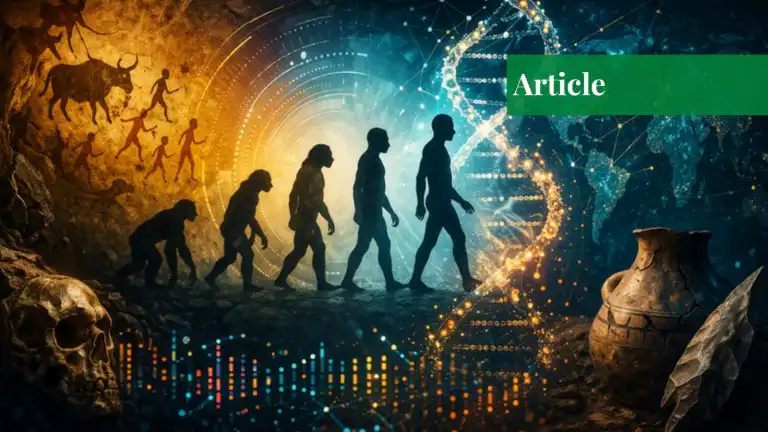
Five landmark studies are rewriting what scientists thought they knew about our species.
People have never been the same. But recent studies indicate that the pace of change increased exponentially with the adoption of the plow by our forefathers. A flood of genetic research published over the past few months, which relies on the thousands of ancient DNA samples from burial sites throughout Europe and Asia, is redefining the way scientists think of the processes that made us what we are today.
Farming and the Acceleration of Evolution
On 15 April 2026, from 15,836 ancient genomes of West Eurasia, covering an 18,000-year range, the largest ancient DNA study ever published in Nature was conducted. The research team, headed by Ali Akbari and David Reich of Harvard University, discovered 479 genetic variants with significant evidence of natural selection. The number is an order of magnitude greater than anything that had been previously recorded by studies.
The trends that are processed are an unexpectedly descriptive tale. Genes associated with an increased body fat became uncommon after the advent of farming some 10,000 years ago. With the increased stability and predictability of food supplies, the body was no longer required to store energy in such an aggressive manner. Tuberculosis resistance variants began to increase in prevalence about 6,000 years ago. The red hair genes started to become widespread approximately 4,000 years ago. Characteristics related to male pattern baldness have been on the decline in the last 7,000 years.
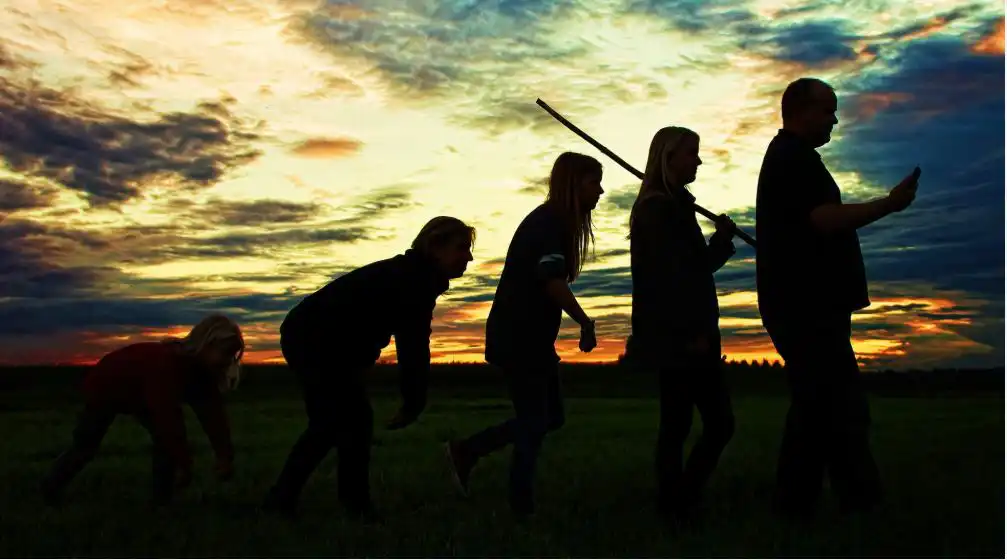
The Genomic Shift: This chronology shows how the advent of farming and more established ways of life led to a sudden evolution of natural selection in such aspects as storing of fat in the body, resistance to diseases, and physical attractiveness.
There has been a huge selection pressure on the genome over the past 10,000 years, Akbari explained to Science. All this has shifted the manner in which we live, and that is being replicated in our genome, and in which it is attempting to keep pace.
Disease, Immunity, and the Bronze Age Shift
The 5,000-year-old Bronze Age was a rush of its own. With the increased population and people living in more densely populated settlements and in contact with domesticated animals, a set of mutations related to immunity and autoimmune diseases became widespread. Population geneticist Lluis Quintana-Murci of the Pasteur Institute referred to this as a phase of enormous change in disease exposure, necessitating a rapid change in the immune genes. Not all discoveries are simple to answer. Groups of characteristics associated with the pace of walking, income, and years of education also changed over the same time. According to Harvard co-author Annabel Perry, there was no college during the Neolithic; there must have been something other than that that was causing those changes. That riddle is left open.
When the Immune System Turns on Itself
The second article, in Nature, by scientists at the Wellcome Sanger Institute, Cambridge University Hospitals, and the University of Cambridge, links the evolutionary narrative with a very contemporary issue. The range of autoimmune diseases affects between five and ten percent of the world population, and the medical professionals have always been puzzled as to why the immune system goes awry against the body.
According to the new study, the mutations that occur throughout a lifetime of an individual can turn off the built-in brakes of the immune cells, leading to diseases like Hashimoto’s and Graves. The team discovered that B cells of patients with autoimmune thyroid disease had accumulated loss-of-function mutations independently in two immune checkpoint genes in multiple cell clones using NanoSeq, an ultra-accurate sequencing technique. There were clones with up to six silent driver mutations accumulated over the years before the emergence of symptoms.
This was a trend that was previously observed in cancer only. The finding is important as the same genes have been intentionally silenced during cancer immunotherapy, and thyroid autoimmunity is a known adverse effect. Researchers have now discovered the same changes occurring spontaneously in autoimmune patients.
Professor Chris Goodnow of the Garvan Institute said it was a massive advance in the pathogenesis of autoimmune disease. It alters everything and answers so much that was in the air. The results are an indication of the future of highly targeted therapies that can kill off rogue immune cells but otherwise leave the rest of the immune system intact. Existing medications are crude. The new study indicates that there is a possibility of sharper ones.
Family Beyond Blood
Although genetics can be used to describe how bodies changed, it cannot always be used to describe how societies operated. The independent inclusion of non-biological members in ancient families is argued in a special issue of the Cambridge Archaeological Journal, edited by Sabina Cveček of the Field Museum, Maanasa Raghavan of the University of Chicago, and Penny Bickle of the University of York.
An obvious example is the 8,000-year-old Çatalhöyuk, located in modern Türkiye. Archaeologists have long thought that people interred in the same house floors were related genetically. That was false when ancient DNA was extracted. Individuals who were buried together were not necessarily related. The family was not defined by biological ties but rather by social ties.
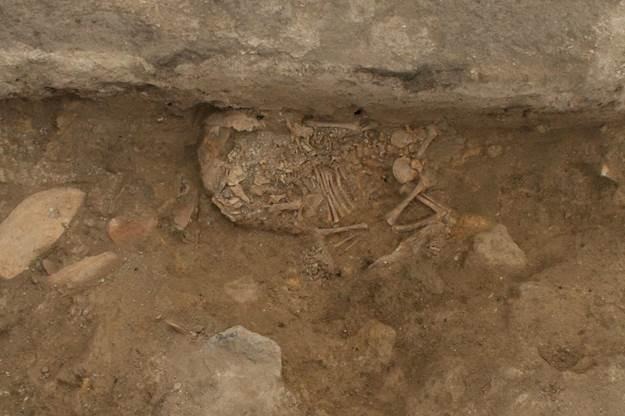
Beyond Blood: Archaeological maps of Çatalhöyuk that communal living and burial were determined by social relationships, but not by genetic relatedness, undermining the prevailing ideas of the prehistoric family unit.
“Even in prehistory, kinship was more than just blood relations,” Cveček said. The definition of family in many communities in the world extends beyond this biological context, so however hard we hound with the study of ancient DNA, we will never get the entire picture unless we consider diversity and cultural anthropological views.
The warning matters. The urge to diminish ancient societies to pedigree charts increases with the increasing strength of genetic technology. Now, scientists can extract DNA from small bones within the inner ear and rebuild biological relations between people who died thousands of years ago. Technical power may mask the social reality it is designed to expose. The ancient families were formed by adoption, fosterage, and co-residence, just as modern families are formed.
Collapse, Migration, and Replacement
Two articles in Nature Ecology and Evolution and Current Biology complicate the situation even more. A group of scientists at the University of Copenhagen (Lundbeck Foundation GeoGenetics Centre) in northern France compared the DNA of 132 people who were buried in the Paris area. Their results indicate that the earliest population in the area failed some 5,000 years ago. The cemetery was a hundred years old. On their return, more than 80 percent of the ancestry of people was Neolithic Iberia, implying that there was a significant migration to the north to replace the previous population.
The remains of the ancient DNA were found to belong to the bacteria that cause plague, Yersinia pestis, and Borrelia recurrentis. They even went as far as to blame a specific pathogen for the collapse, but the tendency of the death of younger individuals gave reason to believe that something catastrophic, whether it is disease, famine, or war, is happening.
Frederik Seersholm of the University of Copenhagen said there is a definite line of genetic separation between the two burial phases. The populations that occupied the tomb before and after the collapse seem to be two entirely different ones.
Unknown Lineages and Hidden Histories
A study spearheaded by Qiaoming Fu of the Institute of Vertebrate Paleontology and Paleoanthropology has found support for a new human line in 11,000-year-old human remains in Donghulin, near Beijing. The oldest person possessed a genetic profile that was not similar to any previous population under investigation. Another person buried there about 2,000 years later was much younger and a member of a completely separate line. Objects carved out of marine shells and ostrich eggshells that accompany them imply long trade routes between these ancient peoples over very large distances.
Can Stress Rewrite Evolution
The last paper in this group does not consider ancient men but fruit flies, and raises a question that has one urgent contemporary significance. A study on Drosophila melanogaster in Spain and Finland by the researchers revealed that heat shock induced gene expression alterations, which lasted three generations following the initial stressful experience. The researchers, in the paper in Molecular Biology and Evolution, discovered that flies that developed in the more heat-and-dry climate of Spain adapted better than those that developed in Finland. A faster development was observed in the descendants of heat-stressed Spanish flies compared with controls, and this effect was observed as early as the great-great-grand-offspring generation.
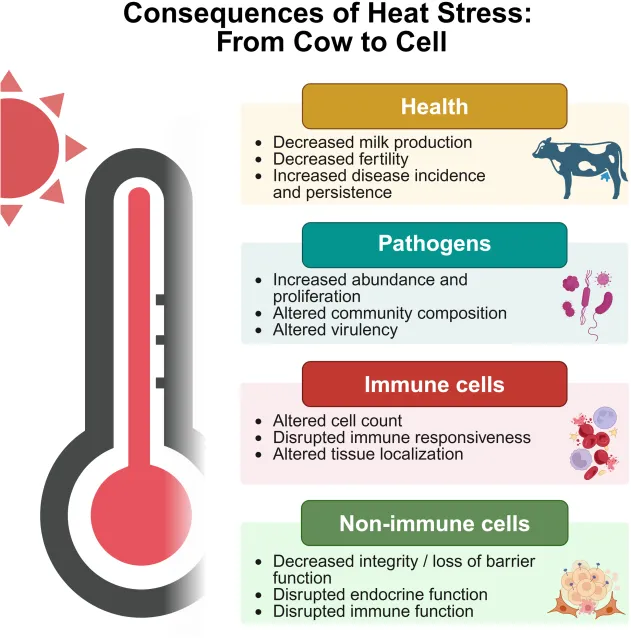
Generational Adaptation: Using fruit flies as a model, this graphic shows how extreme heat stress can “rewire” gene expression for multiple generations, highlighting the potential long-term genetic impact of climate change.
The transgenerational impacts on development time and gene expression that we have found indicate that stress may not just be picking out the fittest flies, but may actually promote evolution, said lead author Ewan Harney. There was vulnerability, not resilience, shown by the cold-climate population.
The extrapolation to other species, including human beings, is disturbing. There is no direct reproduction of climate stress killing off the ill-adapted. It may actively rewire gene regulation across generations, but only in populations that already carry the right molecular machinery to respond. The non-Hispanic populations might have a more difficult time.
An Unfinished Human Story
Collectively, these five studies paint a consistent image. Human beings are not a complete product. Farming reshuffled our genes. The immune system was remodelled by disease. Migration wiped out complete populations and substituted them with new ones. Family was defined by social bonds and not by blood in much of human history. And the environmental pressure can be altering the laws of inheritance at a rate that no one anticipated.
The ancient DNA science was initiated as a means of tracking migrations and ancestry. It has grown bigger, a window on the reasons we get sick, how we build families, and what we may encounter as we go through the climate change around us. The genome is not an absolute writing. It is an account of all the crises our forebears got through, and it is written.
If you want to submit your articles and/or research papers, please visit the Submissions page.
To stay updated with the latest jobs, CSS news, internships, scholarships, and current affairs articles, join our Community Forum!
The views and opinions expressed in this article/paper are the author’s own and do not necessarily reflect the editorial position of Paradigm Shift.

Syed Salman Mehdi is a seasoned freelance writer and investigative journalist with a strong foundation in IT and software technology. Renowned for his in-depth explorations of governance, regional conflicts, and socio-political transformations, he focuses on South Asia and the Middle East. Salman’s rigorous research and unflinching analysis have earned him bylines in esteemed international platforms such as Global Voices, CounterPunch, Dissident Voice, Tolerance Canada, and Paradigm Shift. Blending technical expertise with a relentless pursuit of truth, he brings a sharp, critical perspective to today’s most pressing geopolitical narratives.