Defining Climate Change, Weather & Global Warming
While discussing climate change, it is important to distinguish between climate, weather, and global warming. Each term represents a specific aspect of Earth’s natural processes; however, they are interlinked in shaping our future.
Climate change is defined as “the long-term shifts in temperatures and weather patterns” by the United Nations (UN). The World Meteorological Organization (WMO) defines weather as “the state of the atmosphere at a particular time, as defined by the various meteorological elements, including temperature, precipitation, atmospheric pressure, wind, and humidity.”
Global warming, on the other hand, specifically describes the rise in Earth’s average surface temperature due to increased greenhouse gas emissions. Several organizations say that global warming is a subset of climate change, focused on the temperature aspect.
Climate change is not a local phenomenon unique to Pakistan, it is a global issue. All the nations in the world are not contributing towards climate change through increasing carbon emissions, while some countries, such as the USA, China, India, and Russia, are contributing massively towards global CO2 emissions.
There is a need to focus on new concepts such as climate justice, a type of environmental justice that focuses on the unequal impacts of climate change on marginalized or vulnerable populations. Climate justice seeks to achieve an equitable distribution of both the burdens of climate change and the efforts to mitigate climate change for nations such as Pakistan which are emitting less than 1% of greenhouse gas emissions.
The Rising Temperatures
In his important book Climate Change: A Very Short Introduction, Mike Maslin says that since the Industrial Revolution in the 18th century, CO2 levels have increased by over 40% due to burning fossil fuels. Since 1880, the global average surface temperature has risen by 0.85°C. According to Maslin’s research, 13 of the warmest years on record occurred after 2000, between 1880 and 2014. The past eight years have been the warmest in the global record, according to NASA’s Goddard Institute for Space Studies (GISS) analysis, with 2014, 2015, and 2020 tied for the warmest years on Earth, according to available data.
According to Berkeley Earth’s measurements, 2023’s worldwide yearly temperature average surpassed pre-industrial levels (measured from 1850-1900) by 1.54°C. This marks the first time global temperatures have risen beyond the critical 1.5°C warming benchmark. Global warming and climate change ensure that there is high evaporation and high moisture in the atmosphere, which increases the chances of higher rainfall. This in turn leads to more chances of flooding.
Climate-induced Disasters & Changing Weather Patterns in Pakistan
The frequency of climate-induced disasters is increasing in Pakistan and we are bearing the brunt of global warming. Pakistan is ranked as the 5th most vulnerable country to climate change in the world, according to the Global Climate Risk Index. The super floods of 2010 and 2022 as well as floods in Sindh in 2011, drought in Sindh and Balochistan in 2012, the heatwaves in Karachi in 2015, 2017, 2019, and 2024, and urban flooding due to heavy rains in Karachi in 2020 along with other disasters have affected over 20 million people, The financial losses are estimated to exceed $50 billion.
Due to this temperature increase, for the first time since 1961, Pakistan received above-average rainfall in the summer months of 2022, with 181% above-average rainfall in July, and 243% above-average rainfall in August. The rainfall was above-average in Khyber Pakhtunkhwa (KPK) as well. With 58% rainfall in the province, it ranked as the 4th wettest August for KPK since 1961, according to the State of Pakistan Climate in 2022 report by the Pakistan Meteorological Department (PMD).
Apart from the rainfall, Pakistan also has over 7,000 glaciers, more than any region in the world outside the polar regions. The majority of these glaciers are in northern KPK and Gilgit-Baltistan. Due to global warming, these glaciers are melting at a rapid pace and incidents of glacial lake outburst floods (GLOFs) are rising. 697 GLOFs occurred between 1833 and 2022 and the maximum GLOF frequency has been witnessed in the period of July-September. Glacial lake area has increased by 17.4% between 1990 and 2015 due to glacier melting, according to a research paper published on GLOFs in 2023 by Finu Shrestha et al.
Catastrophic Floods of 2022
All of the above-mentioned things combined in the summer of 2022 in Pakistan and resulted in catastrophic floods, which have caused humongous financial, infrastructural, and livelihood losses throughout the whole country. According to the Post-disaster Needs Assessment Pakistan Floods 2022 by the Ministry of Planning Development & Special Initiatives, Government of Pakistan, the total damage was estimated at $14.9 billion and total losses stood at $15.2 billion. Nearly 33 million people were affected and approximately 8 million people were displaced from their houses. The sector that suffered the most damage was housing at PKR 1.2 trillion (US$5.6 billion) and the damages estimated in KPK province alone were $935 million.
Upper & Lower Chitral districts suffered the most damage in the floods and more than 1,000 households had been affected. The total number of people who have lost their houses, income, and livelihoods is in the thousands. Initial estimates suggested that 46 houses had been completely damaged and 83 houses partially damaged in both districts. Apart from this, a total of 92 water irrigation channels were partially/fully damaged and 47 drinking water supply schemes also suffered damage.
Over 10,000 people including their children and elderly family members were forced to live under the open skies with exposure to extreme weather such as heat, cold, and rain. Apart from this, several health and hygiene challenges have come up, such as outbreaks of waterborne diseases such as cholera and dysentery due to unclean water and sanitation conditions.
Due to infrastructure damage, it became difficult for persons with disabilities (PWDs) and children to access services, food, and schools which resulted in further worsening their socio-economic condition. For the majority of the people affected by floods, it meant a loss of their primary source of income such as crops and other assets. This ensured that the families’ dependency on aid for basic needs and survival increased making them more vulnerable to external shocks and limiting their resilience and ability to become self-sufficient.
Responding to Crises
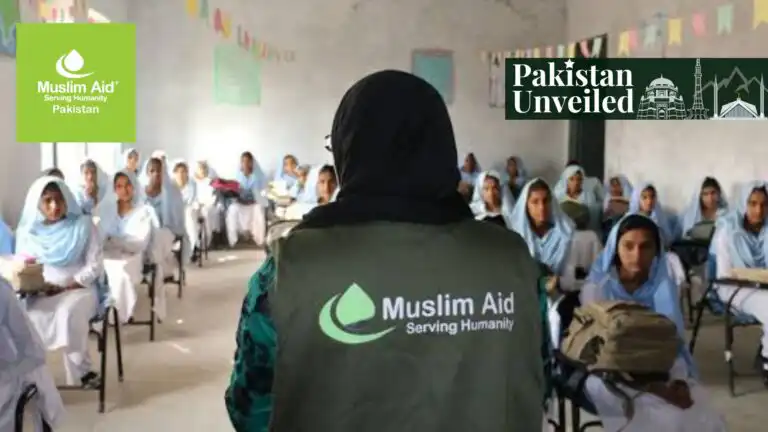
Muslim Aid has been working since 1985 and has been actively engaged in humanitarian relief and emergency projects in Pakistan since 2005. It has a presence in 19 countries all over the world. After working tirelessly in the earthquake of 2005, the faith-based organization has consistently risen to the challenge and has expanded its presence to three provinces and one region (AJ&K).
As ever, after the floods of 2022, Muslim Aid Pakistan (MAP) decided that it had to act and the organization started to mobilize its resources and did a rapid need assessment (RNA) to gauge the extent of the damage that had taken place in Upper and Lower Chitral, KPK.

Keeping in view MAP’s core values of excellence (ihsan), compassion (rahma), service (khidma), and dignity (karamah), MAP decided to launch a project titled “Chitral Recovery: “Empowering Communities through Recovery Initiatives” in Upper & Lower Chitral in which it has planned to construct 50 one-room shelters (ORS) with latrines, rehabilitating 8 drinking water supply schemes (DWSS), 8 WASH facilities, and 8 irrigation water channels. It also focuses on capacity building of the locals on disaster risk reduction (DRR), climate-smart agriculture, and micro-enterprise development training for 200 women.
These ORSs provide secure and dignified housing to the affected population and they are designed to withstand disasters and other environmental hazards. The shelter design incorporates indigenous elements along with disaster risk reduction (DRR) measures to enhance flood protection and minimize damage. The design focuses on disaster resilience and durability. A ramp has been included to accommodate people with disabilities (PWDs).
MAP also worked on rehabilitating 8 drinking water supply schemes (DWSS) in both Upper & Lower Chitral. These schemes serve as reliable sources of clean drinking water for the communities, effectively mitigating the risks of waterborne diseases and resulting in improved health outcomes. These schemes are located within the disaster/flood-prone areas.
Muslim Aid Pakistan has also completed rehabilitating 8 WASH (water, sanitation, and hygiene facilities) related facilities, 4 in government schools and 4 in healthcare facilities. This is vital for reducing the risk of disease transmission and improving the overall health of the population, especially children. MAP field teams have coordinated with the district education department of both districts to identify schools that have missing facilities (toilets, hand washing stations ,and drinking water supplies) after the verification of schools.
Apart from the above shelter and water-related activities, MAP has focused on rehabilitating 8 irrigation water channels since the majority of the residents rely on agriculture for their sustenance, making irrigation channels a lifeline for their crops and agricultural output.
Contributions of Muslim Aid Pakistan
Under the Chitral Recovery project, Muslim Aid Pakistan has directly and indirectly reached over 11,000 beneficiaries with around 5,271 females, which comes out to be 47.9% of the total beneficiaries. It has provided dignified and safe shelter to flood-affected populations who had no one to look up to in times of dire need since no local or international organizations reached them in time.
Access to clean water for irrigation and drinking provides thousands of people in both districts with improved livelihoods and the WASH facilities rehab helps in improving sanitation and in reducing health risks.

Muslim Aid Pakistan believes in empowering women and thanks to the micro-enterprise development training for 200 local women entrepreneurs, they have learned new techniques of embroidery and dry-fruit business. The main focus was on facilitating women in value addition to their existing enterprises, improving skills, and guiding them to develop the value chain process, linking with the local, regional, and national markets. Thanks to these trainings, the female entrepreneurs reported that their earnings have increased by around 15-20%.
All of these interventions contribute to long-term community and self-reliance against future disasters, especially in climate-vulnerable areas. The organization believes in spreading its five core values of dignity (karamah), justice (adl), excellence (ihsan), compassion (rahma) and service (khidma) in its work and putting the needs of our beneficiaries first so that we can serve them in the way that they want to be served. MAP works with an inclusive approach to all peoples; regardless of their faith, race, ethnicity, age, and ability, and remains committed to uplifting marginalized communities all across Pakistan.
If you want to submit your articles and/or research papers, please check the Submissions page.
The views and opinions expressed in this article/paper are the author’s own and do not necessarily reflect the editorial position of Paradigm Shift.

Waqar Ahmed has over 8 years of experience spanning diverse roles in the development sector. He has successfully implemented and completed donor-funded projects across a wide spectrum of themes, including SDGs, climate change, women empowerment, humanitarian response, institutional development, and countering violent extremism (CVE).

Qazi Saqib Basir, Head of Programmes at Muslim Aid Pakistan, has extensive experience in humanitarian and school-based disaster management models, emergency relief, health and livelihoods, large-scale shelter, and refugee and development programs. He has previously served as a country representative for Solidar Switzerland.