What Has Changed in Pakistan’s Politics Since 2025?
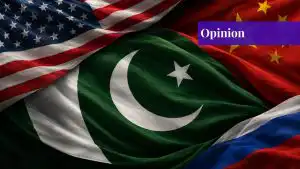
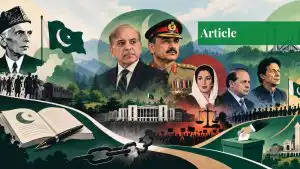
While 2025 started as a year when Pakistan had to be cautious, it turned out to be remarkably eventful. At the international level, Pakistan emerged as an ascendant player because of improved relations with the US, effective management of the dispute with India, and its increasingly prominent role in Middle Eastern security affairs.
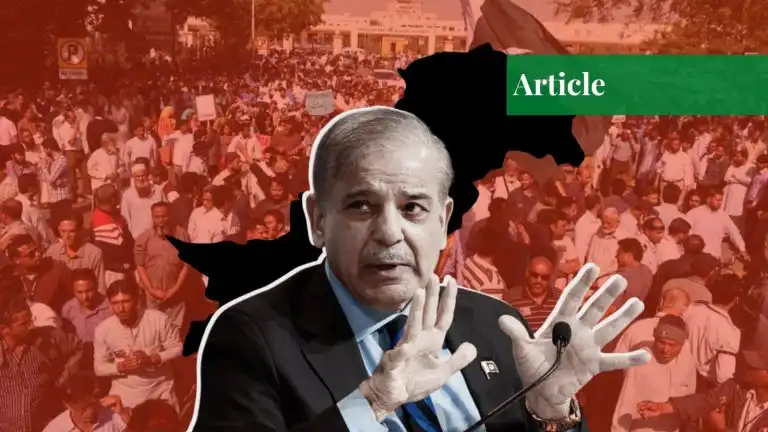
However, all of this happened against the backdrop of a domestic environment that was rife with problems such as terrorism, a poor relationship with Afghanistan, and declining democratic and human rights norms. Thus, it is paradoxical that while the situation in Pakistan in tr 2025 seems to be heading toward political and institutional stability, there are related checks and balances and political inclusivity.
What Remain Are The Major Constitutional Changes In Pakistan?
The 27th amendment was adopted in Parliament on 12th November 2025 and then ratified by the President on 13th November 2025. The main purpose of this amendment is to alter the establishment of the judiciary and the organization of the military command and to expand the power of the executive like never before.
The 27th amendment makes several changes in the judicial system that impact the theory of separation of powers. There has been set up the Federal Constitutional Court (FCC) that is going to replace the Supreme Court (SC) with regard to the interpretation of the Constitution, which reduces the powers of the Supreme Court.
More dangerously, the Chief Justice of the FCC is going to be selected by the President in consultation with the Prime Minister. Moreover, according to the 27th amendment, the judges of the High Court can be transferred from one province to another, province against thewhich enhances the influence of the executive on the judiciary.
Advocates of this amendment argued that it will ensure or enhance the efficiency of the administrative body, strategy, and stability. Conversely, according to many scholars, it poses a danger to the constitution since systems that undermine judicial independence and centralize military power tend to undergo democratic backsliding, civil liberties being curtailed, and the legitimacy of elected administration being reduced.
What Happened in the May 2025 India–Pakistan Crisis?
This year also saw the greatest military battle in decades between India and Pakistan since the 1965 war between the two countries. While the reasons behind the crisis were conventional ones, the tactics used and the results obtained came as a surprise. On April 22, gunmen launched an attack and killed 26 tourists in Pahalgam in the Indian-occupied Kashmir region. India accused Pakistan of involvement, but Pakistan denied this claim. India began Operation Sindoor, using the strategy of counter-value and counter-force targeting towards Pakistan.
In response, the Armed Forces of Pakistan undertook Operation Bunyan-un-Marsoos to avenge the Indian provocation of violating their sovereignty. The Pakistani Air Force managed to destroy several Indian Rafale fighter aircraft. According to the information, the US assisted in obtaining a ceasefire agreement between the two nations on May 10; while India strongly refuted this narrative, Pakistan accepted it with relief. The post-war situation has become unfavorable to India, and Pakistan’s strategic position has been enhanced exponentially.
What Were the Reasons Behind Field Marshal Asim Munir’s Ascendancy to Power in Pakistan?
Field Marshal Asim Munir is the 11th Chief of Army Staff of Pakistan and is second among the Field Marshals of Pakistan after Ayub Khan. Additionally, Munir has achieved the distinction of being the first Field Marshal of Pakistan to be appointed by the civilian government. It is stated that Asim Munir has received the rank of Field Marshal because of his exceptional leadership performance in Operation Bunyan-um-Marsoos, which was a counter-operation by Pakistan in response to Indian Operation Sindoor.
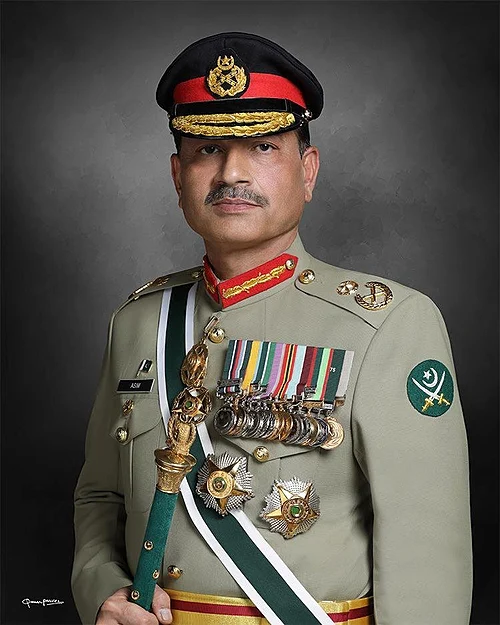
Before the 2025 crisis, the general public was highly dissatisfied with the coalition government and the establishment in Pakistan over the arrest of their former Prime Minister Imran Khan. Nevertheless, as a result of the skirmish with India and the mediatory role played by Pakistan in the US-Iran War, the political status of both the government and the establishment of Pakistan has been enhanced considerably. While the same individuals criticized the establishment for its repeated interventions in politics, the general’s leadership is now appreciated by the same individuals.
How Is Pakistan Expanding Its Influence in the MENA Region?
The continuous defeats of the US in Iraq, Afghanistan, Vietnam, etc. have already diminished its past position of eminence in the international arena. And the emergence of the multipolar moment with multiple power centers further provided impetus to it. Thus, in one way or another, the US has to retreat from its global policeman role either today or tomorrow. Therefore, since January 2025, the Trump 2.0 administration has been pursuing this policy of retreat, which is disguised as strategy.
The Middle Eastern and North African (MENA) countries are diversifying their partnerships beyond the US. And the May 2025 conflict between Pakistan and India resulted in the expansion of Pakistan’s sphere of influence in the MENA region. The GCC countries realized the fact that if Pakistan can defeat a rival that is conventionally much stronger, then it can provide security guarantees to its Muslim brotherly nations too. And hence, since then, all defence pacts or MoUs are being concluded with Pakistan, which include the Pak-KSA mutual defence treaty, Pak-Kuwait defence agreement, the Mecca Pact, and ever-increasing defense cooperation with Egypt, Somalia, Libya, Nigeria, etc.
Islamabad Memorandum of Understanding (IMoU)
The peak of a diplomatic moment in the history of Pakistan was the day when, on 18 June 2026, under the mediation of Pakistan and Qatar, both the US and Iran signed a memorandum of understanding to halt aggression against each other and paved the way for future negotiations. As Pakistan was the only country that our brotherly nation, Iran, could trust, while it also has close relations with the United States, the memorandum was named the “Islamabad Memorandum of Understanding (IMoU).” Although both the US and Iran are once again at odds with each other, both are trying to resolve the issue peacefully and are repeatedly turning back to the IMoU.
How Is Pakistan Balancing Between Great Powers?
Given the return of President Donald Trump to the Oval Office, it was anticipated by many analysts that Pakistan would not be a country of high importance to Trump’s priorities in 2025. However, as the various administrations attempted to position themselves regarding Trump 2.0, Pakistan made an unprecedented move in terms of its dealings. The Pakistani government realized the fickle and transactional nature of the new regime and decided to align itself according to the interests of Donald Trump, whether in dealing with IS-K, critical minerals and oil drilling operations, or investments made through the family-owned cryptocurrency exchange.
Through such alignments, Pakistan managed to reach a series of agreements that no other country tried to achieve. These agreements ranged from trade tariffs that were the lowest in all of South Asia. Moreover, through the Israel-Iran escalation and the Gaza War, Pakistan was able to position itself as an important international mediator in global politics. Pakistan was keen on highlighting the involvement of President Donald Trump in the India-Pakistan crisis and the Gaza Peace Agreement and nominated him for the Nobel Peace Prize in 2025 and 2026.
Likewise, Pakistan is also managing delicate relations with both China and Russia. During the US-Iran war, Pakistan worked closely with its Chinese counterparts to somehow de-escalate the growing volatility in the region, affecting the entire world. In addition, PM Shehbaz Sharif met with Russian President Vladimir Putin on the sidelines of various occasions, including international summits, SCO, etc. These meetings with all three major powers simultaneously clarify the fact that the days are gone when Pakistan had to take sides. This time, all major powers are themselves trying to maintain close relations with Pakistan.
How Is Pakistan Combating Terrorism and Militancy Since 2025?
The TTP was active in its activities in 2025, with attacks on security forces, government officers, and infrastructure, in the form of a suicide attack on the Federal Constabulary headquarters in Peshawar and also the hijacking of Cadet College in Wana. The BLA carried out its most daring attack of the year by hijacking the Jaffar Express train in March, carrying 400 passengers, leading to 23 fatalities among the passengers and 33 militants. Following this incident, the Jaffar Express has since been attacked, but to no success.
The attacks carried out by the Pakistani security forces were on the TTP leadership and fighters in Kabul, Khost, Jalalabad, and Paktika on 9 October 2025. The Afghan Taliban launched a retaliation two days later against the Pakistani security forces operating along the borders. There followed by a series of heavy attacks and counterattacks between the two countries until 19 October, when Qatar facilitated a ceasefire agreement. Pakistan has since reduced its diplomatic relations and referred to the Taliban government as a “regime in Afghanistan.” Suspension of trade activities, indefinite closure of the borders, and rhetoric against the Taliban, with forced repatriation of Afghan refugees as a casualty of cross-border tension.
What Are the Major Economic Challenges Facing Pakistan?
In the year 2025, Pakistan achieved macroeconomic stability as there was a sharp decline in inflation rates and fewer possibilities of default due to stringent fiscal and monetary policies. However, growth levels have been low, unemployment high, and youth unemployment rising, highlighting the poor productivity and employment generation capacity of the economy. In the case of Pakistan, by 2026, the recovery of the economy is picking up pace faster than expected, with large-scale manufacturing recovering from negative growth to 4.8%.
Agriculture is set to make a positive contribution. Fiscal consolidation of Rs. 2 trillion is being seen due to interest payment savings of Rs. 1.6 trillion following a reduction in interest rates. Nevertheless, pressure is growing on the economy from abroad owing to a sharp rise in imports and decline in exports, leading to an expansion of the trade deficit. The only bright spot is remittances. Strangely enough, even despite huge expenditure on social protection, the poverty rate has shot up to 28.9%.
Conclusion
The post-2025 trajectory of Pakistan is characterized by a combination of consolidation in politics, economic issues, constitutional change, and enhanced security pressures. On the one hand, the government has focused on stabilizing the economy and improving the counterterrorist actcountry’s counter-terrorismountry, while on the other hand, the government has tried to enhance its diplomatic relations with Saudi Arabia, the countries in the Gulf region, and other regional states. Nevertheless, the existing level of political polarization and institutional competition will continue to put pressure on the functioning of democracy in the country.
If you want to submit your articles and/or research papers, please visit the Submissions page.
To stay updated with the latest jobs, CSS news, internships, scholarships, and current affairs articles, join our Community Forum!
The views and opinions expressed in this article/paper are the author’s own and do not necessarily reflect the editorial position of Paradigm Shift.

Syed Hammad Ali is pursuing a BS in International Relations programme from the International Islamic University, Islamabad, and has a keen interest in research works, policy analysis, defence and strategic studies, and conflict resolution.