For two decades, the word “Pakistan” arrived in Western headlines wearing the same three companions: terrorism, instability, and danger. Yet headlines rarely capture the whole landscape. At the crossroads of global geopolitics, Pakistan’s story was often viewed through the narrow prism of security, while its deeper identity, a cradle of the Indus Valley Civilisation, home to K2, breathtaking landscapes, and over 240 million resilient people, remained beyond the frame. Today, that frame is widening, revealing a country whose story has always been far richer than its stereotypes.
The numbers are shocking. Pakistan’s own estimate puts the toll at roughly 83,000 lives lost fighting against terrorism since 2001, alongside economic losses officials have placed above 150 billion dollars. A Brown University tally found more than 23,000 civilians and 8,800 security personnel martyred, with over a million people displaced from North Waziristan alone. Standing at the crossroads of history and geography, it absorbed the human and economic consequences of a war that was not its own, paying in lives, livelihoods, and generations while shielding a region from the conflict’s wider spillover.
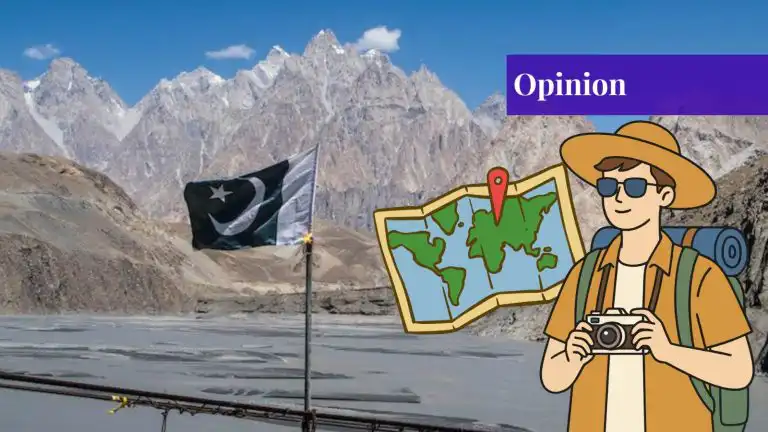
Nations can answer misunderstanding with outrage, but Pakistan handled it patiently. Instead of arguing with every misconception, it rebuilt, extending roads into the mountains, opening its doors to travellers and allowing ordinary Pakistanis to tell their own story through everyday acts of generosity. Time became its strongest advocate. And now, the country’s most persuasive ambassadors are neither diplomats nor campaigns but strangers carrying cameras, whose expectations dissolved long before they boarded their flights home.

Over the past three years, a wave of foreign travel vloggers has done more to reshape Pakistan’s image than any state campaign could. British, American, and European creators have crossed into Punjab, Khyber Pakhtunkhwa, and Gilgit-Baltistan and returned with the same refrain: astonishment at being fed, sheltered, and welcomed by strangers who wanted nothing in return. Academic researchers have begun studying the phenomenon directly, too. A 2025 study on cultural encounters between foreign vloggers and Pakistani locals found that this digital storytelling has become one of the country’s most effective tools for repairing its global image, doubling as an informal advertisement for investment and travel. The data backs the vibe. Pakistan’s tourism revenue grew 58 per cent in 2024 alone, while the World Economic Forum recorded a 20-place jump in Pakistan’s Travel and Tourism Development Index ranking since 2019, with foreign arrivals surging 115 per cent in a single year. For the year 2026, it is estimated at $4.91 billion.
The comparison to India is unavoidable given the two nations share a border, a partition, and a tourism market that has become its own subplot. A number of the same vloggers who tour both countries have drawn sharp, sometimes uncomfortable contrasts. One widely shared video, chronicled by Day News TV, described a British creator recounting relentless taxi scams and aggressive touts in India, only to find, on crossing the Wagah border, what he called an entirely different atmosphere of hospitality in Lahore and Hunza.

It is worth being precise about what this trend actually shows: it is not a scientific verdict on either country’s “quality of life,” and it has drawn real pushback from Indian commentators who see it as cherry-picked and reductive. What it does show, reliably and repeatedly, is a documented shift in how independent, camera-carrying visitors are choosing to narrate their experience of Pakistan specifically, unscripted, unpaid, and increasingly hard to dismiss as state propaganda.
And then came diplomacy, the arena where reputations are made hardest to fake. When the US–Iran war threatened to spiral in early 2026, it was Islamabad, not Washington, Brussels, or Riyadh, that became the venue both sides trusted enough to sit in. Pakistan brokered the ceasefire that took hold in April, then hosted the Islamabad Talks, the first direct, high-level engagement between American and Iranian officials since 1979. The Council on Foreign Relations called it a remarkable role change for a country long treated as a pariah state, noting Pakistan pulled off something wealthy democracies and global institutions had failed at for nearly fifty years. It was, commentators repeatedly pointed out, an echo of 1971, when Pakistan quietly ferried Henry Kissinger into Beijing and reshaped the Cold War. Half a century apart, the same country was trusted again to hold the door between adversaries who trusted no one else.
The throughline across the burnt bridges, the backpackers’ cameras, and the negotiating table in Islamabad is the same: a country that absorbed a two-decade-long mischaracterisation without turning bitter and instead simply kept showing up, feeding travellers tea, rebuilding roads to Hunza, and eventually being handed a seat at the table between two adversaries. The world did not apologise. It simply, slowly, started paying attention. And for a nation that spent twenty years being talked about rather than talked to, that shift is its own quiet vindication.
If you want to submit your articles and/or research papers, please visit the Submissions page.
To stay updated with the latest jobs, CSS news, internships, scholarships, and current affairs articles, join our Community Forum!
The views and opinions expressed in this article/paper are the author’s own and do not necessarily reflect the editorial position of Paradigm Shift.

Nazish Mehmood is a researcher and analyst at a think tank based in Islamabad, specializing in geopolitics, international relations, strategic affairs, and national security, with a focus on evidence-based analysis of emerging regional and global challenges.