“History is the version of past events that people have decided to agree upon.” (Napoleon Bonaparte)
Once Pakistan came into being, there was a clear danger facing the new nation-state that made the rulers build up their defense at the expense of other sectors. Therefore, right from the day of its establishment, the army turned out to be a very powerful organization, and its leaders were regarded as strong players in the ruling system of Pakistan.
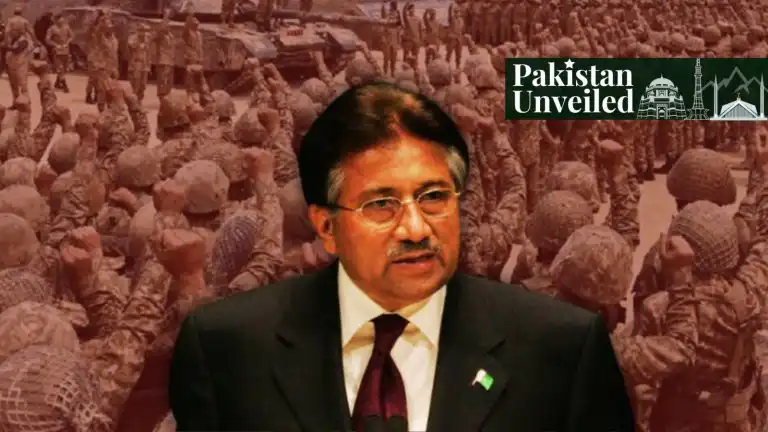
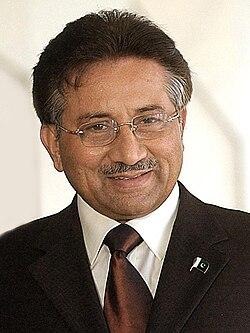
The sudden move of removing the army chief in his absence by Prime Minister Nawaz Sharif gave the army a chance to take over the civilian government on 12th October 1999 in Pakistan without any violence. At this time, in contrast to previous coups, one of the most important factors behind the coup was the confrontation of Nawaz Sharif with the Army.
Civil-Military Divide
The conflict arose between the Prime Minister of Pakistan, Nawaz Sharif, and General Pervez Musharraf following the Kargil Conflict of 1999 since the military felt that Nawaz Sharif had handled the crisis poorly since he had decided to withdraw the troops under Pakistani command following international pressure by the U.S. Upon the arrival of Musharraf’s plane near Pakistani airspace, Nawaz Sharif ordered the aircraft not to land on Pakistani soil. The aim was to give a chance to change the leadership in the military.
The quick action of some military factions that supported Musharraf prevented this plan. After landing successfully, the army occupied strategic places such as government offices and communication centers in Islamabad. Through his broadcast address, Musharraf stated, “Emergency rule is now in effect, while the constitution has been put on hold, together with the dismissal of the National Assembly. The reason behind this takeover is that he needed to safeguard the nation against the effects of corruption and economic chaos.”
Post-Coup Challenges
Mao Zedong once noted, “Political power grows out of the barrel of a gun.” As soon as the military took control of Pakistan, the negative international reaction towards the military regime began. The Commonwealth of Nations excluded Pakistan from its membership. The sanctions against Pakistan, which were introduced in May 1998 after the nuclear tests conducted by Pakistan, became even stricter on the American side. Thus, Musharraf displayed his commitment to democracy. Nevertheless, everything changed after the September 11 attacks.
Yet when the legality of the coup d’état was challenged in the Supreme Court of Pakistan, the general ordered an oath of office, which meant that judges either had to take another oath or step down. Most of the judges took the new oath to retain their position, while nineteen judges, among whom were six Supreme Court judges, refused to take the oath and left their positions. Thereafter, General Musharraf appointed compliant judges who would support the government in the future and save it from any legal proceedings. Finally, on 12 May 2000, the Supreme Court, by way of some petitions, confirmed the military coup on the grounds of the ‘Doctrine of State Necessity.’

Institutional Reforms and Political Engineering
- Devolution Plan and Local Government Reforms
In order to decentralize the system and distribute the powers, General Pervez Musharraf established a National Reconstruction Bureau (NRB) with the chairman being General Tanvir Naqvi. The National Reconstruction Bureau created a Devolution Plan under which local governments were elected without parties between 30 December 2000 and 5 July 2001, and then functioned properly from 14 August 2001. Under the Local Government Ordinance 2001, the structure of local government consisted of district governments, Tehsil/Town governments, and union council governments. Such a type of structure of local government existed in all provinces except for the cantonments that were controlled by the armed forces.
- Accountability and Transparency
It was the duty of the NAB to look into corrupt activities by politicians, officials, and businessmen. Again, the NAB pursued big cases like the sugar price case, the oil price case, and their effect on the coffers of the state treasury. These cases were dropped after receiving directions from General Musharraf. Therefore, he had to resign due to such interference. The cases of corrupt politicians were shut down because they joined pro-government parties. There were many cases against politicians from opposition political parties.
- The Legal Framework Order and the Seventeenth Amendment
Musharraf organized a referendum on 30th April 2002 to legalize his position and to get a justification for his extended stay. His support ranged from 5% to 97% on the government’s and critics’ sides. He also obtained a valid verdict from the Supreme Court. On the completion of the referendum, he promulgated the Legal Framework Order (LFO) 2002 on 21st August 2002 using his right of Constitutional amendment granted by the Supreme Court. Through the LFO, the President was allowed to dissolve assemblies, to appoint governors, commanders of the armed forces, members of the National Security Council, etc. The number of seats in the parliament was increased to 342.
- The 17th Constitutional Amendment
The Seventeenth Amendment Bill was passed with some changes in LFO by the National Assembly on 29th December 2003 and the Senate on 30th December, and finally approved by the President on 31st December 2003, while the opposition boycotted each time. This amendment was an alternative to the 8th Amendment, serving the same purpose. After the approval of the Seventeenth Amendment, Musharraf went ahead to legalize his position through a vote of confidence from Parliament and all provincial assemblies on 1st January 2004. Resultantly, he received 53% of the votes (658 out of 1170 votes) from the Electoral College.
Through the adoption of this amendment, there was a strengthening of the powers of the presidency since it revived Article 58(2)(b), which vested the right in the president to dismiss the National Assembly, the prime minister, and the whole federal government. This amendment served to make Musharraf’s tenure in power legitimate, as he could continue holding the two posts of President and Chief of Army Staff. Moreover, through the passage of this amendment, the National Security Council was created, whose members include civilians and military figures.
Pakistan and the War on Terror
About how the events of 11th September 2001 affected the political situation of the world, there have been serious influences on the policies of Pakistan and the region. First of all, the USA made Pakistan one of its allies to fight against terrorism and abandoned its support for the Taliban regime. With the change in strategy, the USA helped in the stabilization of Pakistan and strengthened the position of Musharraf. Moreover, the USA gave financial aid to Pakistan and ignored the country’s nuclear weapons program.
Since there was no constitutional government in Pakistan, the whole responsibility of taking the decision fell on Musharraf alone. Therefore, Musharraf could not resist anymore and had to accept all the conditions put forward by the Americans. Thus, he agreed with the reversal of Afghan policy, the sharing of intelligence, and the giving of air bases to America for the operation. These incidents served as an opportunity for Musharraf to prolong his reign with US assistance.
Pak-India Bilateralism
In early 2004, i.e., on January 1, 2004, Pakistan and India decided to restore bilateral talks following several years of strained relationships and some conflicts. This important move was an attempt to resolve existing problems, such as the dispute over Kashmir, as well as to improve diplomatic relations between these two nuclear neighbors. The leaders of the states agreed to conduct a comprehensive dialogue regarding all bilateral issues, including Jammu and Kashmir. Normalization processes were implemented at various instances, including the Lahore Declaration and the Agra Summit, which had no significant results.
The Lal Masjid Siege
The Lal Masjid siege took place from July 3 to July 11, 2007, in Islamabad. This incident was resolved through a military operation led by President Musharraf, which resulted in heavy losses and consequently brought political instability to Pakistan’s politics. Two brothers who managed the Lal Masjid, Abdul Aziz and Abdul Rashid Ghazi, demanded the implementation of Sharia Law and were connected with various militant groups.
The associated Islamic seminary, Jamia Hafsa, participated in many operations, such as moral policing and defiance of governmental power. Students of the mosque acted as vigilantes and performed actions like kidnapping alleged prostitutes and policemen, as well as attacking music stores, which were considered by them to be un-Islamic.
In response to unsuccessful attempts at negotiations, President Musharraf ordered a military operation on July 10. It was named Operation Silence and included the storming of the mosque by the Pakistani Army’s Special Services Group (SSG). Approximately 100 people died during the operation, although the number is likely to be greater according to some independent sources.
Assassination of Bhutto (2007)
On December 27, 2007, Benazir Bhutto, former Prime Minister of Pakistan and leader of the Pakistan People’s Party (PPP), was killed during a campaign event in Rawalpindi. In response to Benazir Bhutto’s death, her party’s supporters, along with others, engaged in protests and unrest throughout Pakistan, particularly in the Sindh province. The police were called to suppress those acts of chaos and violence, but still, unrest and disorder continued in different regions of the country.
Hence, the general elections in Pakistan were held on February 18, 2008, which was indeed an extraordinary development in politics because of the murder of Benazir Bhutto. The result of those elections was the triumph of the PPP and PML-N, which eventually led to the formation of the coalition government. The elections indicated a step toward democratic governance and established an expectation of periodic elections and peaceful transfers of power. The president of Pakistan, Pervez Musharraf, resigned from his post on 18th August 2008, having been in power for about nine years.
Conclusion
However, the years of the Musharraf administration, from 1999 to 2008, constituted an era marked by great changes for Pakistan, politically and strategically. This era saw economic and political reforms as well as Pakistan becoming a frontline state during the war on terrorism. Nevertheless, such a process raised doubts regarding the legitimacy of the system and the relationship between civilian and military establishments. Eventually, the weakening of power from Musharraf and the restoration of the civilian regime proved once more a lesson learned from the history of politics in Pakistan: good governance requires both stability and democracy.
If you want to submit your articles and/or research papers, please visit the Submissions page.
To stay updated with the latest jobs, CSS news, internships, scholarships, and current affairs articles, join our Community Forum!
The views and opinions expressed in this article/paper are the author’s own and do not necessarily reflect the editorial position of Paradigm Shift.

Syed Hammad Ali is pursuing a BS in International Relations programme from the International Islamic University, Islamabad, and has a keen interest in research works, policy analysis, defence and strategic studies, and conflict resolution.