
Introduction
Pakistan may have discovered something that powerful states have known for decades: geopolitical relevance can be converted into bargaining. In international relations, states cooperate when their interests converge, bargain when they can, and walk away when the costs outweigh the gains. Great powers have long turned military alliances, strategic access, and diplomatic influence into bargaining chips. Yet Pakistan’s effort to turn a moment of diplomatic relevance into economic opportunity is labelled as transactional diplomacy. Transactional diplomacy involves the use of diplomatic relationships and strategic usefulness to negotiate concrete benefits.
The $10 Billion Request
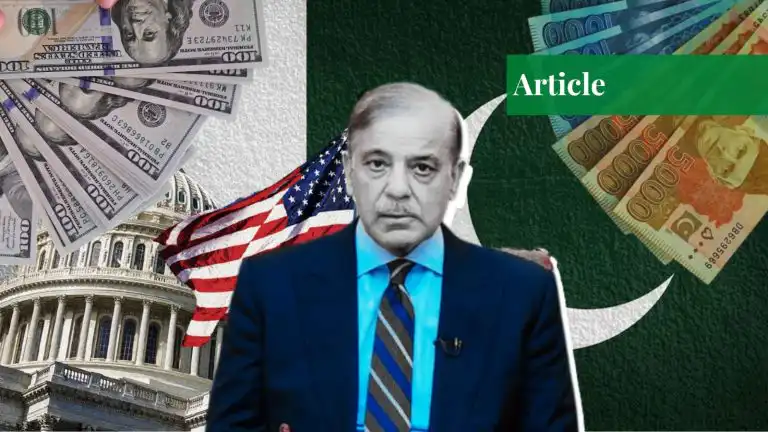
Pakistan’s reported request on July 22 for a $10 billion US exchange stabilization facility has stirred an uncomfortable debate over whether Pakistan is wisely monetizing its geopolitical relevance or turning diplomacy into a transaction. Reuters reported that Pakistan’s finance minister, Muhammad Aurangzeb, requested US Treasury Secretary Scott Bessent for this facility, and this request was followed by Pakistan’s role in facilitating mediation talks during the US-Israel war on Iran, which had raised Pakistan’s diplomatic profile. Provision of this facility can give Pakistan breathing room by bolstering its reserves, easing pressure on the rupee, and reducing its reliance on multilateral financing.
Pakistan has not publicly claimed this request as a mediation fee; it is about economic and financial support. The controversy arises from the timing of this request, which is in the wake of mediation. Pakistan may be entitled to capitalize on its geopolitical relevance, but analysts should be careful not to mistake strategic timing for an explicit transaction.
Transactional Nature of Pakistan-US Relations
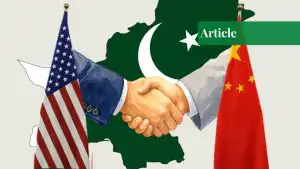
Pakistan has been hit hard by the Iran war, given its dependence on the Gulf energy imports, remittances, and financial support from the region. It would be a mistake to assume that Pakistan would be choosing between diplomacy and self-interest. In a realpolitik world, international relations is not a charity house. States rarely enter negotiations empty-handed. Washington does not engage Pakistan simply out of goodwill, and Islamabad does not maintain relations with Washington merely for friendship.
Pakistan’s glorification of Jihad during the Afghan war stands as a testament to the fact that every relationship is shaped by interests, cost, and expected return. Pakistan has often possessed geopolitical importance without consistently converting that importance into durable economic strength. Its geography, security relevance, and relationships across the region have repeatedly made it useful to larger powers. But strategic usefulness has not automatically translated into economic resilience. If the US can use Pakistan when Pakistan is strategically useful, why can’t Pakistan use that moment to pursue its own interests?
Policy of Pragmatic Realism
This time, Islamabad appears to be trying to negotiate from a position of greater diplomatic relevance. If Islamabad possesses something strategically valuable like diplomatic access, regional relationships, the ability to communicate across hostile camps, or the credibility to facilitate dialogue, it has every right to use those assets in pursuit of national interests.

That is not necessarily opportunism. It may simply be pragmatic realism. From this perspective, seeking a financial backstop is not irrational. States rarely act purely out of goodwill. If Pakistan’s diplomacy contributes to regional stability, de-escalation, protection of trade and energy flows, and US strategic interests, then Islamabad can reasonably ask, what does Pakistan gain from doing all this? It is bargaining and smart statecraft. From Islamabad’s perspective, however, the logic is clear: if a bilateral facility can strengthen reserves, reduce pressure on the currency, and diversify financing sources, why not negotiate for it?
Economic Turmoil in Pakistan
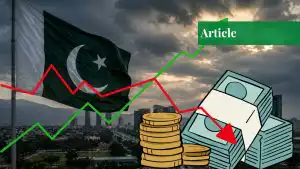
Pakistan’s economic vulnerability is not simply the shortage of dollars; it is structural. The IMF’s 2026 projections put Pakistan’s gross reserves at around $20.9 billion, equivalent to only about 2.8 months of the following year’s imports. The IMF has also continued to emphasize fiscal reforms, revenue mobilization, and structural changes as essential to sustainable growth.
Pakistan’s liquid foreign-exchange reserves stood at about $22.67 billion on July 17, 2026, according to the State Bank of Pakistan, including about $17.26 billion held by the central bank. The statistics show that provision of a bilateral exchange support facility can help to form breathing room for the state. But only the bilateral exchange support facility alone can not automatically fix the low tax collection, energy sector problems, weak exports, and fiscal deficit; it requires reforms at a structural level.
Commodification of Diplomacy
Yet there is a fine difference between leveraging diplomacy and commodifying diplomacy. It is a normal statecraft to use strategic relevance to seek better economic opportunities and financial support. On the contrary, if the world begins to interpret Pakistan’s mediation as something that comes with an invoice, it can build up the reputation of Pakistan as an opportunistic state. The diplomatic relevance (that makes Pakistan stand at the bargaining position) can be damaged if it becomes way too transactional. Pakistan presents mediation as a service and expects a predetermined financial reward, which risks undermining its diplomatic credibility.
There is another side of the debate that is often overlooked: the interests of Washington. The US cannot provide $10 billion straight out of generosity. It would expect a greater role in Pakistan’s future mining and critical minerals sector in return. Along with this, Pakistan’s strategic location has always been of great importance to US history, showing the amount of time that Pakistan has been of strategic importance to the US.
Way Forward
The goal is not about the commodification of Pakistan’s diplomatic role. It should be about making its diplomacy worth in the international arena. Provision of the exchange stabilization facility will have Pakistan gain a headline, but not a structural strategy. The real danger is not about transactional diplomacy but about transactional dependency. If Pakistan uses the success of brokering diplomatic talks to diversify its partnerships and attract foreign investment, it can pave the way to greater autonomy.
On the other hand, accumulation of external financial aid without addressing the structural problems can make its strategic relevance a temporary source of rent. States do not mediate, negotiate, or cooperate in a vacuum. They calculate. Pakistan should calculate too. But it should also recognize the limits of calculation. Pakistan needs to turn temporary relevance into lasting leverage. It must decide whether it wants to be valued as a mediator or priced as one. The real measure of Pakistan’s diplomatic success will not be whether it secures $10 billion, but whether it can turn temporary relevance into lasting leverage.
If you want to submit your articles and/or research papers, please visit the Submissions page.
To stay updated with the latest jobs, CSS news, internships, scholarships, and current affairs articles, join our Community Forum!
The views and opinions expressed in this article/paper are the author’s own and do not necessarily reflect the editorial position of Paradigm Shift.

Eman Waseem is an undergraduate student of international relations with a strong passion for research and analytical writing. Her academic interests include terrorism studies, security, and gender studies, and she enjoys exploring contemporary global issues through evidence-based research.