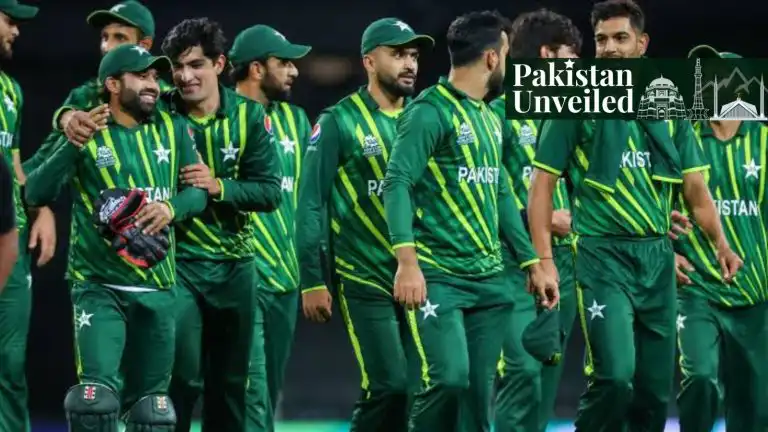
There’s a saying that has followed Pakistani cricket for decades. Nobody beats Pakistan on a given day. Nobody loses to everyone else quite as unexpectedly either. This unpredictability is not a flaw in Pakistan cricket. It is Pakistan cricket. It is why the team has more passionate supporters per capita than almost any other sporting nation. It is why their great victories feel genuinely historic and why their defeats generate the kind of national conversation that only sport at its most emotionally loaded can produce.
The Pakistan cricket team is one of the most fascinating sporting institutions in the world. Built on a country with almost no cricketing infrastructure at independence in 1947, shaped by some of the greatest cricketers the game has ever produced, capable of the most extraordinary performances and the most bewildering collapses in the same tournament, Pakistan cricket demands your attention in a way that few other sporting stories do.
This is the complete story. From the very beginning to where the team stands in 2026.
How Pakistan Cricket Started: A Nation Learning the Game
Cricket in Pakistan was a colonial hand-me-down, and when India and Pakistan obtained independence in 1947, much of the sport’s infrastructure in Pakistan was inherited from what had been left there pre-independence.
That inheritance was modest. Pakistan had no established domestic cricket structure, no purpose-built grounds of their own, and no tradition of international competition. They were starting from the bottom of a sport that the rest of the world had been playing seriously for well over a century.
The early results reflected that reality. Pakistan played their first test match against India in 1952. They lost. But the same year, they produced one of cricket’s most famous upsets—beating England at The Oval in 1954. It was this famous upset at The Oval in 1954 that imprinted Pakistan on cricket’s consciousness.

The significance of that victory cannot be overstated. Pakistan had been a nation for just seven years. They were playing against the country that had created cricket itself. And they won. The story of Pakistan cricket—defying expectations, producing brilliance from nowhere, refusing to be dismissed—started right there in 1954.
Pakistan’s players from that era, particularly their first captain Abdul Hafeez Kardar, fast bowler Fazal Mahmood, and batter Hanif Mohammad, remain some of their most famous cricketers.
Hanif Mohammad deserves a special mention. He scored 337 against the West Indies in 1958—a Test innings that stood as a record for years. A man from a newly formed nation without any cricketing tradition producing the longest innings the sport had ever seen. That kind of exceptional individual talent emerging from challenging circumstances has defined Pakistan cricket ever since.
The Golden Era: The 1980s and Imran Khan
It was in the 1980s with the arrival of perhaps Pakistan’s finest Test team that the team reached its peak.
The 1980s Pakistan team had depth that most cricket nations never achieve. Imran Khan led it—not just as a captain but as the defining figure who shaped the team’s identity and ambition. He was simultaneously the best fast bowler in the world and a genuinely capable batsman. His leadership was demanding and visionary.
Around Imran stood a remarkable generation. Javed Miandad was one of the most tenacious and technically complete batsmen the game has ever produced. His instinct for finding solutions in pressure situations was almost supernatural. His last-ball six against India in the 1986 Sharjah final remains one of cricket’s most replayed moments.

Wasim Akram and Waqar Younis formed a fast bowling partnership without equal in that era. Both were capable of swing bowling that defied physics—Wasim in particular could move the ball both ways in the air at a pace that batsmen simply couldn’t read. Waqar’s reverse swing at high pace was equally destructive.
This team won the 1992 World Cup in Australia—the most significant achievement in Pakistan cricket history. They did it from a position that seemed hopeless. They lost early matches. They were nearly eliminated. Then they won every remaining game and won the final against England at the MCG. The tournament is still discussed in Pakistan as a reference point for why you never write off Pakistan cricket in any format.
The Major Honors: What Pakistan Has Won
Pakistan cricket’s trophy cabinet reflects the inconsistency that defines the team but also the genuine brilliance that surfaces at crucial moments.
The 1992 Cricket World Cup remains the pinnacle—50-over cricket’s biggest prize. Pakistan won it when the team appeared to be falling apart, producing some of their best cricket in the must-win phase of the tournament.
Pakistan won the 2009 T20 World Cup and eight years later beat arch-rivals India in the final of the 2017 Champions Trophy.
The 2009 T20 World Cup was played in England, and Pakistan won it comprehensively. The 2017 Champions Trophy final against India in London was one of the most dramatic results in Pakistan cricket history—Pakistan crushed India by 180 runs to claim a trophy that virtually nobody had expected them to win entering the tournament.
Pakistan became the top-ranked Test side in 2016. That ranking was a genuine statement of where Pakistan Test cricket stood at its peak—above England, above Australia, and above India. It reflected years of producing exceptional Test cricketers and the depth of talent that Pakistan’s domestic system, despite its structural challenges, consistently generates.
The Key Players: Pakistan’s Greatest Cricketers
Every generation of Pakistan cricket produces players who belong in any conversation about the game’s best.
Wasim Akram is widely regarded as the greatest left-arm fast bowler in cricket history. His ability to generate swing at pace, particularly reverse swing with the old ball, was unique. He took 414 Test wickets and 502 ODI wickets. His performances in the 1992 World Cup final—taking two wickets in two balls to seal Pakistan’s victory—defined a tournament.
Waqar Younis partnered Wasim to form the most feared new-ball pairing in world cricket for much of the late 1980s and 1990s. His yorker at high pace was his signature delivery, and it ended his career.
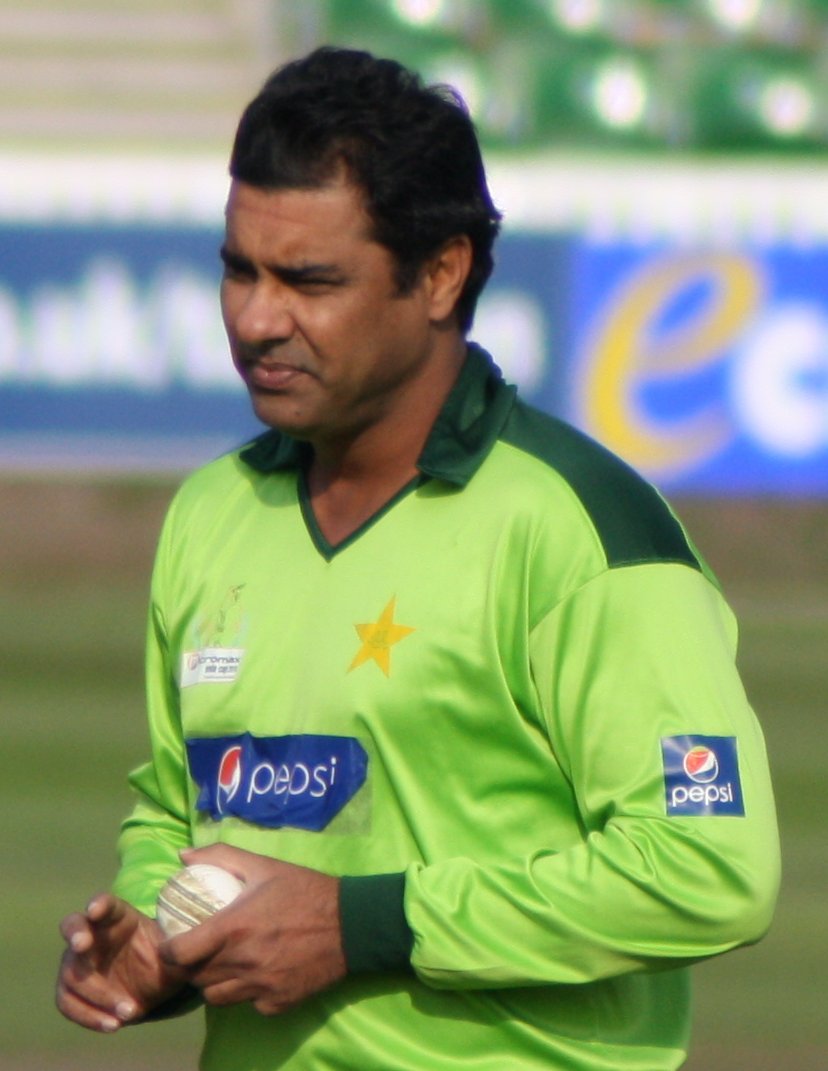
Javed Miandad played Test cricket for Pakistan from 1976 to 1996—a span of twenty years. He scored 8,832 Test runs. He played in three World Cup finals. He was the batsman Pakistan turned to when they needed someone to grind out a crisis and find a way to win.
Inzamam-ul-Haq was one of the most technically gifted and temperamentally composed batsmen Pakistan produced. Heavy, unhurried in his movement and devastating in his strokeplay, he scored over 8,000 Test runs and was the anchor of Pakistan’s batting through the late 1990s and 2000s.
Younis Khan holds Pakistan’s Test run-scoring record with 10,099 runs. He is one of only a handful of batsmen in history to score a century in every Test-playing country. His contribution to Pakistan Test cricket is immeasurable and criminally underappreciated outside of the subcontinent.
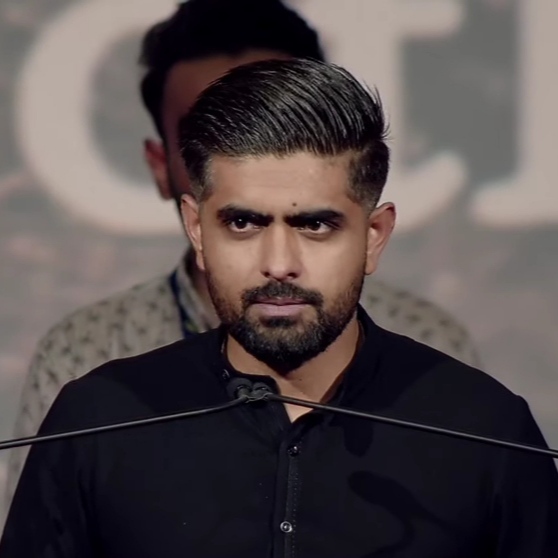
Babar Azam is the contemporary standard-bearer. A technically elegant right-handed batsman who became one of the top-ranked players in all three formats simultaneously—a rare achievement in modern cricket. His batting has a quality of stillness that the great batsmen share. The ball seems to come to him more slowly than to everyone else.
Recent Results: Where Pakistan Stands in 2026
Pakistan’s recent record is a mix of domestic promise and ICC tournament frustration.
Pakistan beat Australia in a T20 series 3-0 in January-February 2026, with Salman Agha scoring 120 runs across the series and Mohammad Nawaz taking 7 wickets. A 3-0 series victory against Australia is genuinely impressive regardless of the context.
Against South Africa at home in late 2025, Pakistan drew the Test series 1-1, won the ODI series 2-1, and won the T20 series 2-1. Saim Ayub was outstanding across both white-ball series. Noman Ali took 14 test wickets across the two matches—a reminder that Pakistan’s spin bowling resources are as strong as they’ve been in years.
The T20 World Cup 2026 in February was a different story. Pakistan lost to India by 61 runs—a result that continued their pattern of underperforming against their biggest rivals at ICC events. In 2026, after the team failed to qualify for the semi-finals of their fourth successive ICC event, the PCB fined all players PKR 5 million each.
That decision—fining players for failing to reach a semi-final—reflects the kind of administrative response that Pakistan cricket has generated throughout its history. The team is held to the highest expectations, and the gap between those expectations and results in ICC tournaments has become a genuine crisis of confidence for Pakistani cricket fans.
The Current Squad: Who Is Playing for Pakistan in 2026
The current test squad captained by Shan Masood includes Babar Azam, Mohammad Rizwan, Imam-ul-Haq, and several young players, including Abdullah Fazal, aged 23, and Azan Awais, aged 21.
The ODI squad for the Australia series in May 2026 includes Babar Azam, Salman Agha as vice-captain, Abdul Samad, Ghazi Ghori, Rohail Nazir, Sahibzada Farhan and young opener Shamyl Hussain, aged 21.
The emergence of young players like Azan Awais, Shamyl Hussain, and Ghazi Ghori is genuinely encouraging. Pakistan has always produced exceptional young talent. The question has never been whether the talent exists. It has always been whether the system around them allows that talent to develop consistently and translate into ICC tournament success.
Salman Agha has become an important figure in the white-ball setup. His 120 runs in the T20 series against Australia was a statement of intent. As a genuine all-rounder capable of batting in the middle order and bowling off-spin, he fills a role that Pakistan white-ball cricket has needed for years.
Mohammad Rizwan behind the wicket remains one of the best wicketkeeper-batsmen in world cricket. His ability to score at pace in the middle overs while maintaining excellent glove work gives the team genuine flexibility in their batting order.
The Challenge Facing Pakistan Cricket in 2026
Pakistan cricket’s challenge in 2026 is not talent. Talent has never been the problem.
The challenge is consistency. The gap between what Pakistan can produce on their best days—3-0 series wins against Australia, dominant performances against South Africa at home—and what they produce against the same quality opposition in ICC tournaments is genuinely puzzling.
Pakistan’s batting has been inconsistent. While their bowling keeps them in games, their inability to post competitive totals against strong top-order lineups has been their undoing in recent ICC events.
The bowling is exceptional. The new ball attack is threatening. Noman Ali’s spin is world-class in the right conditions. The fielding has improved significantly under recent coaching setups. But the top-order batting needs to convert starts into match-winning contributions reliably—not occasionally.
The young players coming through give genuine reason for optimism. Pakistan has always regenerated. The 1992 World Cup team was written off before they started winning. The 2009 T20 team surprised everyone. The 2017 Champions Trophy campaign looked hopeless until Pakistan found form at the right moment.
That capacity for unexpected brilliance is still there. Pakistan cricket has not had it. The work now is to make that brilliance a pattern rather than an occasion.
FAQs
Shan Masood captains Pakistan in Test cricket. Salman Agha serves as vice-captain in the ODI setup and has taken on increasing leadership responsibility across formats in 2026.
Winning the 1992 Cricket World Cup is Pakistan’s greatest achievement. They came from near-elimination to win every remaining match and beat England in the final at the Melbourne Cricket Ground. The 2009 T20 World Cup and 2017 Champions Trophy are also considered major honors.
This is the question Pakistani fans and analysts have debated for years. The most consistent answer points to batting inconsistency in pressure situations and the psychological weight of playing India in knockout contexts. The team’s bowling is world-class. The top-order batting in high-pressure ICC matches hasn’t matched that standard consistently in recent years.
Azan Awais, Shamyl Hussain, and Ghazi Ghori are among the most promising emerging players. All three have received recent international call-ups and represent the next generation that Pakistan cricket is building around alongside established names like Babar Azam and Mohammad Rizwan.
If you want to submit your articles and/or research papers, please visit the Submissions page.
To stay updated with the latest jobs, CSS news, internships, scholarships, and current affairs articles, join our Community Forum!
The views and opinions expressed in this article/paper are the author’s own and do not necessarily reflect the editorial position of Paradigm Shift.

Paradigm Shift is an official staff account.