Balochistan’s ancient karez system kept the province alive through centuries of drought. Unregulated tube wells are finishing it off in a generation.
A Vanishing Water Legacy
In the valley of Mastung, just an hour’s drive away from Quetta, old farmers still recall that they used to count karez names just like others count the number of their relatives. There were 365 of them, stretching underground in the valley. Each karez was an artificially created channel on a gentle slope to transfer groundwater to the fields without even a single machine or drop of diesel fuel. At present, only about a dozen of them are functional. The rest of them lie idle, with their vertical shafts slowly collapsing into the ground.
This is not just about one valley but about Balochistan’s oldest operating technology, older than any road, dam, and even some of the province’s history, which has been left to go extinct while it is still remembered.
How the Karez System Works
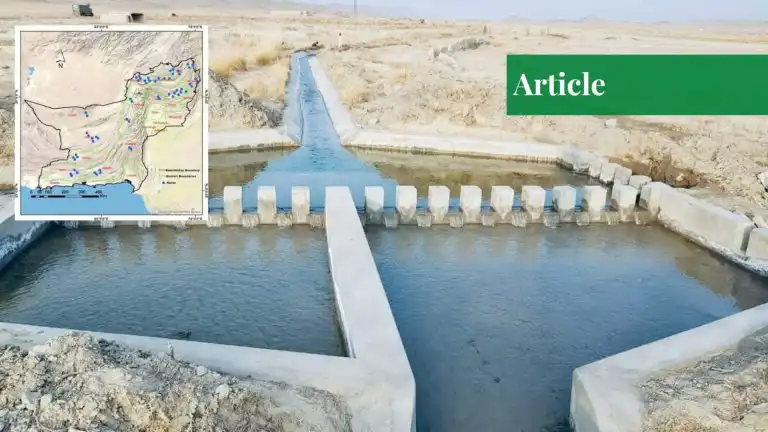
The karez, otherwise known as the qanat in other arid regions, is a wonderful example of a low-tech engineering feat. It involved sinking a “mother well” in an aquifer at the foot of a hill or mountain and then excavating a tunnel from there over a distance of a few hundred metres or more, which would allow the water to flow out of the daylight opening at the bottom end of the tunnel, using gravity only. Traditionally, a certain buffer area around the mother well, usually about a few hundred metres, was supported by tribal agreement as off-limits for any excavation in order not to stress the source too much.
The Wells That Changed Everything
It was not just the drought that broke the system. People in Balochistan have been facing the drought for hundreds of years, including the one lasting from 1998 to 2006, which is cited by people in Quetta as the time when things started to go wrong. The problem is what people did in reaction to the drought: they drilled diesel- and electric tube wells, subsidised them, and uncontrolled them wherever a landowner could afford one, usually close to the mother well of a karez.
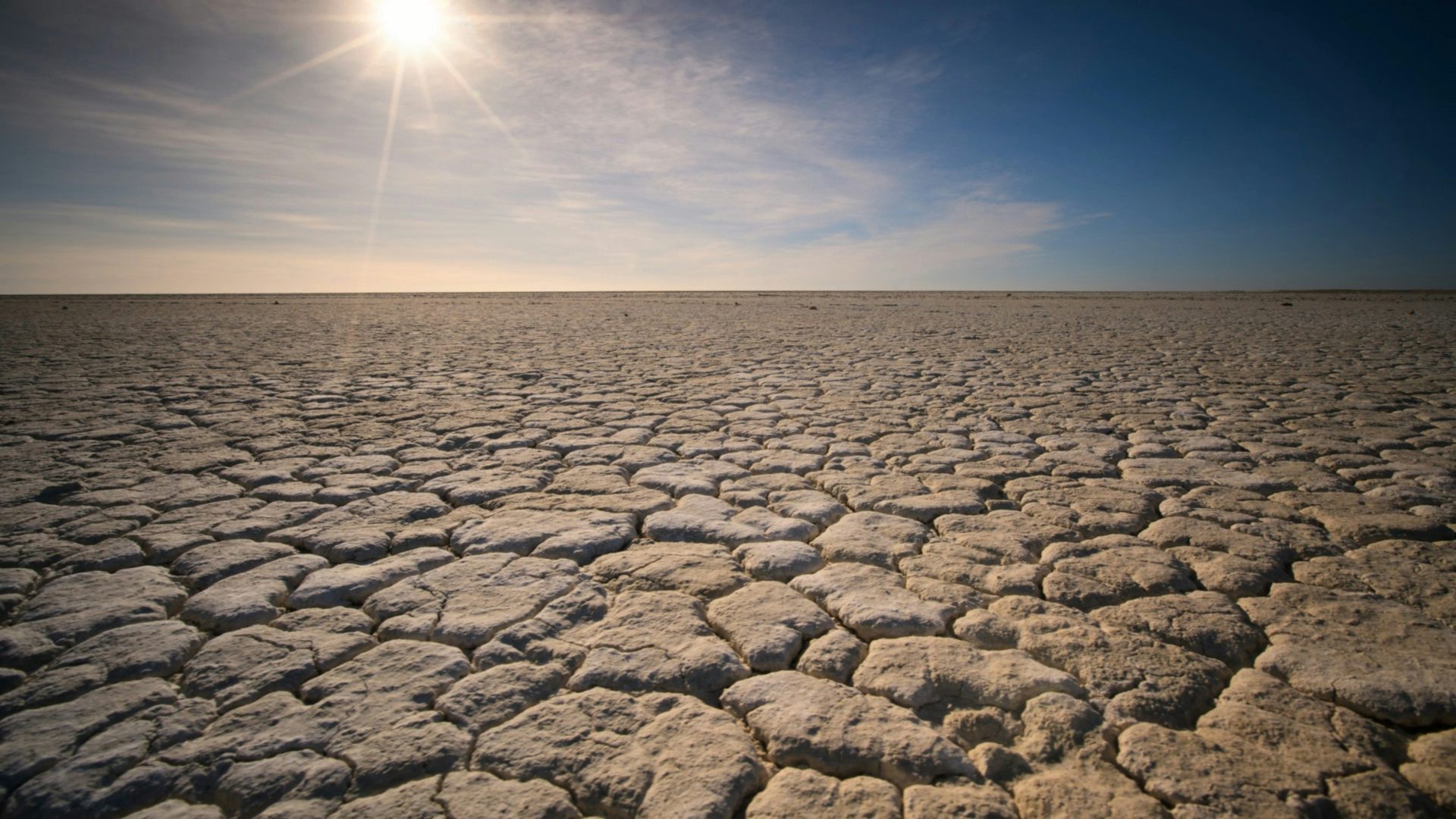
According to research carried out by the World Bank Global Water Practice, there were roughly 5,000 tube wells in Balochistan in the 1970s, while now there are 40,000 of them, taking water from the same shallow aquifers as karezes do. Only in the Quetta province has the Agriculture Department recognised 30,000 unauthorised tube wells.
The Agricultural Cost of a Drying Karez
There is a heavy agricultural price being paid for this. Research conducted on the Loralai district, one of the districts where karez irrigation had been traditionally relied upon the most, revealed that the number of hectares being irrigated through karez declined from about 7,000 in 2003 to about 1,000 within barely a decade. The provincial statistics also follow the same trend: Karez-irrigated lands in Balochistan went down from above 10 per cent of the total irrigated area during the first decade of the 2000s to below 5 per cent in the next decade. Not only does each kareez that dries up take away with it a source of water, but also a centuries-old water distribution system that served as social security for one of the poorest provinces of Pakistan.
Signs of Hope and Restoration
Indeed, there appear to be some positive signs that the government, along with other development agencies, has begun looking at this situation as an emergency rather than a folklore issue. In June 2025, the World Bank approved a project of $94 million called “Balochistan Water Security and Productivity,” which has a focus on groundwater management and irrigation resilience in Balochistan province.
On another front, the Food and Agriculture Organisation, with the help of the EU, laid the groundwork for the restoration of the Chashma Achozai karez, which was located near Quetta and served more than 3,000 people when operational and irrigated 500 acres of land. There have been findings from community research in Loralai that contradict the assumption that there is a lack of interest from the locals in repairing the karezes, especially the ones in rural Balochistan.
A Crisis of Policy, Not Technology
The problem that remains to be addressed is the lack of policy discipline to ensure that such actions result in long-term change. Hydrologists who have worked on this issue have consistently pointed to a simple solution: identify the recharge area for every karez, impose a ban on drilling any more tube wells there, and install check dams and/or leaky dams upstream to assist in the replenishment of the aquifer in those rare years when rainfall is sufficient. This is not some revolutionary idea; it has already been proved to work on an individual basis in relation to certain karez sites. What it lacks is legislation to support it at a provincial level or adequate funding.
A Silent Emergency Beneath the Ground
When the water crisis in Balochistan makes the headlines, the images are usually those of homes in Quetta waiting for water in tankers. And they are well justified. However, the failure of the karez network can be described as a silent and slow-moving emergency affecting villages that do not make the news simply because they are getting water from beneath the ground quietly without any fanfare. A thousand years’ worth of knowledge about hydrology in one of the harshest environments of South Asia is being destroyed within just two generations by wells that no one had envisaged or regulated.
Saving What Cannot Be Rebuilt
The province is not lacking in engineering ability to solve the problem; the farmers of the province themselves have created and sustained an operational system for a thousand years without requiring any advice from any foreign expert. The lack of resolve lies in the inability to safeguard this system from the technology that has made this knowledge outdated on paper but more urgent. Karez cannot be pumped, subsidised, or drilled to life in one night. Once the mother well dries up and the tunnel collapses, it is normally gone forever. Balochistan has no more time left to make this decision.
If you want to submit your articles and/or research papers, please visit the Submissions page.
To stay updated with the latest jobs, CSS news, internships, scholarships, and current affairs articles, join our Community Forum!
Find our FREE quizzes and MCQs here!
The views and opinions expressed in this article/paper are the author’s own and do not necessarily reflect the editorial position of Paradigm Shift.

Nisar Khan Kakar is a writer and poet and a BS English student at Quaid-i-Azam University, Islamabad, Pakistan, hailing from District Killa Saifullah, Balochistan. He serves as Assistant Coordinator for Literary Prose at the Quaidian Debating and Literary Society (QDLS).