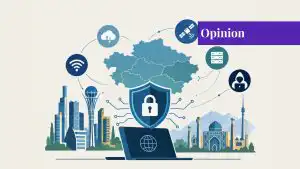


Cyber Threats Cross National Borders
On August 21, 2026, India ordered Google to shut down hundreds of Firebase platforms after it found out that cybercriminals were using its services to support banking scams, distribute malware, and steal financial information. Cyber authorities identified 57 such Firebase-hosted sites involved in such activities in August alone.
This case highlights an emerging issue that cybercriminals can act across borders while exploiting platforms made by global technological giants. Google owns Firebase. Less than two weeks later, on September 4, another cybersecurity issue emerged in Europe. European defense officials went against the European Union’s proposed cloud and AI development act, which reduces dependence on foreign technology providers in sensitive public and military systems.
Supporters see the proposal as necessary for European technological sovereignty, while critics argue that replacing current technology with new, weaker alternatives could itself create security risks. Although these two developments appear different, together they lead to the same challenge: states are becoming increasingly dependent on digital systems that neither stop at national borders nor are they always under control.
When Criminals Exploit Global Platform
The Indian case shows why cybersecurity cannot be treated as only a domestic issue. The criminals misused a legitimate global platform to target Indian users. So this makes the situation difficult for the state, as authorities can investigate victims and take trials on only those criminals who come under their jurisdiction or control. But they have limited control over foreign platforms that are used to conduct attacks. So cooperation with these technological companies and foreign authorities becomes essential.
The Responsibilities of Technology Companies
India’s response also raised an important question about responsibilities. Technology companies do not participate in criminal activities simply because criminals misuse their services. However, when platforms repeatedly become tools for such frauds, governments expect the companies to identify abuse and respond quickly to it. This indicates that for effective cybersecurity, cooperation is required between states, technological companies, and law enforcement agencies.
Digital Sovereignty and Strategic Dependence
The European issue indicates another thing. The EU Cloud and AI Development Act is designed to strengthen Europe’s ability to control key technologies and data. The European Commission argues that technological sovereignty means being able to act and independently control its digital world while reducing any dependence on non-European suppliers. The logic is simple: a country may protect or tackle threats from a hacker but still face a strategic vulnerability if its most sensitive digital systems depend heavily on technology that is controlled outside its authority or territory. Cybersecurity is not about preventing unauthorized access, but it is also about who controls the infrastructure on which the state’s most crucial data is uploaded or stored.
Pakistan’s Emerging Digital Vulnerability
A similar concern can be seen in Pakistan lately. In August 2026, satellite connectivity of more than 400 National Bank of Pakistan branches was shifted from Pakistan’s (PAKSAT) satellite to a UAE satellite (YAHSAT). This move creates a concern over the security of sensitive financial communications and dependence on foreign infrastructure. While arrangements indicate the benefits of internal technological cooperation, they also highlight insecurity and a need for strong safeguards when critical systems rely on infrastructure that is not in national control.
Cooperation or Independence?
However, technological sovereignty has a clear counterargument that building a new domestic alternative may not automatically make a nation safe and secure. European defense officials have warned that existing European alternatives may not match the capabilities of leading cloud and AI providers. Therefore, a force transition may affect the efficiency, defense capabilities, and cooperation with allies.
The criticism should not be ignored. Complete digital independence is not realistic and also not a desire of any state, as it will disrupt relations between allies. Also, modern-day economies are highly reliant on international technology markets, global supply chains, and cross-border cooperation. If a state starts building every digital capability domestically, it will burden its economy and can affect the state’s efficiency.
The better approach is therefore not isolation but a calculated strategic resilience. States should identify which digital systems are too important to depend entirely on external providers and should start developing infrastructure domestically for them. At the same time, they should continue working with foreign companies and governments but only on the condition that international cooperation does provide better security and efficiency.
Finding the Balance
The balance is particularly important for third-world countries that do not belong to the core. States such as Pakistan cannot reproduce the technological infrastructure of global powers. But they can reduce vulnerabilities by protecting sensitive infrastructure. The Indian and European cases point toward the same lesson from different directions. India demonstrates that no country can fight modern warfare alone and that no country should become dangerously dependent on external digital infrastructure.
As countries used to fear dependence on natural resources or trade in the past, now they should fear this modern-age digital dependence. India demonstrates that no country can alone fight this modern cyber warfare; meanwhile, Europe shows that no country should become dangerously dependent on external digital infrastructure. The future of cybersecurity will require both approaches. States must cooperate because cyber threats cross borders, but they must also maintain enough technological capacity to protect their most sensitive systems.
The goal should not be complete digital independence. It should be the ability to cooperate internationally without becoming strategically vulnerable to technological dependence. Cybersecurity is no longer simply about protecting computers. It is increasingly about managing the relationship between sovereignty, technology, and international cooperation.
If you want to submit your articles and/or research papers, please visit the Submissions page.
To stay updated with the latest jobs, CSS news, internships, scholarships, and current affairs articles, join our Community Forum!
Find our FREE quizzes and MCQs here!
The views and opinions expressed in this article/paper are the author’s own and do not necessarily reflect the editorial position of Paradigm Shift.

Abraiz Ali Ahmad is an international relations student at the University of Gujrat, with a strong interest in regional security, geopolitics, and connectivity. He enjoys looking beyond official statements and headlines to understand the interests, vulnerabilities, and consequences shaping regional developments. His particular areas of interest include South Asia, Central Asia, and the Middle East, especially where conflict, infrastructure, and geopolitics intersect.