
A New Market, a New Bargaining Table
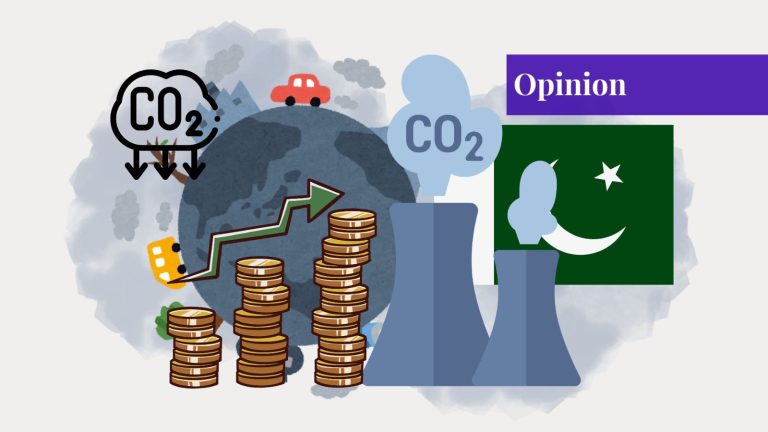
On 1 April 2026, Pakistan signed its first bilateral carbon-market agreement under Article 6.2 of the Paris Agreement. The partner was Norway. Under the memorandum, Pakistan can develop projects in clean energy, agriculture, transport, and waste management and sell the resulting emission reductions to Norway. Norway’s ambassador said his government wants the credits to go beyond its own formal climate targets and that its $1.5 billion Global Emission Reduction Initiative would pay for them. Dawn reported that Norway has struck similar deals with Benin, Indonesia, Zambia, Jordan, and Senegal.
Press releases call this a milestone. They do not say whether Pakistan will come out of it richer and more resilient or will sell a scarce asset cheaply. That depends less on the market than on the state that manages it.
What Exists and What Doesn’t
Three things are often confused. Pakistan has national guidelines for carbon trading, which the climate minister said the cabinet approved by January 2025 (the guidelines are public). It has an Article 6.2 agreement and a small number of approved projects. What it does not have is an operating domestic cap-and-trade system. The International Carbon Action Partnership still describes domestic carbon pricing there as work in progress, with a registry and a measurement system moving into implementation.
The distinction matters. Under cap-and-trade, a government limits emissions from regulated firms and lets them trade allowances. Under Article 6.2, foreign buyers finance projects abroad and receive verified reductions. The first is a domestic industrial policy. The second is an export.
The export market is growing. The World Bank’s 2026 report found that nearly 30 percent of global emissions now carry a direct carbon price across 87 policies, raising a record $107 billion in 2025. The average price has roughly doubled in a decade to nearly $21 a tonne.
Where the Money Could Come From
Transparency International Pakistan estimates the country could generate 40 to 75 million tonnes of tradable credits a year, worth $400 million to $2.25 billion. The upper figure assumes verified cuts of 10 to 15 percent of annual emissions. A fivefold gap between low and high estimates shows how much rides on price and credibility.
The first approved project gives a sense of scale. A South Korean firm plans to invest $20 million to $25 million in 250 water filtration plants in Punjab between 2026 and 2035, generating 1.5 million credits. That is useful money for drinking water. It is not yet a national climate finance strategy.
Who Keeps the Value?
Critics use the phrase “carbon colonialism” for arrangements in which wealthy buyers collect cheap reductions while host communities see little. It is a critical lens, not a description of every deal. But the ingredients are visible. When Pakistan sells a reduction, it must adjust its own accounts so the same tonne is not counted twice, which means it cannot use it toward its own future targets.
Pakistan’s guidelines respond partly through a 12 percent fee on every transferred outcome, split equally between the host province and the Pakistan Climate Change Fund. A fee is a start. It says nothing about the price per tonne, the buyer’s margin, or how much reaches the villages that host a project. Those details belong in public contracts.
Institutions Before Caps
Transparency International Pakistan’s study named the lack of a consolidated national emissions baseline as a significant barrier and recommended a carbon market law, a National Carbon Coordination Council, and a public registry. The government says a national registry is under development to prevent double counting. The climate coordinator, Romina Khurshid Alam, told the report’s launch that carbon markets are not “a shortcut.” She is right, and the registry will be the first test of that.
A domestic cap raises harder questions. The EU’s border carbon charge will fall on imports such as steel, cement, and aluminum, and Business Recorder reports that Pakistan is speeding up ETS work because of the threat to exports, including textiles. The Pakistan Institute of Development Economics argues that a national system would let Pakistan keep carbon revenue that would otherwise be paid to the EU. The Sustainable Development Policy Institute counters that fuel taxation and crediting, followed by a possible ETS, fits Pakistan’s administrative capacity better. A cap set without good data either strangles factories or is too loose to matter.
A Roadmap
- Pass a carbon market law and create a coordinating body that includes the provinces.
- Launch the public registry and publish every authorization, buyer, and price.
- Build sector baselines first, then pilot a cap in one or two industries before going national.
- Write community benefit-sharing and environmental safeguards into project approvals.
- Keep enough reductions at home to meet Pakistan’s own climate targets.
Carbon markets will not pay for flood recovery on their own. They can fund specific projects, and whether they become leverage will be settled by the registry, the contracts, and the baseline. Pakistan should build all three before it signs the next deal.
If you want to submit your articles and/or research papers, please visit the Submissions page.
To stay updated with the latest jobs, CSS news, internships, scholarships, and current affairs articles, join our Community Forum!
Find our FREE quizzes and MCQs here!
The views and opinions expressed in this article/paper are the author’s own and do not necessarily reflect the editorial position of Paradigm Shift.

Azhar Ud Din is a student of international relations at Government College University, Lahore.