
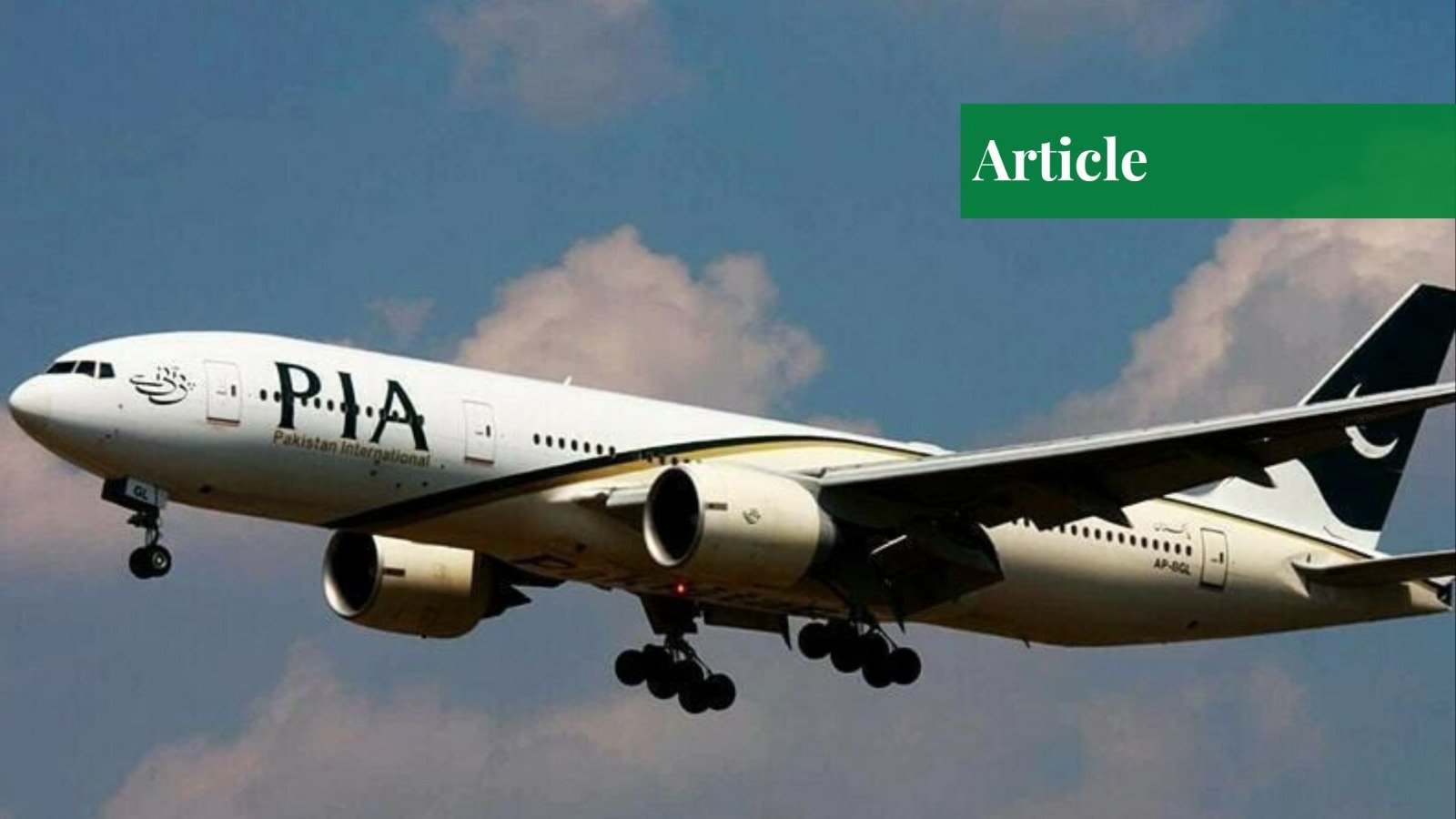

On July 16, 2025, the United Kingdom declared the removal of a five-year ban on flights from Pakistani airlines, marking a significant achievement for Pakistan’s aviation sector, specifically its national carrier, PIA (Pakistan International Airlines). This decision, announced by the British High Commission in Islamabad, paves the way for Pakistani airlines to apply for permits to resume their flights to the UK. It is the result of rigorous safety measures and improvements undertaken by Pakistani authorities after multiple international bans were imposed in 2020. The move comes right at a time when Pakistan has been pushing to privatize PIA. It restores the country’s reputation on the international stage while also strengthening cross-cultural ties between the two nations.
Background: The 2020 Ban and Its Origin
The UK’s restriction on Pakistani airlines, imposed in 2020, stemmed from a pilot licensing scandal that drew global attention towards Pakistan’s aviation sector. The scandal followed a tragic air crash of PIA’s Airbus A320 in a residential area of Karachi. On May 22, 2020, PIA’s flight PK 8303, carrying 99 people, tragically crashed a few kilometers away from the airport. The incident resulted in 97 casualties while also causing injuries to the 2 survivors and some residents.
The crash, attributed to human error by the pilots and the air traffic control, provoked an investigation into the safety standards of Pakistan’s aviation system. In June 2020, the then aviation minister, Ghulam Sarwar Khan, revealed that nearly thirty percent of Pakistan’s active pilots held fake qualifications or dubious licenses. Of the 860 pilots in the country, around 262 pilots were found to have ditched the certification exams through proxies. Among the grounded pilots, around 150 pilots were associated with PIA.
This admission triggered a wave of reactions from international regulators. The European Union Aviation Safety Agency (EASA) suspended the Third-Party Operator certifications for PIA and Vision Air International, banning the Pakistani airlines from European airspace. The UK, in line with the EU decision, followed suit, and so did the USA. In July 2020, America’s Federal Aviation Administration officially downgraded Pakistan’s aviation safety rating to category 2, marking one of the darkest phases in the country’s aviation history. The ban proved to be financially overwhelming, as it is estimated to have been costing PIA around PKR 40 billion annually in revenue.
Road to Recovery
Since 2020, Pakistan’s Civil Aviation Authority (PCAA) has undertaken various steps to restore the reputation of the aviation sector. The International Civil Aviation Organization (ICAO), in September 2020, advised Pakistan to cease the issuance of new licenses to pilots. Over the years, PCAA not only overhauled the pilot licensing procedure but also introduced regular audits and stricter regulations to enhance the safety management system. The ICAO conducted an audit and reviewed the pilot exams and licensing oversight practices. The final report, presented in 2022, removed Pakistan from its list of countries with significant safety concerns.
The efforts bore fruit as EASA lifted its four-year ban on PIA in November 2024, allowing Pakistan to resume its flights to Europe with a direct Islamabad-Paris flight in January 2025. The UK followed a similar trajectory with the removal of the ban on PIA flights to the country. The UK Air Safety Committee carried out a technically driven and independent review of aviation safety standards, engaging extensively with PCAA. On July 16, 2025, the committee removed Pakistan from its air safety list. The British High Commission credited Pakistan for making measurable improvements to meet the international safety standards. However, the individual airlines will still need to apply for operational permits to ensure compliance with the stringent safety regulations.
Implications for PIA and the Aviation Sector
The lifting of the ban by the UK is a momentous moment for PIA, as it has historically been the only carrier to operate long-haul flights from Pakistan to the EU and the UK. PIA announced it will resume flights soon after the ban remocal, starting with the Islamabad-Manchester route with three weekly flights to the UK. PIA’s share of Pakistan’s domestic aviation market dwindled to 23%. Valuable landing slots at the UK’s airports could lead to its financial recovery. PIA estimates to generate over $200 million annually by 2026 from the UK routes alone. New airlines like AirSial and SereneAir are also seeking the UK slots, with the PCAA reporting a 20% year-on-year increase in worldwide ticketing revenue.
The decision aligns with Pakistan’s economic strategy, particularly the privatization of the PIA. The debt-ridden airline has faced allegations of being bloated and poorly managed. Recent reforms, including its first profit after 21 long years, have improved its worth in the eyes of potential buyers. In July 2025, the privatization commission approved four groups to bid for a stake of 51-100% in PIA. The winning buyer is expected to invest PKR 70 billion over the next five years in the company’s growth. In this context, the recent ban lift by the UK would enhance the airline’s valuation, attracting higher bids. The efforts to reverse the FAA ban are also in process to speed up the privatization process.
Impact on Travelers and Bilateral Ties
The resumption of direct flights between Pakistan and the UK is a relief for 1.6 million British Pakistanis, one of the UK’s largest diaspora communities, and thousands of British nationals residing in Pakistan. Before the ban, multiple weekly flights connected Islamabad, Manchester, London, Karachi, Birmingham, and Lahore, serving personal, familial, and professional needs. The ban forced travelers to endure long routes and heavy fares via Gulf carriers. Fares were reported to have surged to a threefold price post the ban. Direct flights could be way more convenient and affordable for travelers.
The decision also strengthens the bilateral ties between the two countries. Air connectivity is expected to enhance trade, tourism, and people-to-people connections. The 7.3% trade increase from 2023 to 2024 would be further boosted with the removal of Pakistan from the air safety list. Pakistan’s northern regions have been gaining international acclaim for their scenic beauty. The 6,033 UK tourist numbers from 2023 are expected to rise with direct flights between Pakistan and Britain. The economic and global implications make this decision a significant milestone for the aviation sector of Pakistan.
Future Outlook
While the ban uplift is a noteworthy breakthrough, Pakistani airlines must navigate the UK CAA’s rigorous permit procedure. Passing the continuous audits by ICAO is the only way to ensure the smooth running of the PIA and other airlines on international routes. While the IMF’s restructuring program has allowed for the privatization of the PIA by freeing it of its existing liabilities, the challenges still loom in the form of a bloated labor force, management crisis, and execution risks. The reformative journey from 2020 to 2025 and the lifting of the ban prove that Pakistan holds the potential to regain trust and build a strong legacy in its aviation sector.
If you want to submit your articles and/or research papers, please visit the Submissions page.
To stay updated with the latest jobs, CSS news, internships, scholarships, and current affairs articles, join our Community Forum!
The views and opinions expressed in this article/paper are the author’s own and do not necessarily reflect the editorial position of Paradigm Shift.

Laiba Khalid is a university student and emerging content writer with a keen focus on socio-political issues, governance, and policy. With a background in English and an interest in current affairs, she brings a critical and youth-driven perspective to contemporary debates. Laiba is particularly interested in bridging academic insight with real-world challenges. She writes with a commitment to clarity and research-based analysis.