Over four decades, the struggle of the Kurdish armed forces, particularly in the form of the Kurdistan Workers’ Party (PKK), has been a defining feature of the geopolitics of the Middle East. A historic turning point is observed in this conflict between Kurdish militants and the Turkish state, where recently, the PKK announced its decision to disband and disarm.
This decision has implications not only for regional security but also for Kurdish political aspirations and the future of any armed resistance in the region. This article stresses the historical context and evolution of the Kurdish armed struggle, the factors that led to this decision of disbandment, and the potential consequences of this unprecedented move.
Historical Context of the Kurdish Struggle
The Kurds are an ethnic group spread across four Muslim countries, notably Turkey, Iraq, Iran, and Syria. After World War I, the Treaty of Sèvres (1920) promised the possibility of an independent Kurdish state, but later, the Treaty of Lausanne (1923) ignored it, dividing Kurds among several new nation-states. The new republic under Mustafa Kemal Atatürk was established in Turkey, which pursued the policies of assimilation and suppression of Kurdish identity, language, and dress.
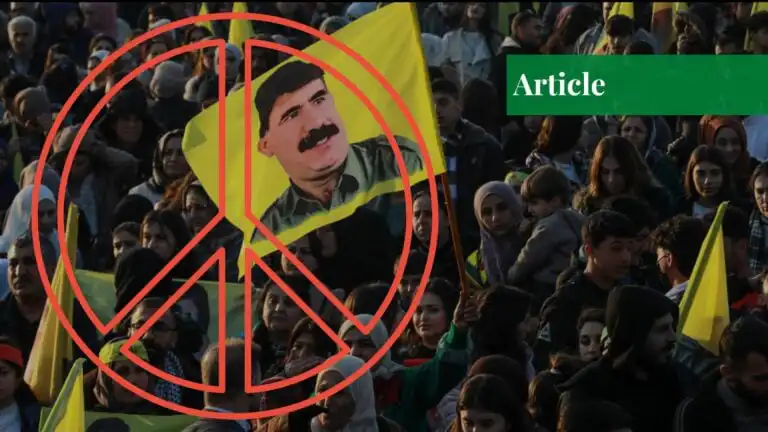
In Turkey, Abdullah Ocalan founded the PKK, which emerged as a Marxist-Leninist organization with the core objective of creating an independent Kurdish state within Turkey. The army insurgency launched by the PKK in 1984, which resulted in nearly 40,000 deaths and widespread displacement, is considered a deadly conflict in the history of modern Turkey.
Over time, a shift was observed in PKK’s objectives when they started demanding cultural as well as political rights for Kurds within the Turkish state, parting away from outright independence. However, the PKK was designated as a terrorist organization by Turkey, the USA, the EU, and NATO, which complicated the negotiation process for peace.
Catalysts for this Disarmament
The decision to disband was followed by stalled peace talks over a longer period of time, international pressures, and a global shift in global dynamics. Diplomatic efforts to broker ceasefires and political solutions were renewed by global actors such as the EU and the USA.
The war fatigue was seen growing between the leadership of the PKK and the Kurdish communities, which was joined by the fact that military struggles alone cannot provide a solution to the problems of these communities to secure their rights.
Syria’s fractured state, the aftermath of ISIS, and Turkey’s strategic demands have further created an environment where this disarmament can provide leverage in political negotiations.
Recent Announcement of “Disband and Disarm” by PKK
As a part of the new peace initiative with Turkey, the PKK came forward with its decision to disband and disarm on May 12, 2025. The decision was made in a congress held in northern Iraq on direct appeal from Ocalan, who argued that the real objective of the PKK’s mission had been achieved by bringing the Kurdish issue to the level of democratic politics. They announced the dissolution of the PKK’s organizational structure and the initiation of their disarmament process, which Ocalan himself will supervise. They demanded the participation of the Turkish Parliament in the peace negotiation process and the establishment of a legal framework for this process.
However, several uncertainties exist in this decision as no specifications are provided for the future status of PKK fighters, the disposal of weapons, or their oversight mechanisms. The Turkish government also remains uncertain regarding potential concessions and the relocation of PKK members to other countries.
Reactions of Major Stakeholders
Some leaders of the PKK commented on this disbandment and disarmament decision as a “painful but necessary step for future generations,” and some fear that this decision of surrendering leverage can create hurdles, as they are doing so without any guarantee of autonomy or any kind of legal reforms. However, Turkey welcomed it and demands full disarmament and the withdrawal of PKK fighters. Although Syria remained silent, Baghdad has eyes on the integration of PKK forces into the federal bodies. The EU and the USA are also interested in the disarmament process and are ready to link future aid to political settlements.
Implications and Consequences of this Decision
The decision will prove beneficial in Turkey as it could resolve the country’s security challenges. Thus, the Turkish government’s warm welcome of this decision can be seen as a significant political achievement and a step toward “Turkey without terrorism.” However, the success of the decision depends truly upon reciprocal actions from Ankara, which may include possible democratic reforms apart from the cessation of military operations against Kurdish groups.
This shift from armed struggle to democratic politics can appear both as an achievement and a risk for the Kurdish movement. No doubt, the PKK claims to have fulfilled its historical mission, but there still exists a lack of concrete guarantees, which raises concerns about the protection of the Kurdish people.
The influence of this decision may reverberate across neighbouring countries, other Kurdish armed groups, and the sense of the Kurdish nationalist movement. Its implications will also be apparent in Turkey’s relations with Western allies, as they have tried to bring a peaceful resolution for both sides.
Conclusion
The decision of the PKK to disband and disarm is regarded as a landmark development in the entire history of Kurdish arms and the overall strong Kurdish struggle for rights, as well as recognition. A hope is associated with this decision for a peaceful resolution to this decades-long conflict. However, its ultimate success depends entirely on the smooth implementation of the terms on which both parties agree. The slight unwillingness of both sides to make the required concessions and their inability to address the long-time unresolved issues of justice, integration, and political reform can create a loophole in the disarmament process.
Considering all these circumstances, the coming months will be critical in determining whether this historic decision proves right and leads to lasting peace or was merely a new phase in the Kurdish quest for self-determination.
If you want to submit your articles and/or research papers, please visit the Submissions page.
To stay updated with the latest jobs, CSS news, internships, scholarships, and current affairs articles, join our Community Forum!
The views and opinions expressed in this article/paper are the author’s own and do not necessarily reflect the editorial position of Paradigm Shift.

Qandeel Fatima is a Lecturer of Chemistry at the University of Mianwali. Alongside her dedication to teaching and research, she remains deeply engaged with Pakistan's socio-political landscape and global dynamics, believing that scientific thinking must inform public policy for meaningful national progress. As a committed aspirant of CSS and PMS, she aims to combine her scientific knowledge with public service.