Introduction
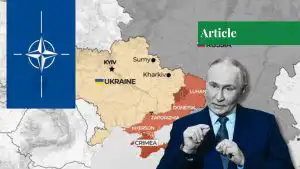
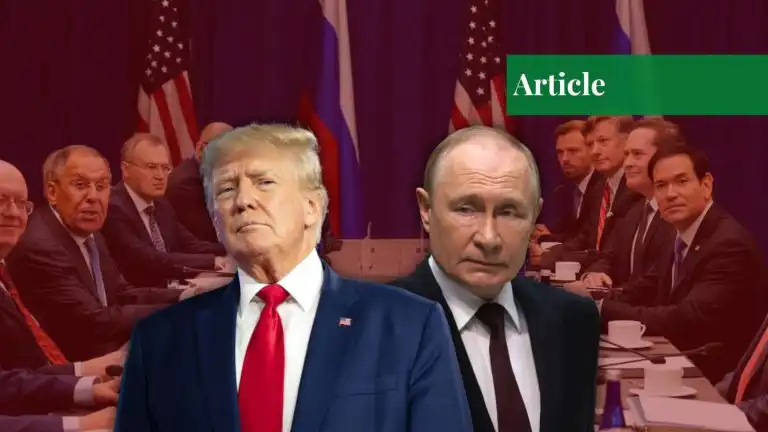
When the White House issued an invitation to Russian President Vladimir Putin to attend the upcoming G20 summit in Miami, officials stressed that the meeting would not deviate from the standard procedures and formats of a multilateral gathering. Still, the State Department noted that the Kremlin’s representation at the G20 would be welcome. Given that Putin has been barred from participating in international meetings since Russia invaded Ukraine, it is clear that the White House sees value in restoring Russia’s participation in major international meetings, at least in the format of the G20. For its part, the Kremlin has made it clear that it interprets the Trump administration’s extension of the G20 invitation as an indication that Putin and Trump will be able to discuss the Russian-Ukrainian conflict.
What Could the Invitation Bring?
Inviting Putin to attend the G20 in Miami may open opportunities to shift the diplomacy surrounding the Ukraine conflict. For now, the US appears to be willing to replace the strategy of overtures that relied on economic sanctions and diplomatic shunning to bring about a political solution to the conflict with one that combines greater engagement and flexibility towards Russia and other major powers. It remains to be seen, however, if shifting from the “long-pressure, no-engagement” strategy to diplomacy that incorporates greater, more direct Great Power engagement will help to facilitate a negotiated political settlement.
According to the State Department, Putin has received a formal invitation to the December G20 summit. This event could allow Trump to engage with Putin and other world leaders. For now, the Kremlin has stated that it is pleased with the invitation but has not announced Putin’s attendance. It is Russian policy not to accept talks concerning a simple cease-fire but to focus on negotiations dealing with a political settlement to the war. As of now, the US and Russia have not approved of each other’s policies concerning the Ukraine war. However, each country has shown interest in diplomacy by means of the summit. For now, the conference has the potential to provide the US and Russia with some diplomatic tools even if the two countries have not approved of each other’s position on the Ukraine war.
Russia’s Perspective
From Russia’s perspective, the outcomes have been positive. Following the full-scale invasion of Ukraine in 2022, Western countries adopted a strategy to boost the economic and political costs of the war to ultimately shrink Russia’s foreign policy options within the West. That said, Russia will always have a seat at the UN Security Council and other international forums. Putin’s scheduled appearance at the summit will give Russia the opportunity to present its case to the international community, as it will likely be interpreted as an indicator that Russia’s policy of blocking various diplomatic initiatives to address European security will continue.
While it is reasonable to suggest that, from a diplomatic perspective, Russia has benefited from the recent turn of events, to suggest that Russia has achieved a resounding diplomatic success would be a stretch. As a permanent member of the UN Security Council, Russia has the right to attend and be represented at diplomatic gatherings, including those convened by the Organization for Security and Cooperation in Europe (OSCE). An extension of the diplomatic invitation to Russia does not necessarily imply that the US no longer supports the international rules-based order and the territorial integrity of Ukraine.
American Perspective
Americans have a different way of looking at this. President Trump has stated the only way to resolve the war is to have face-to-face talks. Other administration officials can say their engagement with Putin is not political but rather recognizes a serious and perhaps only practical way to end the conflict. As one administration official has stated, “We talked to the Russians, and the Soviets, during the Cold War, so we can talk to the Russians now.”
There was a lot of mistrust between the US and the former Soviet Union, and there were a lot of proxy wars. The US and the Soviet Union understood there was always a real chance of a nuclear war. Talking to each other did not mean they trusted each other or supported the other’s views. They understood they needed to talk to reduce the chances of a nuclear war. The same thing is true today and applies to the Ukraine War. There will likely have to be talks with Russia to completely end the Ukraine War.
Analysis
There is less disagreement about past and ongoing military aid to Ukraine than about the future of that aid. It is true that some supporters of military aid believe that in the absence of the Ukrainian military’s best efforts to fight Russian aggression, the Ukraine question will be resolved not by diplomacy but by “compello ad aromatum” (the demand will be accompanied by the firing of guns). It is important to note that providing Ukraine with the means to defend herself and regain territorial integrity, as well as to deter further Russian aggression, is not the same as advocating the use of military means to resolve the conflict.
A political solution to the question of peaceful co-existence of Ukraine and Russia is the goal, but the means to achieve this goal need to be defined first. At the moment, however, it seems that the balanced position taken by the international community, embodied in the adoption of UN General Assembly Resolution “A Political Settlement of the War in Ukraine,” is not sufficient to counter other states’ approaches to the Russo-Ukrainian conflict.
Proponents of open-ended strategies argue that defining the end state of a strategy constricts flexibility. While this may be true, the absence of an end state definition creates challenges as well. Weapons can alter the course of a battle and possibly give a better negotiating position, but they will not ensure the formation of a lasting political compromise. What is the political compromise that the strategy intends to achieve?
Ultimately, if the strategy relies on the continued employment of military means, it will require a diplomatic strategy as well. Military means cannot achieve the entirety of the strategy. Weapons will not create the conditions for a lasting political compromise on their own. Defining the conditions for a political compromise will ultimately require diplomatic measures. The compromise created by diplomacy must ensure that military means will not be employed. A political compromise cannot be created through the use of military means alone. Endless military means without the existence of a political compromise ensure that a true strategic compromise will not be achieved. Military means will simply be employed ad infinitum.
The Miami summit has the potential to be significant. Should Putin attend, it would bring the Russian and Western leaders face-to-face and possibly initiate diplomatic efforts at a time when Putin has refused to conduct formal talks. Talks initiated in this fashion have the potential to cover a range of issues, including verification of ceasefire agreements, attacks on energy infrastructure, kidnappings and swaps, relaxation of sanctions, changes to security and defense architecture, and changes to Europe’s political and security structures.
Resolving these issues will require more than photos of the leaders; they will require in-depth and detailed negotiations. A diplomatic solution that fails to adequately consider Ukraine’s interests, as well as the interests of the other countries involved, will most likely fail to achieve lasting peace. This means that during these negotiations, core principles and concerns of all involved parties should be taken into consideration. Negotiating a peace settlement does not require that the interests of one of the parties involved be compromised.
Conclusion
What happens in Miami may reveal important details about how various US officials and policymakers have thought about war and peace in the post-Cold War era. For many years now, the war in Ukraine has followed a ‘mushy’ or ‘ill-defined’ version of strategy. Each side has decided it could help its cause to wait it out and bear it out. Military effectiveness is measured in increasingly indirect ways. Sanctions are coupled with arms deliveries.
Each side engages in negotiations through proxies. “Miami-2” refers to another round of potential ‘summitry’ in which Russian President Vladimir Putin is extended another invitation to Washington, D.C. The extension of such an invitation likely indicates the US has decided it is time to try another kind of “great power” diplomacy. “Moscow-1” focused on the extension of an invitation to Putin.
Both the “Miami” and “Moscow” series of summits indicate an important shift in US strategy. The focus of US policy may shift away from how to best protract the war and toward how to terminate it. If “Miami” is limited to exploring how best to reconcile US and Russian/Belarusian interests, it may quickly become of little importance. If the US decides to engage in active diplomacy with all relevant parties to the conflict, “Miami” could quickly gain importance.
If you want to submit your articles and/or research papers, please visit the Submissions page.
To stay updated with the latest jobs, CSS news, internships, scholarships, and current affairs articles, join our Community Forum!
Find our FREE quizzes and MCQs here!
The views and opinions expressed in this article/paper are the author’s own and do not necessarily reflect the editorial position of Paradigm Shift.
Dr. Muhammad Shoaib is a lecturer at the Department of International Relations, University of Okara. He is also serving as a research fellow at the School of Public Administration and Political Science at Shandong University, China. He can be reached at mshoaib@uo.edu.pk.