

The Shifting Sands of Political Discourse
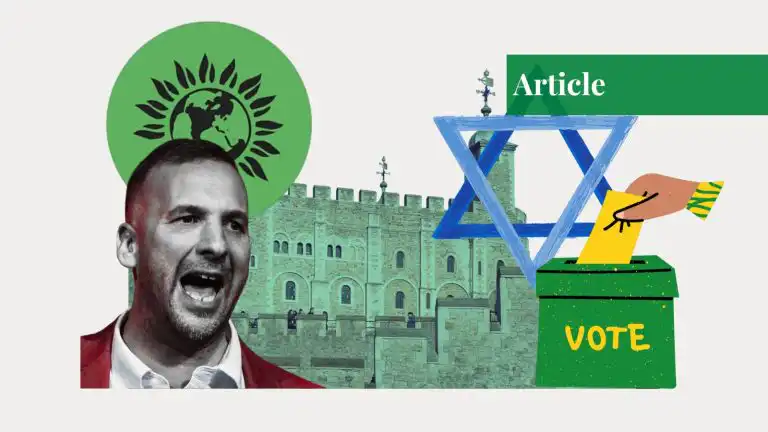
In October 2026, there was a significant change in European politics. The Green Party of England and Wales held its annual gathering in Brighton, England, where it made an important ruling, officially declaring Zionism as a form of racism. By a vote of 1,022 to 813, the members of the party voted that, according to the terms of the vote, Zionism is an ethnonationalist political ideology that uses an oppressive regime to protect one ethnic group against the rest of the population through spatial repression and social inequality.
The event attracted media attention all over the world, as it was the first time a political party had taken an anti-Zionist position in a big Western democracy. The resolution exceeded just a ceremonial critique; it stated the dedication of the party to the Palestinian liberation, supported the Boycott, Divestment and Sanctions (BDS) initiative, urged for an arms embargo to be imposed against Israel, and formally denied the possibility of a two-state solution in preference of a single democratic state with equal rights for all inhabitants of historic Palestine.
For those following international relations and human rights law, the event does not seem to be an incident happening independently. Rather, it marks a growing tension occurring in the West between the traditional diplomatic practice and the fresh grassroots movements advocating for Palestinian rights. For ages, Western leaders have drawn rigid lines between opposing the government position and opposing the ideology of the state, but the pressure from voting blocs is forcing political parties to evaluate the actions of state affairs strictly in the context of international human rights standards.
As countries and political movements across the globe interpret this decision, the resolution by the Green Party of the UK serves as a remarkable example in the discussion of ideologies in modern society. One needs to understand how exactly the decision was made, what the main people involved in this process said in response, and how the event fits within the context of world history.
Decoding the Motion—What the Decision Actually Entails
To grasp the full political and legal aspect of the vote by the Green Party of England and Wales, one must delve into the actual wording and workings of the resolution passed during the conference held in Brighton. The motion was aptly called “Zionism is racism,” but it was presented by local activists within the Green Party, namely the Greens for Palestine association, who managed to get considerable backing from local organizations across Britain.
The resolution highlights the fact that Zionism is not merely an affiliation but a bona fide ethnonationalist political doctrine. Based on the rationale provided in the resolution, the act of carrying out Zionism favors one people and results in the displacement of another, as well as disenfranchisement and institutional discrimination of the latter.
Core Tenets of the Resolution
The outlined policy presents a number of concrete positions that mark a complete departure from established British political agreement on issues at hand:
- Opposing the Two-State Approach
The resolution directly abandons the long-existing political consensus of seeking separate states for Israelis and Palestinians. Instead, it calls for a single state that will be democratic and secular and encompass all of historic Palestine, offering equal civil/political/human rights to all citizens regardless of their backgrounds.
- Applauding BDS and Arms Embargo
The resolution demands the active support of the international boycott, divestment, and sanctions movement and calls on the government of the United Kingdom to introduce a full and immediate arms embargo on the State of Israel.
- Defending the Members from Internal Pressure
The resolution points out that this anti-Zionist position is aimed at the political system rather than individuals based on their Jewish origins or religious beliefs. Indeed, it stresses that “not all Jews are Zionists, and not all Zionists are Jews,” thus drawing the important line between anti-Zionist criticism and antisemitism, despite attempts by party leadership, including the leader of the party, Zack Polanski, and ex-MP Caroline Lucas, to make the resolution softer.
The Diplomatic Uproar
The adoption of the resolution on “Zionism is racism” in October 2026 caused immediate and significant effects not only in domestic UK politics but also in the politics of major European coalitions and diplomacy worldwide. The case shed light on the fact that there was a conflict between party workers and party leaders, while causing condemnation from diplomatic institutions and organizations.
The result created great disunion within the Green Party in the UK. Although the majority of the grassroots activists voted in favor of the resolution with 1,022 votes to 813, only one out of five MPs of the party supported the motion. The issue was raised by the prominent ex-leader of the party, Caroline Lucas, who expressed her alarm over the quoted wording of the resolution at the conference’s debates, claiming that this might scare voters and put the members of the Jewish community at risk.
The fallout was immediate: The Communal Leadership in the UK, represented by the Board of Deputies of British Jews and the Jewish Leadership Council, issued statements condemning the resolution. Both organizations claimed that equating Zionism with racism undermined Jewish self-determination and ignored the historical roots of Zionism as a refuge against European antisemitism.
They also criticized the resolution due to its wording because the conference voted down the amendments that would save the Zionist association’s members from any drawbacks from the party. Following the backlash, the Government of Israel also reacted rapidly and sharply. They characterized the resolution as antisemitic. In retaliation, Israeli authorities announced bans on the entry of the key members of the Green Party, including the leader of the party, Zack Polanski.
Across Europe, the event has caused panic in the European Green family. The partner parties, including France’s Les Écologistes and Germany’s Bündnis 90/Die Grünen, had to find a way to distance their policy from that of the Green Party in the UK, which revealed the ideological differences of the West European Green parties’ policies toward foreign affairs and the situation in the Middle East.
Historical Parallels – UN Resolution 3379 and the Echoes of 1975
Brighton’s decision to associate Zionism with racism is not a matter of history in isolation. To understand the reasons for this stance, one must go back to one of the most controversial events in the history of international diplomacy in the 20th century—the UN General Assembly Resolution 3379.
The Emergence of UN General Assembly Resolution 3379 (1975)
On 10 November 1975, at the height of the Cold War and with the rise of the non-aligned movement, the United Nations General Assembly adopted Resolution 3379 with the approval of 72 votes against 35 and 32 abstentions. The resolution was sponsored chiefly by the Arab countries, the Soviet bloc, and the African supporters of the resolution, which stated, “Zionism is a form of racism and racial discrimination.”
This resolution was a product of the post-colonial movement of the 1970s that held the view that all liberation movements in the Global South were inextricably linked to each other. The supporters of the resolution claimed that Zionism as a state ideology was based on the methods of displacing people and granting ethnic privileges that were very much like the colonial practice.
Nonetheless, the reaction from Western democracies and Jewish organizations was immediate and firm. Western governments overwhelmingly disapproved of the vote. Israel’s ambassador to the UN, Chaim Herzog, famously ripped the resolution sheet in half on the stage, saying it is “without any moral or legal value.” US Ambassador Daniel Patrick Moynihan voiced strong emotions, saying that the US “does not recognize, will not respect, and will never put up with this shameful act.”
Revocation and the 1991 Turn
Resolution 3379 was the center of significant discussions regarding politics and diplomacy for many years. The collapse of the Soviet Union and the US diplomatic efforts to reverse this resolution preceded Israel’s participation in the Madrid Peace Conference of 1991.
On December 16, 1991, the General Assembly passed UN Resolution 46/86 that invalidated the 1975 decision with a score of 111 to 25. This is one of the very few historical cases when a General Assembly resolution was reversed.
Comparison Table: Historical & Modern Context
Structural analysis comparing UN Resolution 3379 (1975) and the UK Green Party Motion (2026).
| Structural Dimension | UN Resolution 3379 (1975) | UK Green Party Motion (2026) |
|---|---|---|
| Sponsoring Body | Intergovernmental bloc of sovereign nations (UN General Assembly) | Grassroots membership of a Western political party |
| Geopolitical Context | Cold War tensions and Global South anti-colonial alignment | Post-2023 Gaza conflict, expanding international court proceedings, and social media activism |
| Primary Framework | Anti-imperialist statecraft and diplomatic alignment | Domestic legal definitions of protected political speech vs. hate speech |
Global Policy Lessons – What Other Nations Can Learn
The Green Party of England and Wales’s resolution signifies an important experimental field of application for political parties, parliamentary assemblies, and social organizations. The smart choice of Brighton in conducting voting on this issue brings several lessons for regulating the complexities of ideology-related discussions amid increasing domestic tensions in the sphere of Middle East diplomacy.
The Practice of Precise Definition of Law in Anti-Discrimination Laws
The popularization of anti-discrimination law opens up the issue of defining different ideologies through internal legislation. The issue of defining Zionism as a concept standing for ethnonationalism caused a lot of controversy in the sphere of lay and legal aspects of the treatment of party members
The foreign policy resolutions can be misunderstood when they try to represent certain complex movements concerning the national identity. The rejection of Amendment III indicates a clear example of how the overextension of bans can lead to the negative attitude of the public toward certain groups of people.
Policy Lesson for Other Countries
For parliaments and political parties to criticize state policies, they have to create hyper-specific mechanisms that protect community organizations, religious identities, and private lives from penalties for possible hate speech.
The Brighton vote reveals an increasing structural gap that characterizes contemporary participatory democracies, namely the discrepancy between grassroots activists and parliamentary leaders. Four out of five Green MPs publicly opposed the policy for fear of losing support from voters and communities.
The Danger of Diplomatic Isolation and Cross-Border Fragmentation
The immediate reaction of the Israeli authorities, in terms of restricting movement for members of the Green Party, as well as distancing themselves from the party’s sister organizations such as France’s Les Écologistes and Germany’s Bündnis 90/Die Grünen, clearly shows the diplomatic implications of such unilateral ideological declarations.
International coalitions are built on common diplomatic paradigms. If national political agencies adopt unconventional definitions of terms that contradict the existing internationally valid legal definitions of concepts, such as changing the two-state negotiations into one-state mandates, they risk losing the support of traditional international partners and limiting their power in international relations.
Conclusion
The decision made by the Green Party of England and Wales to proclaim the notion of “Zionism is Racism” during the conference in Brighton signifies a key development in political history in the West. The party took the unprecedented step of creating a public and unapologetic anti-Zionist platform by repudiating the well-established diplomatic convention of a two-state solution.
This decision exemplifies the ongoing process in democracy, which indicates that civil society movements and grassroots actions are increasingly adopting unconventional methods of impacting government policy based on internationally recognized standards of human rights and anti-discrimination.
At the same time, this event has important implications in terms of its consequences, which produce significant party rifts and unprecedented international diplomatic backlash. The whole event may be considered a profound example of how the ideas of the 19th and 20th centuries are interpreted and scrutinized from the standpoint of modern international law. Moreover, as democracy is being established around the globe, the conclusions drawn from the discussed event will influence political eras for ages.
If you want to submit your articles and/or research papers, please visit the Submissions page.
To stay updated with the latest jobs, CSS news, internships, scholarships, and current affairs articles, join our Community Forum!
Find our FREE quizzes and MCQs here!
The views and opinions expressed in this article/paper are the author’s own and do not necessarily reflect the editorial position of Paradigm Shift.

Bisma Azram is an international relations student at the National University of Modern Languages (NUML), Islamabad. Her interests include international politics, security, digital governance, and contemporary global affairs. She is particularly interested in exploring how emerging challenges affect societies and public policy.