
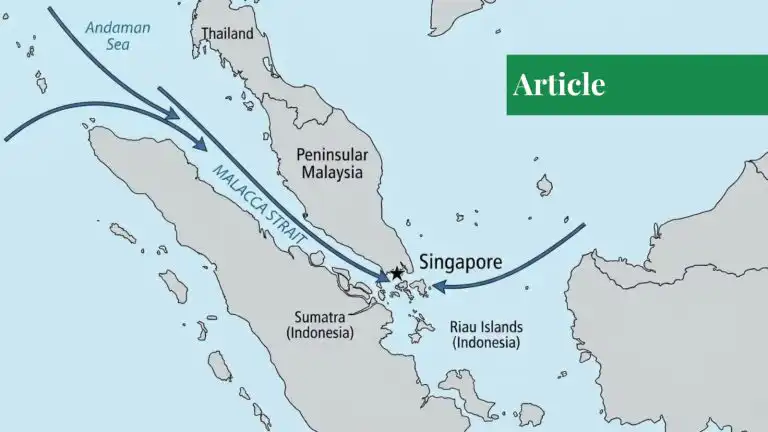
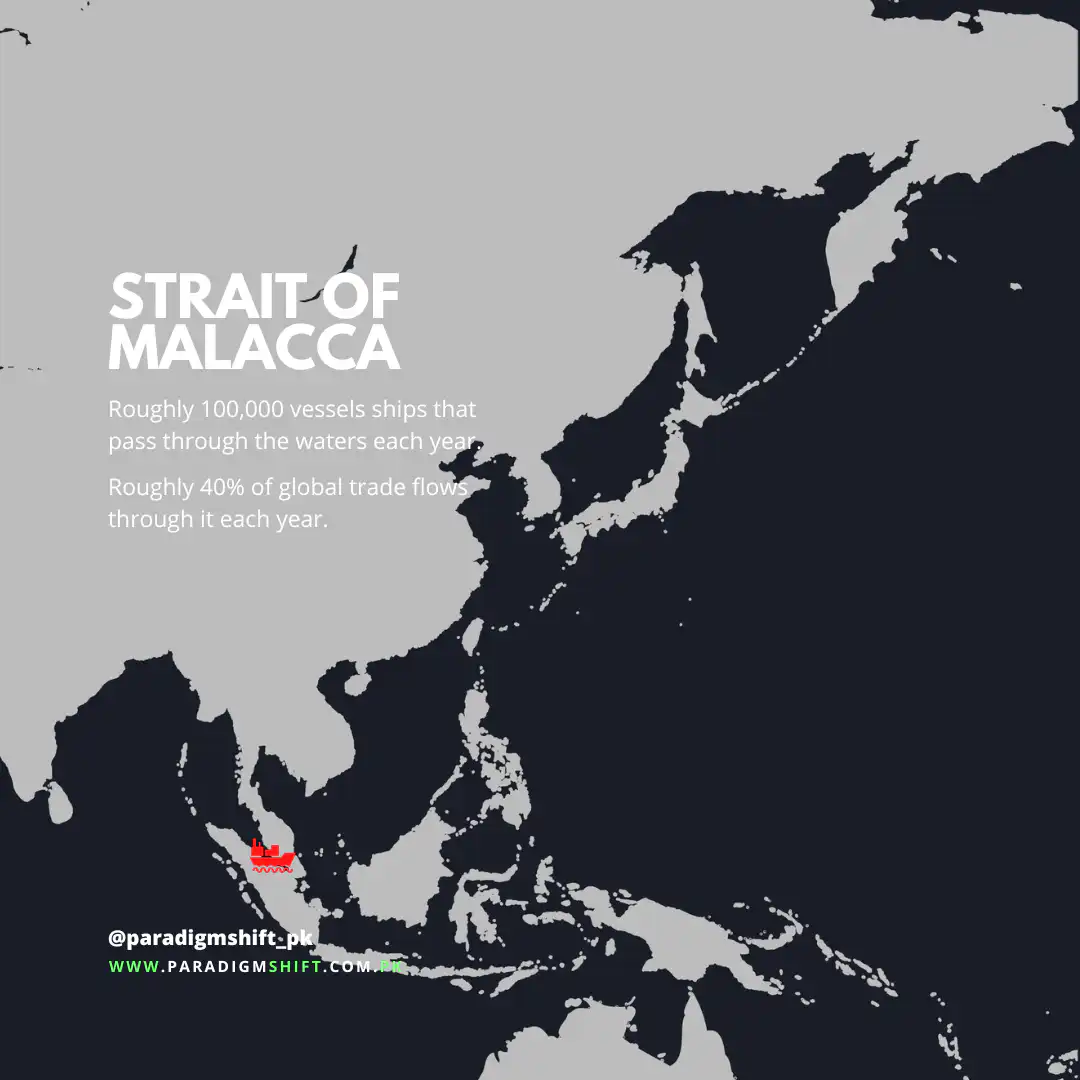
When talking about the greatest vulnerability of the Indo-Pacific region, the discussion will always be related to the Strait of Malacca. This is because this waterway carries almost 60 percent of the global maritime trade as well as most of China’s oil imports. The Malacca dilemma has been identified as a potential problem that might arise during wartime. In that case, the naval power would block the passage and restrict access to East Asia’s energy supply within weeks.
The key transformation occurring in the Southeast Asian region at present does not involve naval power. Rather, it involves a billion-dollar project that aims to get rid of the strait altogether. This project has been launched due to Beijing’s security concerns as well as the need for foreign direct investment in mainland Southeast Asia. These overland transport projects have often been celebrated as the victory of economic connectivity, but they have introduced a new element in the geopolitics of the region.
The ultimate effect of bypassing the Malacca Strait lies in the fact that the diplomatic and strategic leverage of maritime Southeast Asia has been severely compromised.
The End of Geographical Monopoly
For more than half a century, littoral countries of the strait—Singapore, Malaysia, and Indonesia—have enjoyed a special geographical advantage. Their monopoly on the major trade route linking the Indian and Pacific Oceans ensured their direct involvement in global trading policy and the security system. Particularly, Singapore has relied on the geographical monopoly of that country as the main principle for its economic success and foreign policy.
Nowadays, the mentioned monopoly is being undermined due to different overland routes. The most sophisticated one is the China-Myanmar Economic Corridor (CMEC). The infrastructure corridor, which includes the port of Kyaukphyu in Myanmar’s Rakhine State, delivers oil and natural gas from the Indian Ocean to China’s landlocked Yunnan Province, bypassing the Strait of Malacca. Despite internal conflict in Myanmar, the port construction proceeds under the 50-year concession granted to the consortium led by Chinese state company CITIC Group. The port is considered the most efficient bypass to the Indian Ocean.
On the other hand, the Thai government has launched the $28 billion Landbridge project. While abandoning proposals that date back centuries and involve the digging of a canal through the Kra Isthmus, the government is aiming at the construction of deep-sea ports in Ranong, located in the Andaman Sea, and in Chumphon, located in the Gulf of Tonkin. This will be linked by a large highway and rail network for the offloading, transportation, and reloading of cargo containers overland, cutting three to four days from the route around the Malay Peninsula. With bidding set for 2025 and 2026, Bangkok is making efforts to bring in Chinese, American, and Middle Eastern investments into the scheme.
This is in addition to the expansion of the cross-border Eurasian rail systems. Freight railway lines from Kunming to Vientiane and then to Bangkok and beyond into Malaysia are revolutionizing the way high-value, time-critical cargo moves across continental Asia. By moving high value-added freight from shipping ports to transshipment terminals and overland rail, such projects not only augment but also displace the conventional trade routes.
The Potential for Division Within ASEAN Centrality
The change in infrastructure poses the potential to split ASEAN and divide its ten members according to a geographical divide. The mainland countries of Laos, Cambodia, Myanmar, and Thailand are becoming increasingly integrated into north-south coordination chains that are anchored in southern China. For these governments, playing host to transit corridors provides great infrastructure investment, revenue from transit, and support from Beijing. The economic future of these states is becoming tied up in the continent.
In contrast, the maritime states of Singapore, Indonesia, and the Philippines are dependent on open maritime passages based on international law. As trade shifts northward onto the land, these states experience a quiet crisis of relevance. They become less relevant diplomatically. If the major external players, particularly China, but also Japan and South Korea, become less reliant on the passage through the Strait of Malacca, then their diplomatic and security engagement in the stability of the littoral states will be reduced. This also applies to the United States, which has historically partnered with Singapore and Indonesia to ensure the freedom of navigation through the strait.
Second, the use of bypass routes means that there is a legal change in Asian trade. Ocean routes are regulated by the United Nations Convention on the Law of the Sea (UNCLOS). Open oceans are owned by nobody. The land-based bypass routes, however, pass through sovereign territories. The land-based bypass routes are regulated by bilateral landlord and tenant agreements. This means that any transfer of the goods from the Strait of Malacca to Myanmar or Thailand passes under the domestic political will of Naypyidaw or Bangkok.
The Security Illusion
Security is the major reason Beijing would pay for such projects. This involves the risk that the U.S. Navy may decide to block this route in case of conflict over Taiwan and the South China Sea. However, switching from one maritime chokepoint to a number of overland corridors will only generate more complicated vulnerabilities for Beijing.
It is necessary to understand that seeking security in the form of circumvention is a security illusion because pipelines that will be built through Myanmar will go right through the territories contested by EAOs and defense forces against the junta. They will be exposed to instability in these regions, to extortion and sabotage, and will require extensive security deployments to operate at all.
The Landbridge proposed in Thailand is a source of great logistical difficulties as well. The necessity to unload thousands of cargo containers from the ship in the Andaman Sea, load them on trains, then deliver them across the 90-kilometer-long isthmus and load them on other ships in the Gulf of Thailand is an immense challenge in the case of war.
Additionally, these alternatives do not reduce the nation’s strategic exposure to enemy navies; they only shift the strategic risk from one point to another. In case India builds a pipeline facility in Rakhine State or a deep-water port in Ranong Province, they are equally susceptible to enemy blockades or airstrikes as the ships passing through the Malacca Straits. The creation of Chinese port facilities in the Bay of Bengal by India means shifting the frontline to the vicinity of the Andaman and Nicobar Islands.
Reframing Maritime Security
With the growth of bypass infrastructure, power dynamics in the region are being recalibrated. The state of Singapore understands the risk it faces to its historic economic system. Understanding that there is no way to stop the development of alternative shipping channels, Singapore has moved to a system where it is now trying to cement itself as the indispensable center for logistics management, green fuels, digital trade architecture, and maritime arbitration in the region. Singapore wants to be the brain of Indo-Pacific shipping even if the brawn moves elsewhere.
In the meantime, the maritime security efforts in the region are expanding. For many years, the focus of Southeast Asian maritime defenses was on protecting the choke points in the Malacca and Singapore Straits from pirates. Now, the focus of littoral navies, as well as the QUAD nations, has shifted to monitoring the deeper-water approaches in the Andaman Sea and northern reaches of the South China Sea.
Concentration on a single crisis event in the Strait of Malacca fails to recognize the ongoing structural change that is occurring within the Indo-Pacific. The gradual evolution of bypass options has caused economic and political power to shift from maritime Southeast Asia to the Asian mainland.
As trade routes are rerouted through Thai land routes, Burmese pipelines, and Laos railways, the geographical realities that have shaped Southeast Asian foreign policy for a hundred years are being redefined. The future shape of the region’s security architecture will depend less on who has control over the choke points of the seas than on who has control over the land route alternatives.
If you want to submit your articles and/or research papers, please visit the Submissions page.
To stay updated with the latest jobs, CSS news, internships, scholarships, and current affairs articles, join our Community Forum!
Find our FREE quizzes and MCQs here!
The views and opinions expressed in this article/paper are the author’s own and do not necessarily reflect the editorial position of Paradigm Shift.

Nisar Kakar is a writer and poet and a BS English student at Quaid-i-Azam University, Islamabad, Pakistan, hailing from District Killa Saifullah, Balochistan. He serves as Assistant Coordinator for Literary Prose at the Quaidian Debating and Literary Society (QDLS).