
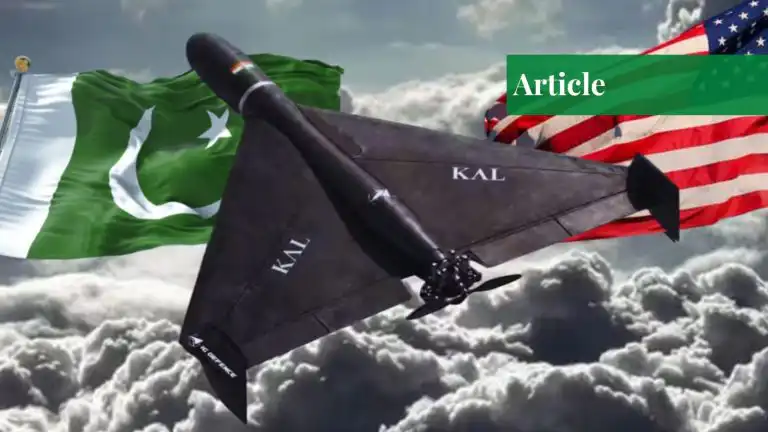
On the 16th of September 2026, representatives of Powerus, a defence and drones company based in the United States, had a meeting with Pakistan’s Chief of Defence Forces, Field Marshal Asim Munir, at the General Headquarters in Rawalpindi. Following the meeting, Powerus and the Pakistan Army signed a memorandum of understanding and reached an agreement on the first order for unmanned aerial systems. The company has not disclosed the value or details of the order because of security and confidentiality considerations.
The fact that Pakistan is increasing its investment in drone technology is important not only in itself but also because of the complicated international connections associated with Powerus. Although Powerus is an American company, one of its co-founders, Ziv Marom, had a career in the Israeli military, and the company has also carried out business with India’s counter-drone sector. Questions have been raised on this account since Pakistan does not recognize Israel and has a difficult relationship with India.
However, the most important question might be whether or not Pakistan is moving towards Israel. Pakistan’s official stance on the Abraham Accords has not changed. In June 2026, the Foreign Office of Pakistan said that its position still relates to the creation of a viable Palestinian state with Jerusalem as its capital within the pre-1967 borders.
What the Powerus Agreement actually shows is a larger shift in global security. Unmanned systems are growing in importance and are now going beyond previous geopolitical boundaries. For Pakistan, this raises a major question: is the country simply purchasing another military tool, or is it preparing for a future in which drones will be as significant as conventional weapons?
What makes the Powerus agreement stand out is that Pakistan is cooperating with an American defence company whose leaders have experience in the Israeli military or defence sector; at the same time, Pakistan has no diplomatic relations with Israel and has on several occasions stated that its stance on the Abraham Accords is unchanged.
It is wrong to say that the Powerus agreement indicates that Pakistan is joining the Abraham Accords or moving towards recognising Israel, since there is no evidence of a policy change. It is necessary to distinguish between business defence agreements and diplomatic alliances.
Defence companies today have an international presence. The employees, investors, suppliers and partners of these companies are usually from several different countries. It is possible for a country to carry on business with a foreign company without having to share all of its political beliefs. The case of Powerus illustrates this situation. Although it is an American company, its top officials and business connections extend to Israel and India. With regard to Pakistan, the main attraction appears to be the technology and defence capabilities, not diplomatic relations with Israel. However, the political aspect is still important. This example proves that technological cooperation can take place even when the political relations between countries are complicated.
What actually matters to Pakistan is not merely whether a company has links with a particular country, but whether dealing with such companies might lead to undesirable technological, political, or strategic dependencies.
The Powerus agreement is also part of Pakistan’s broader strategy to enhance its unmanned capabilities. In May 2026, the Ministry of Defense Production in Pakistan had a meeting with private companies that are involved in unmanned aerial systems. The ministry described drone warfare and surveillance as rapidly developing fields and stressed the importance of greater cooperation between government agencies and private technology companies. It also stated that developing local unmanned capabilities has now become a national priority.
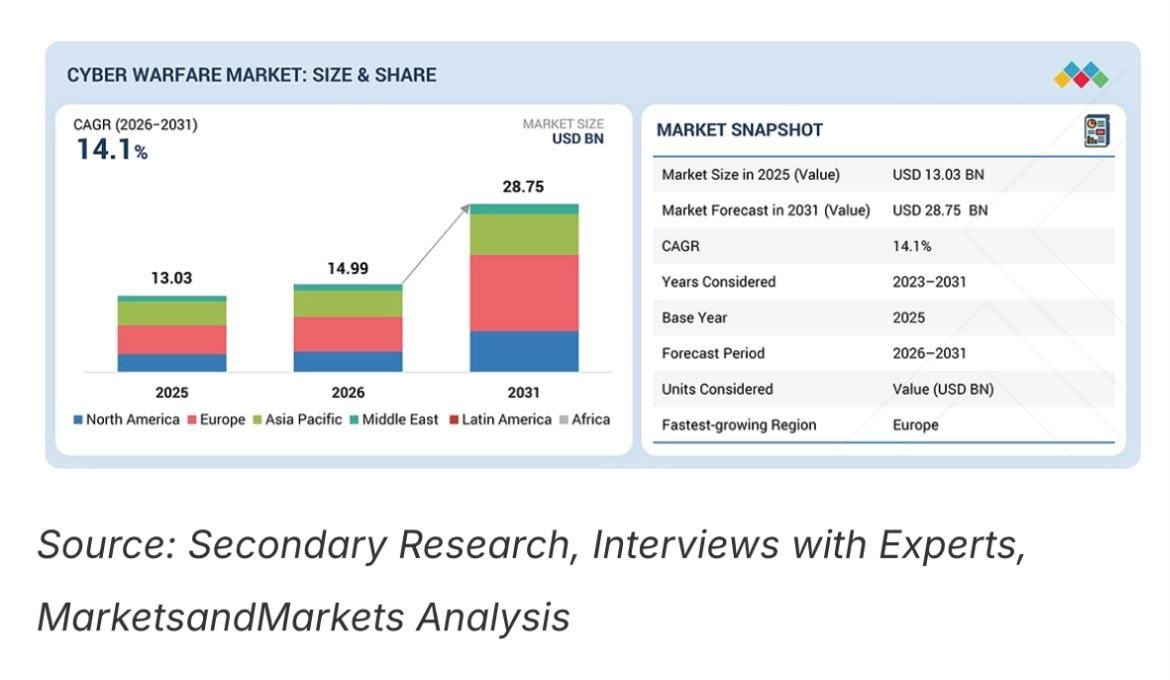
The fact that Pakistan is interested in drones extends beyond merely purchasing equipment from other countries; it also wishes to set up its own system covering research, manufacturing, testing, buying, and collaborative work on technology. This is reasonable because drones have altered both the cost and the character of warfare; for instance, a recent chart from marketsandarkets.com indicates that the cyberwarfare market is growing rapidly.
War machinery such as fighter jets, tanks, and warships is very expensive to develop, to purchase, and to maintain. Drones, according to their type, can carry out tasks such as surveillance, reconnaissance, targeting, and strikes at a lower cost. The value of drones arises from both their low price and their versatility. They allow an area to be watched without putting a pilot’s life at risk and can remain over a target for a long period. Smaller drones can be used by small military units while larger ones are suitable for long-range missions. Owing to these advantages, drones have now become an important element of modern military planning.
However, as drones have become more common, so too has counter-drone warfare. Since drones are used by any military force, they must consider how they can defend against enemy drones. As a result, there has been an increased need for radar, electronic warfare equipment, jammers, sensors, air-defence systems, and other technologies designed to counter unmanned aircraft. The rivalry between drones and counter-drones is now a major element in military technology. This is particularly significant for Pakistan. If Pakistan acquires advanced drones but does not have effective counter-drone systems, it could end up with a serious vulnerability. An opponent capable of disrupting or destroying drones could make those drones much less effective. In the future, success in battle may depend less on possessing a large number of drones and more on combining a range of technologies such as drones, counter-drone tools, electronic warfare, artificial intelligence, satellite communications, intelligence and surveillance, regular air defense, and conventional military equipment. The countries that manage to integrate these technologies effectively will have a considerable advantage over those that keep them separate.
This raises a more fundamental question: will the next major war be primarily carried out using drones? The answer is likely to be complicated. Drones won’t suddenly take the place of fighter jets, missiles, artillery, tanks, or ships. On the contrary, they are likely to become a more significant element of a broader and more complicated battlefield. Future wars could see a variety of technologies working in conjunction, such as conventional military equipment, drones, artificial intelligence, cyber tools, and electronic warfare. For instance, a drone could detect an enemy, transmit the information via secure networks, and artificial intelligence could then be used to analyse it. Electronic warfare units would attempt to prevent the enemy from disrupting the drone, after which artillery, missiles, or other unmanned systems could strike the target. In this scenario, drones do not replace traditional weapons; they enhance their effectiveness. That is the reason why referring to it as a “drone war” might be misleading. The actual change is that unmanned systems are becoming closely integrated with regular military capabilities.
The war in Ukraine has demonstrated how extensively drones are being used for surveillance, reconnaissance, and attacks, and how vital electronic warfare and counter-drone systems have become. As a result, there is an ongoing cycle of change: one side introduces a new type of drone, the other finds a way to counter it, and then the first side makes further adjustments again. For Pakistan, the message is that acquiring drones is only the beginning. Military success relies on training, maintenance, communication, intelligence, software, electronic warfare, and the capacity to adapt technology as the nature of the battlefield evolves. The same applies when making drones at home. While building drones locally provides greater control, a robust drone industry needs more than just assembling airframes; it also requires expertise in artificial intelligence, sensors, navigation, communications, engines, software, and electronic warfare.
Pakistan is in a difficult security position due to India being a major military opponent, instability along its western border, and the increasing use of drones in the region. Developing its own drone capabilities would be of assistance in terms of surveillance, border security, and carrying out military operations. It might also result in reduced dependence on foreign suppliers if Pakistan is able to carry out its own research and manufacturing. Yet it will be difficult to achieve complete technological independence. Since modern military drones depend on sophisticated components and software, parts such as engines, sensors, chips, navigation systems, and communication equipment are generally obtained from all over the world.
Pakistan has to strike a balance between gaining access to advanced foreign technology and developing its own technological capabilities within the country. The Powerus deal might assist in this regard. Powerus has expressed an interest in joint U.S.-Pakistan drone projects, and the agreement involves an initial order as well as a more general understanding. Should this partnership develop, it could enable Pakistan to acquire new technology and increase local production. At the same time, Pakistan must also consider issues such as software dependence, maintenance, data security, supply chains, and long-term access to essential components. True strategic independence is not merely about producing weapons at home; it also means having sufficient control over the technology so that it can be used, maintained, and improved.
The agreement demonstrates no intention on the part of Pakistan to move towards recognising Israel or to join the Abraham Accords; its official stance remains the same. It also doesn’t indicate that drones will take the place of traditional military vehicles. What it does show is that unmanned technology is now so important that it can no longer be ignored. The Pakistan Ministry of Defence Production has already regarded the development of a local drone industry as a national priority. The Powerus agreement brings a new dimension to this initiative by providing a means of working with an American technology company.
Ultimately, the Powerus agreement could be only a minor element of Pakistan’s broader defence modernisation programmes. However, it does serve as a timely reminder that the future battlefield is already taking form and could be quite different from those of past wars.
If you want to submit your articles and/or research papers, please visit the Submissions page.
To stay updated with the latest jobs, CSS news, internships, scholarships, and current affairs articles, join our Community Forum!
Find our FREE quizzes and MCQs here!
The views and opinions expressed in this article/paper are the author’s own and do not necessarily reflect the editorial position of Paradigm Shift.

Abraiz Ali Ahmad is an international relations student at the University of Gujrat, with a strong interest in regional security, geopolitics, and connectivity. He enjoys looking beyond official statements and headlines to understand the interests, vulnerabilities, and consequences shaping regional developments. His particular areas of interest include South Asia, Central Asia, and the Middle East, especially where conflict, infrastructure, and geopolitics intersect.