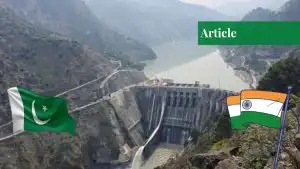
The most fundamental resource for civilisation has always been water. Where rivers flowed consistently, empires flourished; where they did not, they collapsed. In the twenty-first century, hydropower dams the size of mountains, satellite imagery that maps aquifer depletion in real time, climate models that predict glacial retreat for the decade, and the political will to use all of these as tools of pressure have all been added to this age-old logic. Pakistan is currently at the crossroads of all four. To build hydropower infrastructure on rivers that Pakistan’s constitution essentially views as the nation’s bloodstream, India has suspended the Indus Waters Treaty to the east, citing national security. On Tibet’s Yarlung Tsangpo, China is constructing the biggest dam in the world to the north, upstream of all the hydrological systems that supply the subcontinent. Above all, temperatures that the subcontinent did not cause and cannot reverse are causing the Himalayan glaciers, the natural reservoir that supports the whole Indus basin, to retreat. Water security in Pakistan has become more than just a development issue. It is becoming the nation’s main strategic issue.
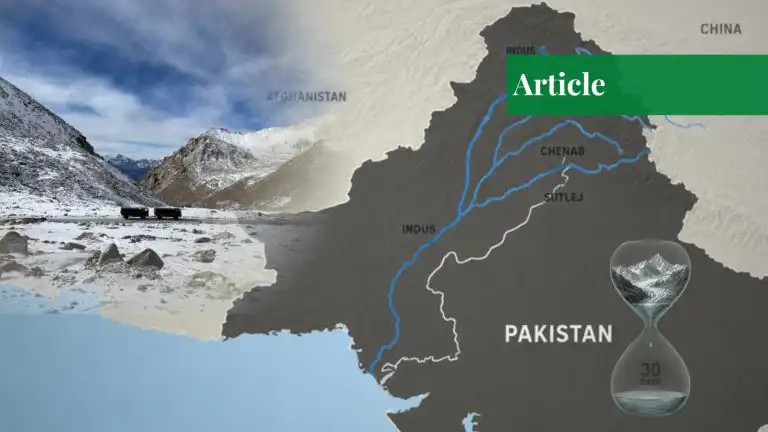
One of South Asia’s most significant geographical features is the Indus River system. Rising close to Mount Kailash in Tibet, it flows through the Karakoram and Hindu Kush before entering Pakistan. There, it gathers the tributaries of the Jhelum, Chenab, Ravi, Beas, and Sutlej across the Punjab plain before embarking on its arduous trek to the Arabian Sea at the Sindh delta. More than 200 million people are supported by this system, which also provides water to the subcontinent’s most productive agricultural land and sustains the world’s largest irrigation network. The basin’s hydrological reality is simple and harsh: nearly all of its headwaters are located outside of Pakistan. China, India, and Afghanistan all control parts of the Hindu Kush-Karakoram-Himalayan mountain range, which produces the river’s flow. Pakistan depends on what its neighbours and topography permit to flow downstream, making it structurally a lower riparian state.
This geographic reality was partially managed by the Indus Waters Treaty of 1960, brokered by the World Bank and signed in Karachi by Nehru and Ayub Khan after nine years of negotiation. The Indus, Jhelum, and Chenab rivers, which collectively supply more than 80% of Pakistan’s irrigation water and roughly one-third of its hydropower-producing capacity, were given to Pakistan by the treaty. The Ravi, Beas, and Sutlej rivers in the east were kept in India. By all accounts, it was one of the most resilient bilateral water accords in history, having withstood decades of diplomatic disruption, four short conflicts, and three major wars without ever being formally revoked. Because those who depend on water for survival cannot wait for diplomats to agree, the treaty was intended to be permanent. That permanence is now, for the first time in the treaty’s sixty-five-year existence, genuinely in question.
The extent of Pakistan’s reliance on the Indus basin must be understood to comprehend what is at risk in the current hydro-political conflict. Approximately 80% of Pakistan’s agriculture and a third of its hydropower generation depend on water from the Indus basin, a dependency that is structurally greater than India’s relationship to the same system. Thirty percent of exports come from agricultural goods, and the agricultural industry directly employs forty-two percent of the working population and contributes about twenty-three percent of the GDP. Agriculture uses around 95% of Pakistan’s freshwater, making it the nation’s main water user as well as an economic pillar. But Pakistan’s two largest reservoirs, Tarbela and Mangla, built in the 1960s and 1970s and filling up with silt, only have thirty days’ worth of water, and their storage capacity is woefully insufficient for that reliance. The world standard for water security is a storage capacity of 120 days. Pakistan ranks 14th among the world’s seventeen most extremely water-stressed countries, a list that includes desert nations whose situation is structurally far less complicated than Pakistan’s. The country has the world’s largest contiguous irrigation system, but cannot provide water security to its own people.
In the wake of the incident in Pahalgam, India decided on April 23, 2025, to put the Indus Waters Treaty “in abeyance.” New Delhi said the move was a counterterrorism precaution. The implications are much more serious. There is no place for the word ‘abeyance’ in international water law, and it is not found in the text of the treaty. It was precisely this ambiguity that made it beneficial: it kept the fear of disruption alive without committing to a particular action that may be decided, allowing India to exercise influence without incurring the formal repercussions of withdrawal. Pakistan quickly grasped the manoeuvre. The Permanent Court of Arbitration at The Hague ruled unanimously in June 2025 that it was not open to India to suspend proceedings unilaterally and affirmed that the treaty remained in force regardless of India’s political declaration. The award was rejected by India as “illegal and void.” The current water insecurity in Pakistan is in the space between the court’s decision and India’s response.
The Pahalgam conflict was preceded by the dispute over the Kishanganga and Ratle hydroelectric projects on the Jhelum and Chenab rivers, which are the western rivers allotted to Pakistan by the treaty. For more than ten years, Pakistan has claimed before the World Bank and the PCA that these projects are in violation of treaty restrictions regarding flow manipulation and storage capacity. According to India, the projects are within its rights to non-consumptive use as granted by treaties. Prime Minister Modi’s declaration that “India’s water will be used for India’s interests” collapsed the diplomatic language entirely, making explicit what the construction of Kishanganga and Ratle had implied through engineering alone. The water was being declared a weapon after it had been geopoliticalised. The threat’s practical constraints are real: India does not currently have the infrastructure to reroute western river flows on a large scale, and it would take years to construct it. However, even in the absence of physical diversion, India’s capacity to control the timing of releases, holding back water during the low-flow season between December and February and releasing it at random, can result in the kind of cascading agricultural disruption that a nation with thirty days of storage capacity and no margin for error cannot withstand.
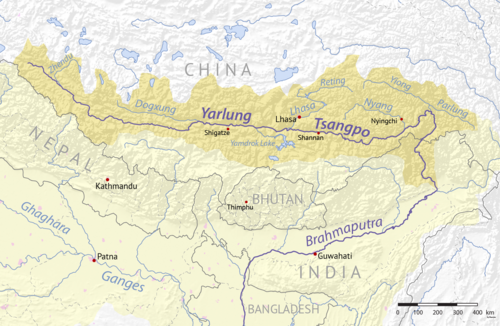
The geopolitics of water in Pakistan cannot be reduced to the relationship with India. China controls the Tibetan Plateau, which is further upstream in the hydro-political hierarchy and is the source of both the Indus and the Brahmaputra. As such, its actions have an impact on the entire subcontinent. On 19 July 2025, China broke ground on the Medog Hydropower Station on the Yarlung Tsangpo River in Tibet, a project that, upon completion in 2033, will be the largest hydropower installation in human history, generating three times the power of the Three Gorges Dam at an investment cost exceeding $137 billion. China maintains that the project has no downstream effects and is a run-of-the-river design. This assurance has been met with varied degrees of mistrust by the downstream countries, including Bangladesh, India, and Pakistan, due to regional implications.
The all-weather strategic cooperation that characterises their bilateral relationship complicates China’s upstream role, particularly for Pakistan. Under CPEC, China has accelerated construction of the Mohmand and Diamer-Bhasha dams in Pakistan’s northwest, projects that will meaningfully increase Pakistan’s storage capacity and hydropower generation when complete. Just the Diamer-Bhasha Dam will produce 4,500 megawatts and hold 8.1 million acre-feet of water. This is strategically significant because China is both Pakistan’s funding partner for its own dam program, the upstream dam-builder whose Tibet projects alter regional hydrology, and the geopolitical counterweight to India, whose presence implicitly discourages Indian water adventurism. Although there is friction in the relationship, China’s control over the upper tributaries of the Indus implies that Pakistan will always care about its dam decisions regardless of political affiliation; it is currently a structural advantage that Pakistan lacks on its eastern border.
The physical depletion of the water supply itself is a more fundamental and irreversible catastrophe that lies beneath the geopolitical drama of treaty abeyance and megadam building. Glaciers in the Hindu Kush-Himalayan region supply over 75% of the Indus River’s flow. According to climate experts, these glaciers are receding at some of the quickest rates on record. Pakistan has more glaciers than any other nation outside of the polar regions, roughly 7,000 in the Himalayan, Hindu Kush, and Karakoram ranges, and it is witnessing their decline due to temperatures it did not generate. Despite accounting for less than 1% of global greenhouse gas emissions, Pakistan was classified as the nation most vulnerable to the effects of climate change in the Germanwatch 2025 Climate Risk Index. The defining injustice of Pakistan’s climatic condition is the indignity of this asymmetry, maximum vulnerability from the smallest accountability.
Glacier retreat has the paradoxical effect of increasing meltwater flow in the short term, followed by a longer-term collapse as the glacial mass is depleted. Most estimates put Pakistan in the first phase, where rivers run high in the summer but become less predictable. That’s what caused the devastating floods that struck the nation in 2022 and returned in 2024 and 2025. Extreme heat has caused reservoirs to lose up to 20% of their capacity through evaporation. Last winter was one of the driest ever, with 67 percent less rainfall than normal, said the Pakistan Meteorological Department. To have a peak flood and a trough drought in the same country in the same decade is not contradictory. Climate breakdown is not a slow linear fall but an increasing unpredictability that destroys the predictability that underpins agricultural planning, dam management and food security.
Preferring the well-known categories of military conflict, nuclear deterrence, and counterterrorism, Pakistan’s security apparatus has been sluggish to formally include water in its threat assessments. These days, its analytical paradigm is severely outdated. The FAO has placed Pakistan’s water stress among the highest globally, a designation that carries specific implications: water stress at this level is historically associated with agricultural collapse, internal displacement, intercommunal conflict over water allocation and the political instability that follows from all three. Pakistan’s water storage capacity is only thirty days, compared to a standard of one hundred and twenty. 70% of its people do not have consistent access to clean drinking water. Aquifers in the nation are being emptied considerably more quickly than they are being refilled. These forecasts are not far away. These are contemporary facts that intensify daily and interact with the previously mentioned geopolitical vulnerabilities to produce non-linear risk. Three distinct crises that together pose an existential threat are on India that withholds water during a month of low flow, a glacier system that is unable to deliver its seasonal melt on time, and an internal distribution system that loses two-thirds of its carrying capacity due to inefficiency.
For six decades, the Indus Waters Treaty served as evidence that effective water cooperation was achievable even between nuclear-armed rivals who had engaged in wars. Now, both the treaty and that proof are suspended. The Permanent Court of Arbitration ruled in June 2025 that the treaty was legally valid, but legal validity without implementation is just a theoretical concept. India’s refusal to accept the court’s jurisdiction and to participate in PCA proceedings has revealed the fundamental architectural flaw in the treaty: that it was designed for a world in which both parties accepted the authority of its dispute resolution mechanisms. The World Bank, which is the treaty’s guarantor, is powerless to use coercion when one party does not. As a legal document, the treaty endures. Its operational reality is far less comforting.
Beyond the bilateral conflict, the larger framework of global water administration is insufficient to address the issue at hand. Only 38 governments have accepted the UN Watercourses Convention, which Pakistan may use. Crucially, China has not ratified it and is not subject to its requirements for damage prevention and equitable utilisation. China and Pakistan are also members of the SCO, which lacks a significant framework for water control. India’s rejection of some processes limits the World Bank’s ability to act as an impartial adjudicator under the IWT. As the Lowy Institute’s analysis observed, every upstream riparian in Asia would be encouraged to adopt the same reasoning if India’s precedent of viewing treaties as tools of political pressure rather than frameworks for stability is permitted to continue, with China emerging as the main winner, and Bangladesh, Pakistan and India’s own downstream states as the ultimate losers.
Pakistan has limited but actual strategic options, and they must be pursued immediately. Accelerating domestic storage infrastructure is the first and most immediate goal. In addition to completing the Diamer-Bhasha and Mohmand dams on schedule and without further political postponement, a comprehensive program of building small and medium-sized reservoirs, installing rainwater harvesting infrastructure, and lining canals to cut the two-thirds loss in the irrigation system would completely change Pakistan’s water security situation in less than ten years. Pakistan has exploited only 6,500 megawatts of its 59,000-megawatt hydropower potential from the Indus system alone. It is not an abstraction, that unrealised capacity. It distinguishes a nation that has incorporated resilience into its own borders from one that is always susceptible to upstream disruption.
The full and aggressive use of international legal procedures is the second strategic necessity. Pakistan’s June 2025 victory in the Permanent Court of Arbitration, which resulted in a unanimous decision that the treaty is still in effect despite India’s political statements, is a model rather than a definitive triumph. Pakistan should make the necessary legal and technical investments to keep up its ongoing participation in international arbitration, record all of India’s treaty violations, and create the supporting documentation that would be needed in future trials. Although it is far less expensive than the alternative, international law is neither free nor trustworthy.
Climate diplomacy is the third necessity. By objective standards, Pakistan is one of the world’s biggest victims of climate change and one of its least significant contributors. This produces a moral argument that is convincing on a global scale but has not yet reached its full potential. The upstream issue would not be resolved by a persistent Pakistani diplomatic campaign at the UNFCCC, the G20, the UN Security Council, and multilateral development banks. Instead, it would internationalise it in ways that increase the reputational cost of China’s opacity on hydrological data sharing and India’s water adventurism by framing water security as a climate justice issue, demanding compensation through the Loss and Damage Fund, and forming alliances with similarly situated lower riparian states throughout Asia and Africa.
Indus is more than just a river. It is the fundamental geographic truth of Pakistan, the prerequisite for its agriculture, the source of its energy, and the link between its civilisational past and its future as a nation. Additionally, it is becoming more of a battlefield, not of armies, but of treaties, glaciers, dams, and geopolitical calculations made by nations above it on the map that view Pakistan’s downstream vulnerability as either irrelevant or leveraged. No one policy solution will address this enormous task. However, the necessary solutions, building storage, pursuing legal rights, demanding climate justice, and diversifying hydraulic dependency, are all accessible, attainable, and required at the same time. When water becomes a national security emergency, Pakistan cannot afford to consider it as a domestic infrastructure issue. There is debate on the rivers that gave rise to this civilisation. The threat must be matched by Pakistan’s response.
If you want to submit your articles and/or research papers, please visit the Submissions page.
To stay updated with the latest jobs, CSS news, internships, scholarships, and current affairs articles, join our Community Forum!
The views and opinions expressed in this article/paper are the author’s own and do not necessarily reflect the editorial position of Paradigm Shift.

Abdul Basit | MS International Relations | Researching soft power, cultural diplomacy and global politics | Writing on geopolitics, foreign policy and defence affairs.