Introduction
Last month’s Pahalgam attack brought additional hardship to the security situation in South Asia. Many people were killed, and tensions rose between India and Pakistan after a convoy in tourist-favored Jammu and Kashmir was deliberately targeted. Indian officials immediately placed the blame on militants supported by those in Pakistan, a claim denied by Islamabad, which urged an honest inquiry and for everyone to stay calm. Such incidents increase conflicts and make the current bilateral process less likely to succeed, especially the 1960 Indus Waters Treaty.
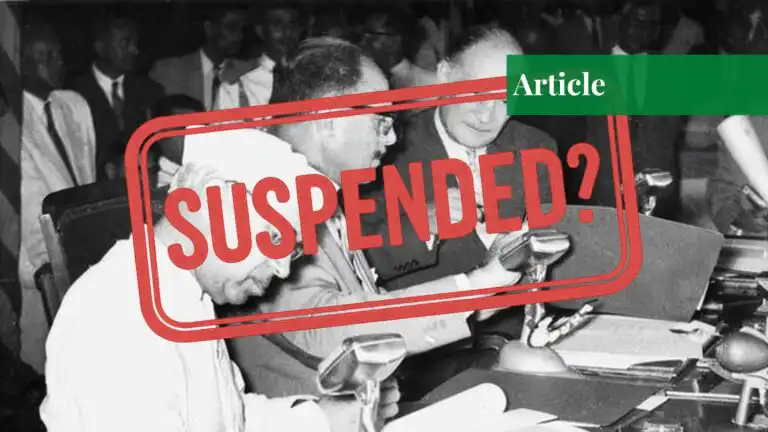
In 1960, India and Pakistan signed the Indus Water Treaty through the World Bank, making it possible for both countries to share six significant rivers. These waters were shared by Pakistan and India, as the Ravi, Beas, and Sutlej were given to India, and the Indus, Jhelum, and Chenab were given to Pakistan, each receiving about the same share. Miraculously, through repeated wars and years of political division, the treaty has remained a sign of unusual cooperation. Recently, especially after the attacks of Uri (2016), Pulwama (2019), and Pahalgam, many people in India have begun to think the treaty is not useful and have occasionally advocated for India to end or alter it.
Unpacking the Pahalgam Incident
A group of heavily armed militants ambushed the convoy of the Central Reserve Police Force (CRPF) in Anantnag, leading to the death of 44 people and many other casualties. Officials in New Delhi stated that members of Jaish-e-Mohammed from Pakistan had orchestrated the attack, but Islamabad immediately denied this information. The political repercussion was quick and harsh. India evicted its high commissioner from Islamabad and halted bilateral talks. The rhetoric in both nations has become hardened, similar to previous crises such as the 2016 Uri and 2019 Pulwama attacks. Calls by Indian political circles to “revisit” or “revoke” IWT became a rage.
The Pahalgam attack is not a single incident, but it is part of a recurring series of attacks in the area of Kashmir that extends intermittently into the Indo-Pakistani diplomatic space. Its timing, among attempts to relaunch backchannel diplomacy, worsened strategic sabotage, forcing India to reexamine commitments to Pakistan under instruments like the IWT that have entailed a certain level of contact with Pakistan.
Framework of the Indus Waters Treaty
The Indus Waters Treaty came into force in 1960 after mediation by the World Bank between India and Pakistan. It existed as its main agenda was to divide the waters of the Indus River System, constituting the Indus, Jhelum, Chenab, Ravi, Beas, and Sutlej rivers, between these nations. India got rights to the eastern rivers (Ravi, Beas, and Sutlej), and Pakistan held rights in case of the western streams (Indus, Jhelum, and Chenab). This treaty has detailed provisions as to water use, infrastructure building, and dispute settlement. Pertinently, the Permanent Indus Commission was created for routine, day-to-day consultation, and for contentious issues, a neutral expert or arbitration court was appointed under the supervision of the World Bank.
Despite three major wars (1965, 1971, and 1999) and constant skirmishes along the border, IWT has survived. It is frequently cited as an example of transboundary water cooperation under duress. The IWT has survived wars and continues to function, even when other forms of communication have broken down.
Legal binding of the Treaty
The Indus Water Treaty, in terms of law, is a bilaterally binding bilateral treaty under international law. Those present at the Vienna Convention of 1969 (Vienna Convention on the Law of Treaties), although not retroactively, provide guiding principles for the IWT’s interpretation and durability. Article 26 of the Vienna Convention is personalist regarding the idea that a treaty must be observed in good faith.
On the other hand, Article 62 introduces the concept of rebus sic stantibus, which means that a fundamental change of circumstances can justify the termination of a treaty. However, legal scholarsgree that, in a broad sense, this principle can only be invoked based on proof that much has changed from the original basis of consent, an unrealistic situation in the case of the IWT.
Article XII of the IWT clearly states that the treaty “shall remain in force until terminated by mutual agreement.” This article makes unilateral withdrawal beyond the realm of the legally feasible. Even where India threatens to review or revoke the treaty, the option is legally weak without a Pakistani endorsement.
Can Terrorism Incite Withdrawal or Suspension According to Law?
India has, in the past, threatened to revisit the IWT as a retaliatory measure to terrorist attacks, more recently after the 2016 Uri and 2019 Pulwama attacks. After Pahalgam, the same rhetoric has come back. However, the legality of suspending a shared water treaty on account of acts of terrorism remains flimsy.
It is necessary that, under the doctrine of rebus sic stantibus, the changed circumstance must have been unforeseen and essential to the basis of consent. Terrorism is indeed terrible, but it does not cross the high barrier set under this doctrine. Indo-Pak tensions were a public fact when the treaty was signed. Furthermore, pacta sunt servanda (agreements must be kept) is still an underlying principle in international treaty law. A deviation from that exposes not only bilateral arrangements but even the more generalized norm of untampered treaties to disintegration.
By using terrorism to justify the need to withdraw, this would set a dangerous precedent, and granting subjective security interpretation would enable states to dissolve arrangements. Not only from the perspective of the IWT regulation, but even strategically, which suspension or revocation of the IWT would likely impose international rebuke, especially from the World Bank and other interested parties in transboundary water governance? Legal authorities warn that exit from the treaty within an unresolved dispute framework may be regarded as aggression, instead of a legitimate withdrawal.
Recent Developments in the Indus Water Treaty
Since the Pahalgam terror attack in April 2025, India has taken significant steps with the Indus Waters Treaty (IWT). In 2025, India officially announced the suspension of the IWT, saying it was because of national security problems and Pakistan’s alleged support for terrorism across the border. Under this step, all technical cooperation and meetings under the treaty are stopped, along with the sharing of data and warnings of projects, which is the first time such a freeze has happened since the treaty was signed.
Following the suspension, India launched projects to use the water from western rivers, especially the Chenab River, to its fullest extent. One way this is done is by expanding the Ranbir Canal, which will help with irrigation in Jammu and Kashmir and use the allowed quota under the IWT. India did not inform Pakistan before flushing the water at the Kishanganga and Baglihar dams, a move that was seen as provocative by the treaty’s standards. There was a history of dispute and arbitration involving these projects at the World Bank.
Pakistan has responded by saying that any unilateral interference or blockage of water will be seen as an act of aggression. Due to the low Chenab River flows, the Water Resources Ministry in Pakistan has expressed worry, using satellite pictures and data from local checks to support their claims. After asking the World Bank to help, Pakistan is urging India to comply with the treaty. The World Bank is yet to act, but it still believes in neutrality and is closely monitoring events. Lammy stated that both the UK and the US have emphasized that every country should promote peace and comply with the IWT guidelines.
The Consequences of Undermining the IWT
The repeal of the Indus Waters Treaty (IWT) would influence both the strategic and diplomatic situations of India and Pakistan and the wider region. Despite wars like those in 1965, 1971, and 1999, known as Kargil, the IWT has remained in force. If water is destabilized, tensions may rise even higher and lead to the security of water being prioritized, an extremely worrying trend as both climate change and more people put water in shorter supply.
In terms of diplomacy, breaking or stopping the deal would result in criticism by many and by the World Bank in particular, for its earlier role in making the treaty. The country’s decision may add tension to its relationship with Bangladesh and Nepal, who might think India is turning away from transboundary water deals. In addition, if the IWT is faulty, international treaty law could regard a threat analysis (such as the threat of terrorism) as justification for a country to break its legal commitments.
It would also pose a risk of diplomatic inconsistency since India has hydrological cooperation with China through bilateral mechanisms such as the 2002 and 2013 memoranda of understanding (MoUs). India’s pick-and-choose policy towards water diplomacy, maintaining transparency with one neighbor while threatening treaty suspension to another, could erode confidence in its regional water governance credibility.
Conclusion
The Indus Waters Treaty has proved to be exceptionally resilient against wars, upheavals of politics, and changing priorities of tactics. The Pahalgam attack is severely destabilizing but does not qualify legally or morally to warrant a treaty violation. In a nuclear-armed subcontinent, the IWT works as a diplomatic pressure valve; water cooperation from a security standpoint. Mutual benefit, international monitoring, and the realization that water wars would benefit neither side provide the legal durability of the treaty. Instead of prodding the boundaries of the treaty, both India and Pakistan should endeavor to modernize it through dialogue so it remains relevant to the fast-changing surroundings it governs.
If you want to submit your articles and/or research papers, please visit the Submissions page.
To stay updated with the latest jobs, CSS news, internships, scholarships, and current affairs articles, join our Community Forum!
The views and opinions expressed in this article/paper are the author’s own and do not necessarily reflect the editorial position of Paradigm Shift.
Mahpara Gull is an MPhil scholar of international relations at the National Defence University. Her research interests focus on emerging powers, strategic affairs, and contemporary global challenges. She has interned at the Institute of Strategic Studies Islamabad (ISSI) and Inter-Services Public Relations (ISPR).