“Kashmiris cannot be denied their right of self-determination indefinitely”
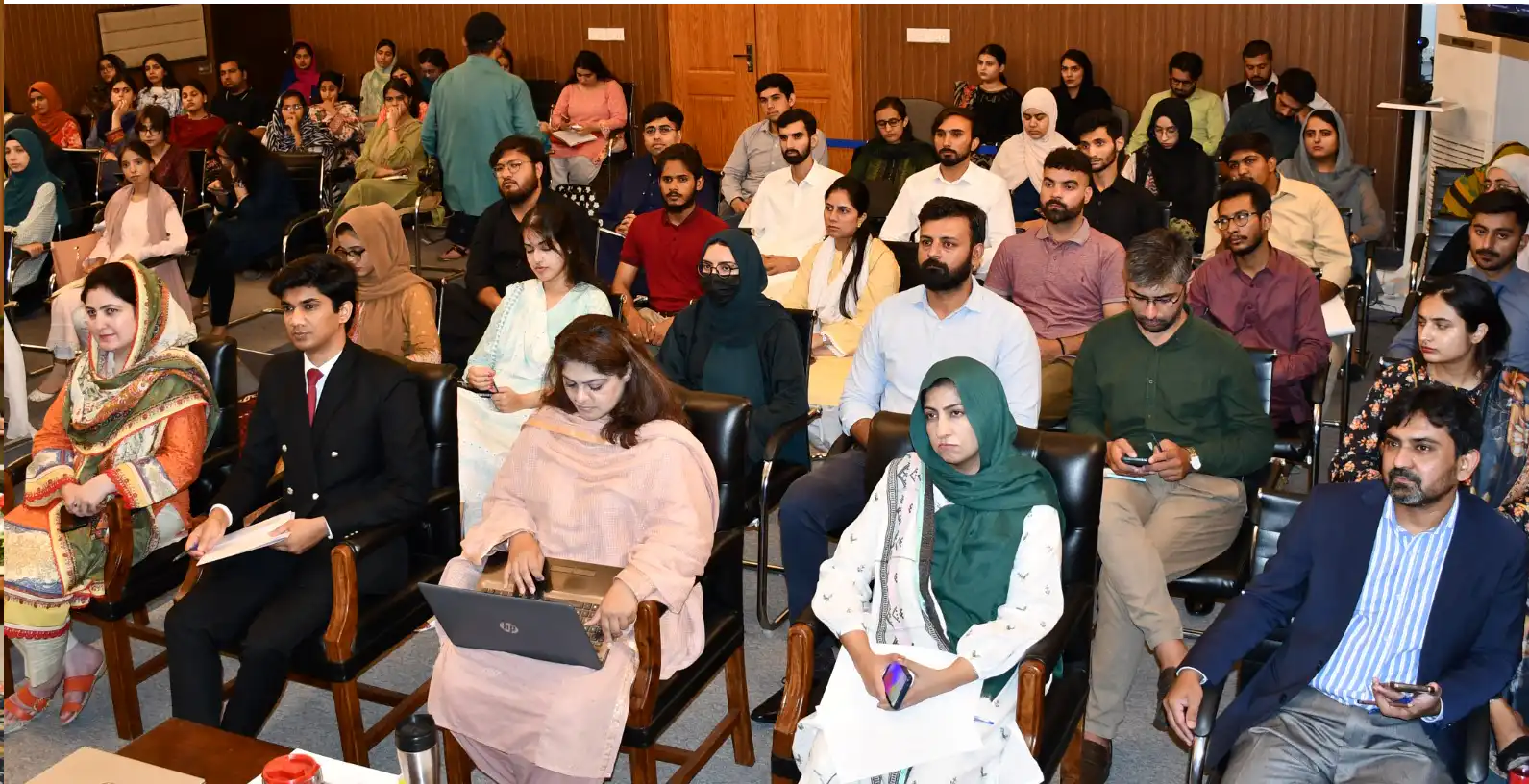
Islamabad – A seminar to commemorate the passing of the resolution for Jammu & Kashmir’s accession to Pakistan in July 1947 was held at the Institute of Regional Studies (IRS) in collaboration with the Youth Forum for Kashmir. The seminar featured reflections from notable figures from Azad Jammu & Kashmir and Indian Illegally Occupied Jammu and Kashmir (IIOJK), including, Senator Zarqa Suharwardy Taimur, Sheikh Abdul Mateen, Altaf Hussain Wani, Sundas Malik, and Zaman Bajwa. Farrukh Pitafi, a renowned journalist, moderated the session.

The speakers underscored the enduring significance of Kashmir’s symbolic accession to Pakistan and the ongoing struggle in IIOJK for the right to self-determination. Ambassador Jauhar Saleem, the president of IRS, in his opening remarks, highlighted that South Asia’s peace and development had been blocked by India’s hegemonic designs, epitomized by its illegal occupation of Jammu and Kashmir.
He noted that the enduring rivalry between Pakistan and India could only witness a rapprochement through resolving the Jammu & Kashmir dispute as per UNSC resolutions, since the Kashmiris could not be indefinitely denied their right to self determination.
Senator Zarqa Suhrawardy emphasized Pakistan’s commitment to supporting Kashmiris in their quest for self-determination and the necessity of evaluating the effectiveness of Pakistan’s support for the Kashmir cause. Sheikh Mateen provided the historical context for the Kashmir dispute, citing the July 19, 1947, resolution whereby Kashmiris expressed their desire to accede to Pakistan. He also discussed the cultural and religious affinities that align Kashmiris with Pakistan.
Altaf Wani paid tribute to the foresightedness of the leadership of the Muslim Conference, which decided to accede to Pakistan. He said that the deplorable situation of Kashmiris in Indian-occupied Kashmir proved that the decision made by the people of Azad Jammu and Kashmir was right.
A Kashmiri lady who joined the seminar virtually from Srinagar said that the rosy picture of an Indian-held Jammu and Kashmir painted by the Indian media was totally contrary to reality. In actuality, the suppression of the people of Jammu and Kashmir had crossed all limits. 80,000 Muslim boys in Kashmir were being incarcerated in detention centers, while thousands of women were being raped, and millions of Kashmiris faced subjugation of all kinds at all levels.
Farrukh Pitafi felt that Kashmiris enjoyed peace and freedom in Pakistan, while in IIOJK they were deprived of all freedoms and lived under the worst kind of oppression. But eventually, India would have no choice but to relent and implement the UNSC resolutions.
If you want to submit your articles, research papers, and book reviews, please check the Submissions page.
The views and opinions expressed in this article/paper are the author’s own and do not necessarily reflect the editorial position of Paradigm Shift.
Paradigm Shift is an official staff account.