

AI is everywhere these days. People say terms such as “AI automation,” “AI agents,” “workflows,” and “autonomous systems.” However, many people use all of them as if they are synonymous concepts. This is not the case.
As a student, a businessman, or a person interested in technology, it is essential to know the difference between these two concepts in order to pick the correct tool. This blog post will provide a straightforward explanation of both, using practical examples, and you will be able to differentiate between the two of them by the end of it.
Let us begin with the basics.
What Is Automation?
But before discussing AI, we need to learn more about simple automation.
Automation is the creation of a machine or software program that performs certain actions without the involvement of a person who needs to repeat them multiple times. Let us see some examples of automation from our lives:
- A clock that makes an alarm sound at 6:00 AM each day.
- A washing machine that completes the wash cycle with one click of a button.
- An email application that sends a thank-you message every time someone fills out your form.
In all these examples, somebody had to set initial rules beforehand. Afterwards, a machine simply follows the rules without any thinking or understanding. This kind of automation has been around for many years already and suits well for those tasks that are repetitive and simple.
What Is AI Automation?
AI automation is a combination of artificial intelligence and an automated system.
Regular automation implies strict guidelines like “If something happens, then do something.” In AI automation, however, the process still takes place according to a preplanned path, but AI technology is used in some stages of this process where a certain level of comprehension is required, for example, parsing text, classifying data, and composing a response.
AI automation can be easily understood as a preplanned path that has intelligent assistants in it.
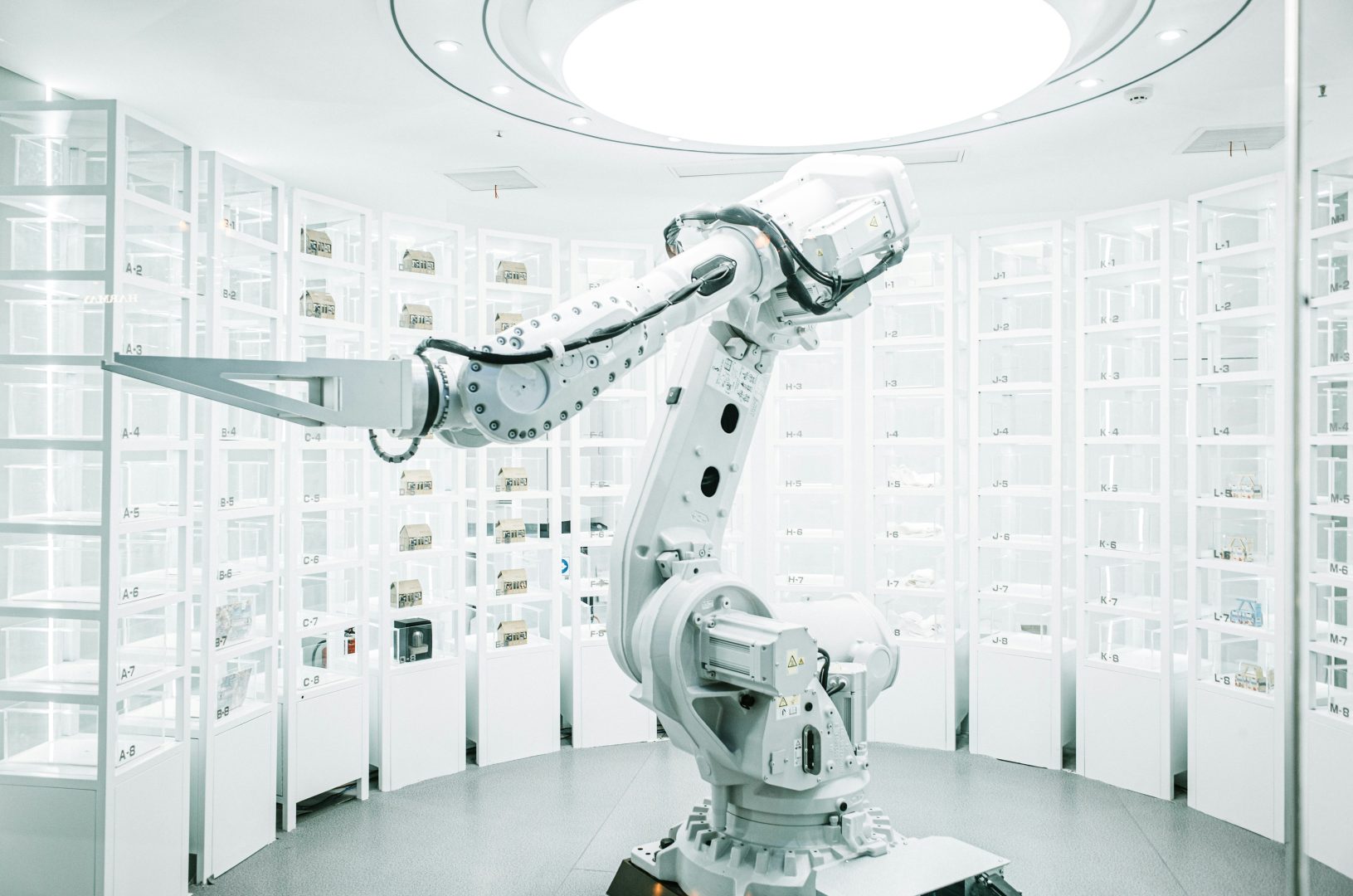
An example of AI automation
Let’s take an example of a firm that gets several hundred emails from customers each day. This is their automation process:
- A new email comes in.
- The AI parses the email and determines whether it is a complaint, a question, or a request.
- Depending on the result, the email is directed to the appropriate department.
- AI composes a brief summary of the email for the department.
See what is going on here. These actions are predetermined. Step 1 results in step 2, then step 3, then step 4. This is an intelligent system for the narrow purpose of reading and categorising. However, the decision about what is to follow the particular action is made by a human being ahead of time.
Key characteristics of AI automation
- It has a predetermined workflow. The order of actions is established by a human in advance.
- It is predictable. You can expect that each time it will perform the same action.
- It performs well at a specific kind of task. For instance, sorting emails and data extraction from invoices.
- It requires a trigger. It can be triggered by receiving a new email, button clicks or a specific time.
- It cannot adjust its course of action. If some unpredicted event occurs, it can fail or freeze.
What Is an AI Agent?
An AI agent is quite unique. An AI agent is unlike a robot that executes a sequence of instructions. An AI agent is defined as an intelligent entity whose job is to achieve a certain goal when it is set. You do not need to give it every step of the procedure, but you just need to define the goal for it, and it will find the means to achieve it. It has capabilities such as thinking, planning, tool-using, self-monitoring, and problem-solving.
A basic description of an AI agent is that it is an intelligent entity that knows your goal and achieves it on its own.
Example of an AI agent
Assuming you have told an AI agent, “Find me the top three laptops under $800 for students, compare them, and send me a summary.”
The agent will do the following on its own:
- Search for student laptops on the Internet.
- Find reviews and compare prices.
- Observe that one of the laptops is out of stock and therefore remove it from the selection and search for another laptop.
- Do a comparison of the selected laptops.
- Prepare a report and send it to you by email.
No one instructed the agent to remove the out-of-stock laptop. It identified the issue and corrected it. This is the key distinction. The agent made its own decisions while doing so.
Main Components of an AI Agent
The following are some of the components of an AI agent:
- Goal: This is the objective of the user.
- Brain: This component is typically a large language model (LLM), which has the ability to comprehend language and do reasoning.
- Tools: This refers to tools such as web browsers, calculators, emails, calendars, and databases that the agent can use.
- Memory: The memories of the agent include all the previous actions and the lessons learned.
- Planning: This involves breaking the big goal into small goals and figuring out the order of action.
The Main Difference in One Line
In AI automation, the route has been decided by someone else beforehand. An AI agent comes up with its own route to complete the task.
Difference between AI Automation and AI Agents Explained
Let us now discuss each of these points.
1. Who Decides the Route to Take?
For AI automation, a human has made all decisions regarding the steps to be taken. The AI assists in completing those steps. For an AI agent, AI makes all decisions. Humans only provide the objective. This difference could be compared to the train vs. automobile example below.
2. How Flexible Is It?
Automation using AI is inflexible. Any change in the sequence of actions can stop its functioning. An agent using AI is flexible. If the usual path cannot be followed, an alternative way can be found.
For example, when expecting a PDF document, automation may crash upon receiving a picture. The agent notices that the format is not the same and finds a way to read it.
3. Decision-making
AI automation can make simple choices, like “Is this letter a complaint or a question?”
An AI agent can make more difficult choices, such as “What will I do now? What tool will I use? Do I have enough information?”
4. Level of Autonomy
AI automation requires certain conditions for its work, such as a trigger and preset configuration.
An AI agent has more autonomy, which implies freedom of action. After receiving the task, the agent performs its functions step by step without much assistance.
5. Error Handling
In case of error, automation either freezes or generates an error message that requires human intervention. The AI agent encounters an obstacle while trying to achieve its goals, and it attempts to overcome this obstacle by retrying the action, looking for a different approach to solving the problem, or by posing questions to the user.
6. Predictability
Automation in AI is highly predictable. Same inputs, same sequence of actions, slightly varied results. It becomes easy to trust and validate. An AI agent is relatively unpredictable. Its unpredictability stems from the fact that it designs its own path. Therefore, two executions of the same task will not follow the same steps.
7. Cost and Complexity
AI automation is typically inexpensive and simple to implement. It involves fewer AI calls and has a well-organised structure.
An AI agent is typically expensive and more complex. It thinks much more, employs many tools, and requires numerous steps to complete a task.
8. Speed
Automation is generally quicker since it relies on a predictable and concise path. An agent can be slower because it has to think, plan, and analyse at each stage.
Quick Comparison Table
| Feature/Attribute | AI Automation | AI Agent |
|---|---|---|
| Who plans the steps | Human | The AI itself |
| Works with | Fixed workflow | A goal |
| Flexibility | Low | High |
| Decision level | Small decisions | Big decisions |
| Handles surprises | Poorly | Well |
| Predictability | High | Lower |
| Cost | Lower | Higher |
| Best for | Repeated, simple tasks | Complex, changing tasks |
| Example | Sort emails | Research and write a report |
An Actual Case to Illustrate the Concept
Suppose there is a restaurant owner called Sara.
Utilisation of AI automation: In this case, Sara establishes an AI system. Every time a client writes a review on the Internet, AI determines whether it is a good or bad review. Good reviews receive an automatic reply, “Thank you!” Bad reviews are forwarded to Sara. The process is always performed in the same manner
Engaging with an AI agent: Later in the story, Sara tells an agent, “Can you help me build a positive image for my restaurant on the internet this month?” The agent studies all of the reviews, realises that many people mention poor service, compares the restaurants of the competition, recommends improvements, writes responses to dissatisfied clients, creates a post for social media, and sends weekly reports to Sara. The agent modifies its actions if needed.
Both of the described techniques are valuable. However, they address different issues.
When Should You Apply AI Automation?
Select AI automation if:
- The process is done regularly and is always the same
- The outcomes should be predictable and secure.
- Costs are a high priority.
- There are clear regulations that don’t vary significantly.
- It’s possible to suffer serious losses due to errors, and strict control is required.
Great Examples
- Ticket classification and tagging
- Information extraction from invoices into spreadsheets
- Reminders and follow-ups are being sent.
- Meeting notes summarising
- Automatic translation
When Do You Use an AI Agent?
Select an AI agent in these cases:
- The job is complicated and has many stages.
- These stages cannot be completely prepared beforehand.
- There are changes to the situation along the way
- The job requires research, thought, and decision-making.
- There will be some amount of unpredictability, but in return, there will be power.
Good Examples
- Working on a subject and preparing a comprehensive report
- Preparing a trip by comparing flights, hotels, and timings
- Debugging computer code
- Project management of projects which have many small jobs
- Personal assistant that works through several tools
Can They Be Used Together?
Sure, and usually, this is the case. In reality, the most successful cases combine both.

For instance, automation can be used for all easy and repetitive tasks, while agents will work on those tasks that require analysis and decision-making. For instance, automation can be applied to gathering all client messages and sending difficult cases to an AI agent to solve them.
This is not about competing. These are two different approaches, like a hammer and a drill. You just select what suits you more.
Common Mistakes People Make
Mistake 1: Thinking That Any AI Software Is an Agent
Many programmes are called “AI agent” simply to attract attention. If a program works according to a certain algorithm, then it is automation, but not an agent.
Mistake 2: Use an Agent Where Automation Is Enough
If the task is trivial and repetitive, then automation would be more cost-efficient, rapid, and safe than agents. Do not use a complex method where a simpler one suffices.
Mistake 3: Trust Agents Blindly
Agents may make errors, misinterpret the objective, and deviate from the plan. It is essential to ensure that a human makes vital decisions such as spending money or communicating with clients.
Mistake 4: Specify Vague Goals
The agent needs clear objectives to accomplish. “Enhance my business” is too broad, while “respond to all customer complaints in one hour and identify major issues” would be appropriate.
Risks and Limits to Remember
It is vital to understand AI agents’ risks and limitations:
- They are fallible. Artificial intelligence often provides false information confidently.
- They are costly. The higher the number of actions, the greater the computational power.
- They are uncontrollable. Being autonomous, an agent is free to choose its actions; thus, it is necessary to put certain restrictions on it.
- They require proper resources and permissions. Ensure that an agent receives access only to necessary tools.
- AI automation also has its limitations. It does not cope with unexpected events, and it requires being updated whenever your processes change.
The Future
Nowadays, all companies begin with AI automation due to its simplicity and reliability. Gradually, as AI agents get better and safer, more and more jobs will shift towards agents. There might be situations when agents will act as assistants that will be responsible for entire projects but controlled by humans.
Those people who will know everything about both approaches will have an advantage. They will be able to use one or another approach depending on the situation.
Quick Summary
- Automation refers to performing repetitive work using a machine under strict procedures.
- In AI automation, the intelligence of AI is applied to certain procedures, but the procedures are still set by humans.
- On the other hand, an AI agent receives a goal and determines its actions, utilises tools, remembers, and reacts to obstacles on its own.
- Automation is reliable, cost-effective, and quick, whereas agents are flexible, strong, and intelligent but more expensive and less reliable.
- Apply automation in cases of simple and repetitive operations, and apply agents in cases of complex and changing operations.
- The most efficient systems include both elements.
Conclusion
It is easy to distinguish these concepts since AI automation is a smart machine guided by procedures, whereas an AI agent is a smart employee who develops his/her own procedures. Neither is superior in all cases. The appropriate approach will depend on the nature of the task at hand. For those requiring consistency and simplicity, use automation. If there’s a need for flexibility and adaptability, go for an agent.
Keep things small-scale and human in control of key decisions. Armed with this knowledge, you are now ready to discuss the topics of AI automation and AI agents with confidence.
If you want to submit your articles and/or research papers, please visit the Submissions page.
To stay updated with the latest jobs, CSS news, internships, scholarships, and current affairs articles, join our Community Forum!
Find our FREE quizzes and MCQs here!

Paradigm Shift is an official staff account.