
The Unnoticed Crisis: A Call for Global Action
The title of Saudi Arabia and Senegal pushing for “stronger global action” on water security may not have caught the eye of many during this week’s UN General Assembly. Water diplomacy is not usually nice and noteworthy. No buildings on fire, no emergency airlifts, no viral images of confrontation. But behind the diplomatic jargon of the joint session “United for Water: A Call for Collective Action” is one of the most powerful warnings of our time: water is the one resource we cannot substitute for, can’t manufacture in large quantities, and can’t live without. The numbers should have been front-page news all over the world.
Today, about 2.2 billion people do not have access to clean drinking water, and 3.5 billion do not have access to proper sanitation. These are not predictions made in a distant future when climate change ravages the planet, but rather today’s reality, unfolding with the back-and-forth of elections, military postures, and trade tariffs, as though water will “take care of itself. It won’t. But I was most impressed by this particular assembly, not the numbers. This was the combination of countries talking.
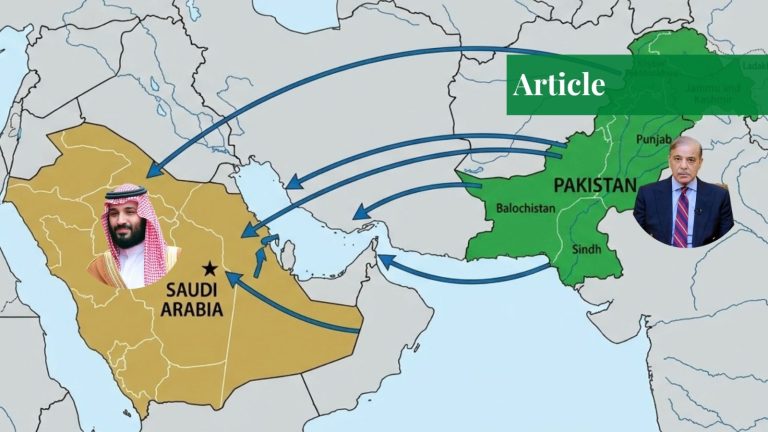
A country that has been shaped by oil wealth and desert geography for 100 years, Saudi Arabia has quietly become a water diplomacy conference call for global water issues, having organized the Global Water Organization in 2023 and hosting the 11th World Water Forum in 2027. In December, Senegal will host the UN Water Conference together with the UAE in 2026.
Two countries of different economic levels, of different continents, and of different water realities united on this issue. This is no coincidence. It’s a wake-up call that water-related issues are no longer a developing world problem that appears in the footnotes of climate reports but are a problem that both the richest and the most water-stressed countries are beginning to recognize as a matter of life and death.
Pakistan’s Looming Emergency
This should not be an abstract issue in international affairs for those of us in Pakistan watching it. It should be personal and personal and personal. Water is one of the most critical challenges in Pakistan and is rarely at the core of the Pakistani conversation, like inflation, politics, and security threats.
We are an agro-based economy that relies on the sole river system, the Indus, which is dependent on glaciers that are shrinking at alarming rates owing to climate change. The per capita water availability in Pakistan has declined from approximately 5000 cubic meters at the time of independence to less than 1,000 cubic meters now, which is considered the threshold for “water scarcity.” For days on end, Karachi’s tap water goes dry, and tanker mafias thrive on it. The situation of rural Sindh and Balochistan is one that would be considered a humanitarian emergency in any other part of the world but is little noticed at home.
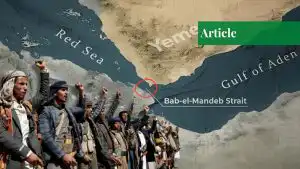
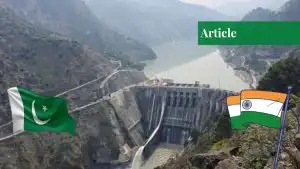
But all this is set against the backdrop of the unanswered, highly contentious issue of the Indus Waters Treaty with India, which is a contentious agreement now at a new impasse, where water is never just an environmental problem. It’s a security problem, a diplomatic problem, and, more and more, a potential cause of regional war. That’s exactly why it is important that the Saudi deputy minister’s words in New York are more than just being given attention. Connecting water security to “the security of critical maritime routes” and “a fundamental issue of international security and resilience” is not just diplomatic rhetoric: it’s a precise assessment of the twenty-first century.
For decades, we have considered water as an environmental or humanitarian issue that needs to be addressed by NGOs and development agencies. All the time, that was a framing that is incomplete. Water scarcity leads to population displacement, triggers population migration, exacerbates the North-South divide and, as we have seen in some countries in the Middle East and the Horn of Africa, can lead to violent conflict over water resources shared by two countries over rivers and aquifers.
Moving Beyond Summit Rhetoric: Three Imperatives for Action
Unfortunately, international water security conferences have a history of eloquent statements and limited actions. According to the UN’s own special envoy on the issue, the progress towards the UN’s Sustainable Development Goal 6, which aims to ensure the availability and sustainable management of water for all by 2030, is too slow to reach the goals. It’s a pattern we’ve seen in climate pledges: lofty promises made at glittery summits, years of lackluster funding, national priorities and the subtlest of excuses, and then the cameras turn off when it’s time to walk away. Water security is a very real possibility to be added to that list, something we all say is important, but no one ever thinks is a priority.
Then what would it take to not get that fate instead?
- Water as Security Investment: Firstly, water must be viewed as a security investment and not a development add-on. Water infrastructure is a vital component of the protection of populations and perhaps more important than defense and deserves the same political urgency that many governments give to their defense spending.
- Enforceable Bilateral Frameworks: Second, regional cooperation frameworks, such as the Indus Waters Treaty, Nile Basin cooperation, or new South-South cooperation, such as what is being developed between Saudi Arabia and Senegal, must be made enforceable and not simply based on goodwill. If there are no accountability mechanisms in a treaty, it is a mere promise. A promise doesn’t irrigate a single field.
- Domestic Governance Reform: Third, and most crucial in the case of a country like Pakistan, domestic water governance must be done with the same sense of urgency as one uses for international dialogue. Of course, it’s a bit of a paradox to call for a global alliance on water cooperation while the very thing we depend on is leaking from our own cities at an estimated 30-40% before it reaches our household taps.
Conclusion
A desert kingdom and a West African republic have joined forces for water, or at least it’s poetic. It implies that it is not a geopolitical question as such, but one that transcends the conventional geopolitical divisions, such as between oil-rich and oil-poor areas, the Global North and the Global South, and Muslim-majority and otherwise. Eventually, there is no ideological or GDP distinction in scarcity.
The question is whether the rest of the world, and especially water-stressed nations like our own, will treat this UN gathering as a genuine turning point or as one more photographed handshake destined to be forgotten by the next news cycle. Given how much is at stake—food security, public health, regional stability, and ultimately, human survival—we cannot afford for it to be the latter.
If you want to submit your articles and/or research papers, please visit the Submissions page.
To stay updated with the latest jobs, CSS news, internships, scholarships, and current affairs articles, join our Community Forum!
Find our FREE quizzes and MCQs here!
The views and opinions expressed in this article/paper are the author’s own and do not necessarily reflect the editorial position of Paradigm Shift.

Waqas Abdullah is a geopolitical and geostrategic analyst whose area of expertise is Middle Eastern and Indo-Pacific politics. A Türkiye Bursları Scholar, he is pursuing a Master’s in International Relations at Selçuk University, Konya, Türkiye. His work focuses on Middle Eastern politics, climate refugees, human security, and regional cooperation.