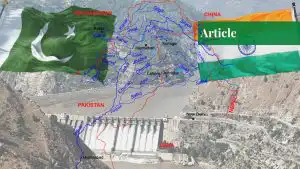
International law does not allow a state to excuse itself from the obligation of a treaty by saying it has put it “in abeyance. It provides just three possible ways for a party to lawfully cease to perform a treaty obligation: suspension on the grounds of a material breach of a treaty (Article 60 of the Vienna Convention on the Law of Treaties); suspension on the basis of a fundamental change of circumstances (Article 62); and counter-measures under the general law of state responsibility. Neither of the three conditions would apply to India’s choice on the Indus Waters Treaty.
That’s not an interpretation; it’s what occurs when you take the tests as each doctrine states them and apply them. But since none of them fit, the treaty’s own law comes into play by default: pacta sunt servanda, which is contained in Article 26 of the same Convention, which states that when a treaty is in effect, the parties are bound and must carry it out in good faith. The stance taken by Pakistan is neither a diplomatic whim nor a reflection of its policy that the Indus Water Treaty continues to function entirely. It is where the law lands once every alternative has been tested and ruled out.
Article 60: The Breach of the Same Treaty
Article 60 permits a state to suspend a treaty if there is a material breach by the other party. The threshold question is simple: “Has Pakistan breached the Indus Waters Treaty?” It isn’t “has Pakistan been accused of wrongdoing in general,” but whether it breached an obligation it placed upon itself—on data sharing, on the design parameters of run-of-river projects, on the working of the Permanent Indus Commission. It has not.

The accusation that India has made is that of cross-border terrorism, which is not within the four corners of the treaty. Article 60 does not give a state the power to suspend Treaty A due to a breach of an unrelated obligation under general international law. If it did, then virtually any bilateral treaty could be suspended whenever one of the two states had a grievance unrelated to the treaty.
There’s another twist here, which directly opposes the Indian case: Article 60(5) exempts humanitarian treaties from the general prohibition on reprisals that might inflict harm on the population protected by the treaty. India’s demand for suspension is even less defensible because the treaty has to do with the water supply of an entire agricultural economy and is far more in the humanitarian than in the commercial or technical category.
Article 62: Built to be Nearly Unusable
The next possible doctrine is fundamental change of circumstances if material breach is not found. There are two key points in Article 62 to be noted: first, it sets a high threshold—the change must be one that neither party anticipated; second, it requires that the change be “radical,” i.e., it must “change the nature of the obligations which remain to be performed.” For the Tribunals, this doctrine is not used as liberally or as skeptically as one might think, for it would undermine the concept of a binding agreement.
The negotiation of the Indus Waters Treaty was aimed at addressing such political turbulence; it has lasted through two wars and the ensuing conflict in 1999 without either side defaulting on it, which is sufficient testament to the fact that the treaty’s planners were not concerned with how it was going to perform in the context of the overall security relationship. Terrorism allegations, however grave, do not change the nature of a water-sharing regime as required by Article 62.
The doctrine applies with special care to river-allocation regimes, which are often presented in territorial terms, in the form of permanent treaties that assign rights to a shared resource that remain unchanged over time, with the boundary agreements that establish them as a subset of the same doctrine.
Countermeasures: The Closest Fit, Still Not Close Enough
The other option could be India’s action as a counter-attack measure, halting an unrelated demand to push Pakistan into compliance with its counter-terrorism obligations under general international law. This is the most generous interpretation India can give it, and it still doesn’t meet its own standards.
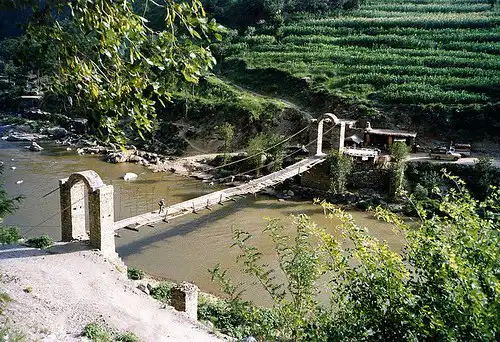
The countermeasures should be commensurate with the harm done, should not be of an essential humanitarian nature, must be reversible, and typically must be preceded by notice and a negotiation period. India’s Ministry of External Affairs notification in April 2025 didn’t provide any of that: no negotiation window, no condition open for India to decide whether it was satisfied, and ongoing construction work at hydroelectric projects in contested areas – which seemed more like a new normal for India than a door being left open to be flipped.
Under any interpretation of the doctrine as the International Law Commission has put it, it’s hard to see suspending the security of tens of millions of people who had no involvement in the terrorist attack, in response to that attack, being proportionate.
What’s Left Once the Exits Are Closed
India’s position is taken through the sole legal entrance available, and all three are closed. The humanitarian carve-out and subject-matter mismatch are the reasons that Article 60 fails. Article 62 fails on the doctrine’s own restrictive threshold. There is no proportionality or reversibility in countermeasures.
The term “abeyance” is used without any legal implications because it was never intended to have any. It serves as a means of asserting the “effective” suspension without having to agree to any of the conditions that would apply to a suspension itself. Pakistan’s insistence that the treaty remains binding is not an emotional or political stance dressed up in international law.
On the merits, it’s where the doctrine takes it: until India’s 1960 treaty is found to be invalidated by Article 60, Article 62, or countermeasures justification, it remains in full effect, and there’s nothing so far said by India that supplies the missing legal basis.
Find our FREE quizzes and MCQs here!
If you want to submit your articles and/or research papers, please visit the Submissions page.
To stay updated with the latest jobs, CSS news, internships, scholarships, and current affairs articles, join our Community Forum!
The views and opinions expressed in this article/paper are the author’s own and do not necessarily reflect the editorial position of Paradigm Shift.

Abdullah Khan is affiliated with National Defence University, Islamabad. He engages in scholarly research on diplomacy and the military domain, with a deep focus on regional security dynamics across the South Asian region. In addition to academic research, he has authored numerous op-eds and analytical articles addressing pressing geopolitical developments, defense posture, and diplomatic engagements in the Middle Eastern and South Asian theatre.