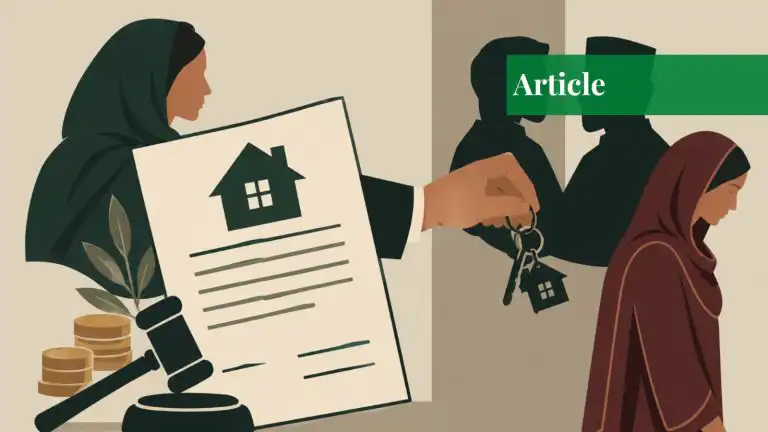
The Inheritance They Never Received
Why don’t girls and women in Pakistan receive their inheritance? Although the law grants them this right, family pressure often forces them to give it up. In many households, girls are told from an early age that they don’t need their share — so when the time comes, they either refuse to claim it or simply hand it over to a brother or other male relative.
Even though in Islam it is not the family’s choice or favour to give a girl her property share, women become the legal heirs after the death of a family member. She doesn’t need to ask for her share, because it’s her legal right according to Islam—it is the woman’s right. The family can’t say, “It’s our decision whether to give it to you or not”—the law also gives her this right. But there is a problem: giving the right on paper and taking responsibility to check whether she actually received that right are two different things.
Both Supreme Court cases below show this same issue: the law gives inheritance rights to women, but in real life, people don’t follow that right—and the matter ends up in court, where the court intervenes to protect the right of women.
When a Brother Simply Refuses: Abrar Hussain v. Bibi Shahida
This case involves a brother and sister who, after their father’s death, both had a legal right to his property. The brother, however, refused to give his sister her share and took control of the entire property himself. The case began in 2019 and moved from the Sindh High Court all the way to the Supreme Court, where Justice Athar Minallah gave the final verdict — ruling that the state itself is responsible for ensuring a woman actually receives her share. This is not the only case — there are many other similar cases as well.
“…to ensure the effective and unfettered realisation of women’s right to inheritance.”
Justice Athar Minallah, Supreme Court of Pakistan
The 71-Year Wait: The Property Dispute That Wouldn’t End
This case involves a widow and her two daughters, who owned family property together. In 1955, however, someone claimed that the women had verbally given away their share to other family members as an “oral gift” — with no written documents to prove it. The case went through three different courts – the trial court, the appellate court, and the Lahore High Court – and all three ruled against the women.
The case finally reached the Supreme Court, where Justice Shahid Bilal Hassan declared the old mutation “illegal and void”. He ruled that whoever claims an oral gift took place must prove it themselves — the burden is not on the woman to prove that she never gave her share away. From these cases, we come to know that the law is there to protect women’s inheritance rights.
“The right to inherit is not a ‘bounty’ to be granted at the pleasure of male family members.”
Justice Shahid Bilal Hassan, Supreme Court of Pakistan
What These Cases Show
These cases show one thing clearly: courts do give inheritance rights to women – but before a woman reaches the Supreme Court for her right, it takes years to get there. There are also a lot of expenses involved in these cases, which cause a lot of emotional stress, including conflict with family that leads to even more problems. The court helps them, but reaching the court itself takes a lot of struggle.
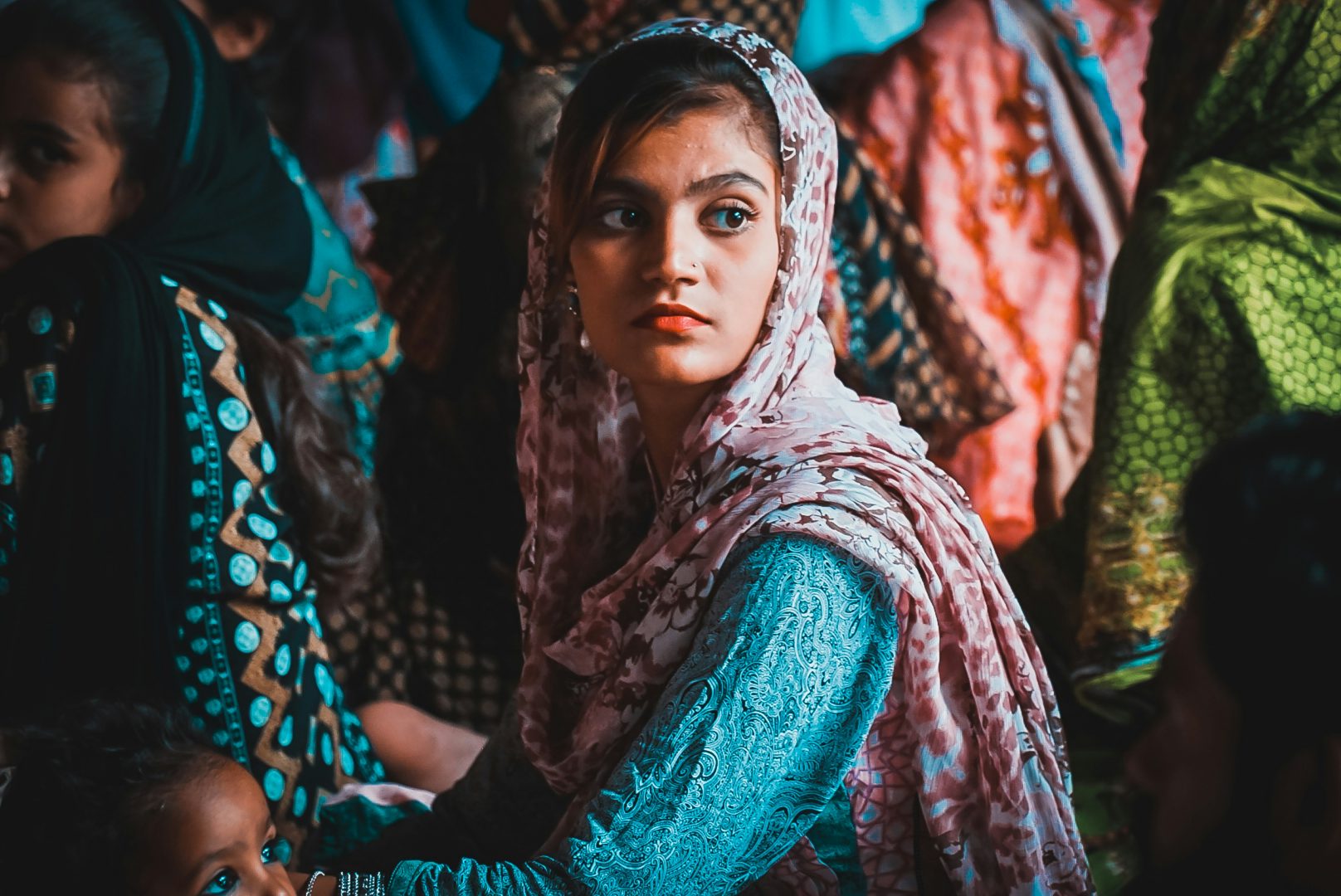
The main issue is not that courts don’t give rights to women—the main issue is that the law gives the right, but she doesn’t get that right in reality because of her own family, who don’t give her that right. In most cases, people start saying, “Why do you need this right? You have a brother; you can give it to him.” Because of these problems, she ends up in court, but it takes a lot of time. Here, I am not blaming the courts; the courts give her rights properly. The main issue is her family, the people around her who brainwash her, and because of that, she feels helpless. So, if we want to give women their inheritance, not only the court should play a role – family, government, and society should also play this role in giving women their inheritance rights.
Role of Family
Families should stop treating women as if inheritance is not needed—asking, “What will you do with it? You’re just the daughter/sister; why are you asking about it?” Women should not feel guilty while asking for their inheritance right; it is their right.
Role of Revenue Officials
Revenue officials should also play an important role. If a woman’s property record shows that she “gifted away” her property, it is the officials’ duty to check whether she gifted it away willingly or gave proper consent. Only paperwork should not be considered proof that she gifted it away – there should be proper, verified consent.
Role of Society
In most societies, people say that women should not ask about their property. Here, I question this: if a woman asks about her share, does that make her greedy? She is only asking for what the law has already given her as a right. That does not make sense – asking about her own share should not make her greedy.
If these things do not change, women will never receive their inheritance right. Having a right and receiving a right are two different things. Women have this right according to law, but they never actually receive it.
If you want to submit your articles and/or research papers, please visit the Submissions page.
To stay updated with the latest jobs, CSS news, internships, scholarships, and current affairs articles, join our Community Forum!
Find our FREE quizzes and MCQs here!
The views and opinions expressed in this article/paper are the author’s own and do not necessarily reflect the editorial position of Paradigm Shift.