A nation emerging from colonization usually faces the challenges that determine its trajectory due to the occurrence of critical moments. These crucial events usually bring about a systemic upheaval that changes the structure of the country’s political governance, both internally and externally. For Pakistan, the 11th of September is one such critical juncture, which is a point of tragedy and adaptation in the nation’s history. Through analyzing the two occurrences that happened on this same fateful date, in 1948 and 2001, respectively, one can be able to see how the country has always had to build resilience through structural shocks.
The First Tragedy
The first event happened on the 11th of September, 1948, with the death of Quaid-e-Azam Muhammad Ali Jinnah—the founding father and the determining figure who made Pakistan a reality. Apart from the loss of a beloved leader, the sudden death of Mr. Jinnah was a huge institutional damage since it happened just thirteen months after the independence of Pakistan.
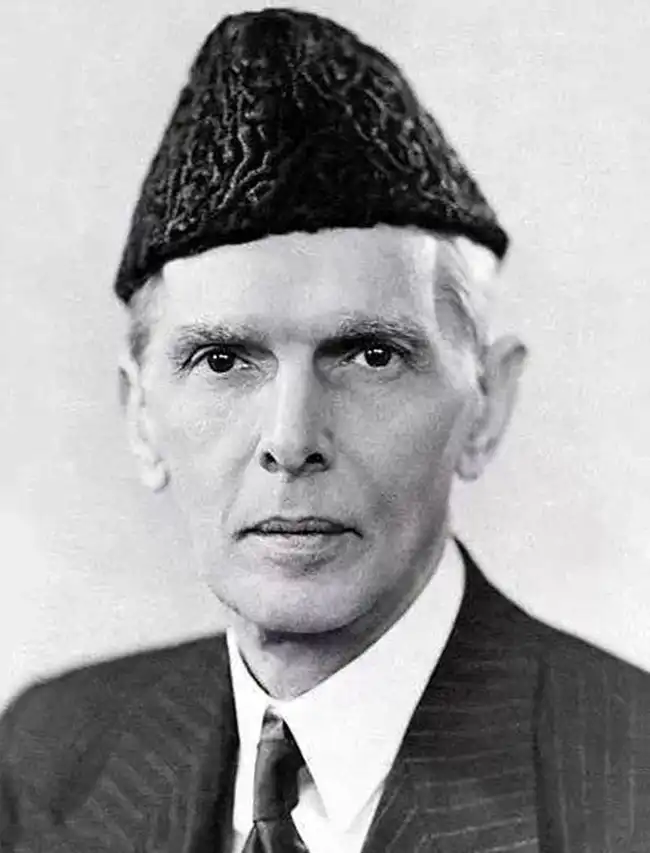
In newly established states, the charisma of a leader is key in the development of democratic values. The cracks within the fragile system soon emerged as it took the country nine years to draft its constitution in 1956, which opened the ground for the bureaucracy and the military establishment, being two unelected agencies, to consolidate themselves and eclipse the weaker civilian agencies. Foreign affairs and international dealings also took unfavorable turns, like the US and USSR invitation drama, due to the haphazard management without the intent to preserve Quaid’s vision.
While 1948 was unforgettable for the country because it lost its founder, even more significant was the loss of the mechanism of arbitration at the state level—which led to structural flaws that the civilian political system has remedied over the decades since then.
The Second Tragedy
After 53 years, again the date September 11 struck with the terrorist attacks on the United States in 2001. The attacks came as an external cannon, which hit the weak castle of the state of Pakistan. As the immediate change in the strategic perception of the world placed the country in the international political scenario, it found itself facing an ultimatum from Washington in the following days.
As the country assumed the role of being a frontline state in the global war on terror, it received heavy systemic backlash. There is a detailed account of how this abrupt alignment resulted in the country falling into the vicious cycles of unsustainable growth and heavy debt traps. The empirical data reveals that the resulting economic costs of Pakistan’s inclusion in GWoT were in excess of $150 billion and included the loss of more than 80,000 Pakistani citizens due to the civil war and asymmetric conflicts.
What September 11 Means For Pakistan
However, the true historical importance of these dual crises is that they developed the capacity of Pakistan to adapt and sustain its mechanisms in extreme conditions. Both events of September 11, separated by half a century, illustrate a cyclical trend where domestic destabilization and external compulsion had contributed to innovations in the survival techniques of the nation. While the death of Mr. Jinnah in 1948 slowed the process of building a strong democratic governance framework in the country, and the realignment since 2001 made Pakistan face internal destabilization and foreign interference, the state did not crumble.
From an objective and analytical perspective, September 11 has become a sad reminder of how harshly history and geography have affected Pakistan as a nation. Eventually, it has become the ultimate benchmark of the state that is constantly rebuilding itself in the aftermath of tragic structural developments.
For the future, Pakistan needs to realize that despite the fact that unexpected shocks and accidents cannot be entirely avoided, the possibility of being affected by them can be mitigated. It is evident from the passage of time that Pakistan cannot be undermined and, thus, proves the tenacity of the country’s society and institutions. But it is no longer possible to survive through passiveness exclusively.
Sovereignty and stability come from building independent capacity rather than adaptation. Although the country is currently prospering in all developmental sectors and making changes to its economic structure, the historical record shows that it has not yet compensated for the institutional gap created in 1948 and the security consequences of 2001. For this deep divide between generations never to occur again, Pakistan must transition from ad hoc crisis management to building a proactive state capable of addressing these crises to reduce vulnerabilities.
For Pakistan, September 11 is not only a date to commemorate but also a date to reflect and learn.
If you want to submit your articles and/or research papers, please visit the Submissions page.
To stay updated with the latest jobs, CSS news, internships, scholarships, and current affairs articles, join our Community Forum!
Find our FREE quizzes and MCQs here!
The views and opinions expressed in this article/paper are the author’s own and do not necessarily reflect the editorial position of Paradigm Shift.
By Koonj Altaf is a PhD candidate in international relations and an academic counsellor based in Karachi.