
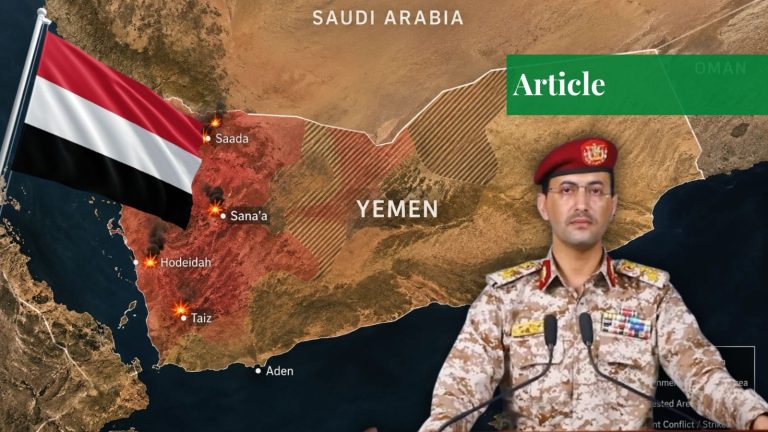
Yemen was transitioning from the preparatory phase to the action phase as a large-scale campaign to retake Houthi-controlled areas began in Riyadh on 4 October 2026, according to Rashad al-Alimi, chairman of Yemen’s Presidential Leadership Council. The military operation, dubbed Fajr al-Yemen, or Operation Dawn of Yemen, was intended to expand government control across the country. Six weeks later, the gap between then and the battlefield was unmistakable. Coalition-backed forces started withdrawing from the Bab al-Mandeb region to guard Aden on 15th November, and Saudi Arabia changed its coalition commander. It takes more than a battlefield plan to win a battle of liberation.
How the Truce Collapsed
The UN-brokered April 2022 truce in Yemen has been largely quiet on the front lines for four years. Human Rights Watch said it broke on 13 July 2026 after Yemen’s government army forces, along with Saudi forces, fired on the airport while a Yemeni Mahan Air flight was landing in Sanaa. On 14 July, the Houthis announced the end of the “de-escalation phase”, and on 20 July announced a maritime blockade of Saudi ports. At the end of July, they attacked the Aramco plants in Jizan and Yanbu.
The more significant was the early September capture of approximately 150 km of Red Sea coastline by a Houthi offensive that included Mocha and the Bab al-Mandeb region. By 4 October, the Houthis had seized al-Turbah, which separated the final government-held town of Taiz from the other government-held areas. Al-Alimi’s announcement was made on the same day, and was more a reaction to a faltering front than a blueprint for a new one. The Houthis were also blamed for drone and missile strikes on Aramco facilities in Riyadh and Khurais that weekend, and on 16 November, Saudi Arabia announced it had downed two further Houthi drones targeting the Mecca region and Riyadh. The war has broken out and spread in Yemen to Saudi cities and airports.
Claims Versus Facts
Announcements and territory are two distinct things. On 5 October, the government claimed it had captured Dhubab and Mocha, and had “neutralized” 1,747 Houthi fighters in 1,122 operations. The Houthis said they lost no ground. Al Jazeera reported that the government troops were still unable to recapture Mocha 6 weeks later. There is no independent verification of casualty figures, which come from one side of a conflict. If each side maintains their own scoreboard, this is a valuable asset they can use to their advantage.
The point was driven home on the 15 November retreat. The Houthis made a push towards an area 60 km north of Aden, while King Salman appointed General Fayyad al-Ruwaili as commander of the Saudi Joint Forces, replacing Lt Gen Fahd bin Hamad al-Salman. Another vulnerability is cohesion: anti-Houthi fighters have various command systems and funding lines, with the Houthis demonstrating they can go in many directions simultaneously.
The Human Cost
Taiz demonstrates the toll of the war on civilians. A 20-liter fuel canister was priced at 120,000 riyals ($77) and was four times as expensive as it was last year, Al Jazeera reported, citing its own investigation. Al Jazeera’s investigation showed a 20-litre container of petrol was priced at 120,000 riyals ($77), four times last year’s cost, and petrol stations have been closed since 5 October. The UN, on 20 October, alerted to a more than twofold increase in food and fuel prices. Medical officials even predicted that hospitals could cease functioning within two days due to fuel and oxygen shortages by 16 November, while local authorities were requesting humanitarian corridors. On 19 October, a Houthi military attack in Shabwa’s al-Alam Training Camp resulted in the deaths of 73 recruits (aged 18 to 20) and the injuries of over 200, according to reports.
Saudi Arabia’s Foreign Policy: Security First
In 2026, Yemen is the southern end of a broader Saudi foreign policy, where the single goal is to defend the kingdom, its people and its oil exports, but not get entangled in a war it can’t win. On 28 February, after the US-Israeli attacks against Iran began, Iran launched missiles and drones against Saudi’s territory. But a Saudi Foreign Ministry official, who spoke on condition of anonymity, said there was no Saudi intention to strike Iran, and the kingdom had urged diplomacy even before the conflict.
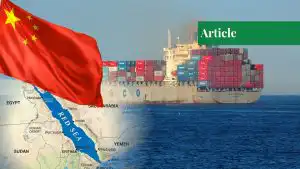
Tehran’s relations with Riyadh are dependent on the 2023 peace deal brokered by China. According to Modern Diplomacy, on 16 October, foreign ministry official Rayed Krimly stated that the Houthi escalation is backed by Iran, and Riyadh considers it a violation of that deal. But channels remain open: The Mecca pact states that Saudi Arabia and Iran have agreed to resume talks, mediated by Qatar and Pakistan.
So has diplomacy in the region, which has been accompanied by deterrence. The foreign ministers of Egypt, Pakistan, Saudi Arabia and Türkiye met in Riyadh on 19 March and in Islamabad on 29 March and in Antalya on 18 April, all of whom voiced support for Pakistan’s mediation efforts between the US and Iran. Saudi policy is often to form coalitions of Muslim-majority governments, continue a dialogue with Iran, and “not to be the one to escalate.”
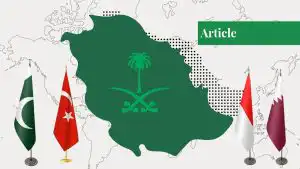
Saudi Arabia is diversifying its security partners too. It signed a mutual defense pact with Pakistan in September 2025, and on 7 August 2026, a bilateral mutual defense agreement between Pakistan and Türkiye (named the Mecca Joint Defense Agreement) was signed that calls an attack on one an attack on all. There are restrictions to the pact: the IISS says Pakistan deployed fighter planes only following a ceasefire between the U.S. and Iran. In March, the kingdom also signed a counter-drone deal with Ukraine and Britain has increased the number of defensive RAF flights over Saudi cities. Washington also stays at the center, having approved the sale of about $2 billion in arms on 16 July. The defense and foreign ministers of the pact met on 5 October in Riyadh and agreed to put the pact’s collective deterrence measures into effect, marking the first test of the alliance.
On Palestine, policy has remained unchanged. In July 2025, Foreign Minister Prince Faisal bin Farhan stated that normalization with Israel is only possible if it is achieved via a Palestinian State, calling it a “strategic principle” and not a negotiating tool. In February 2026, INSS analysis noted that the “strategic principle” of normalization with Israel will not be a negotiating tactic, but rather a prerequisite for achieving it through a Palestinian State. Geography also determines strategy today. Saudi oil exports have been continuing through Bab al-Mandeb, as the US-Iran confrontation has wreaked havoc on the Strait of Hormuz, making the Red Sea coast and the Houthis’ attacks on Yanbu much more than Yemeni concerns.
What a Credible Strategy Needs
There are four priorities. First, relieve Taiz. A besieged city is a humanitarian crisis and a strategic liability; humanitarian corridors should be opened. Second, combine with politics. The government has granted amnesty to Houthis who defect, and al-Alimi said that the people of Sanaa, Saada, and Hodeidah were not targeted, but this has yet to be detailed in writing on how to protect civilians and who will rule retaken areas. Third: Seek transparency in independent monitoring and honest casualty reporting. The fourth thing is to maintain the spirit of diplomacy. Military pressures have an aid and comfort function only when there is a table to be returned.
The Weight of a Word
The word has been “liberation” in Yemen’s conflict for 10 years, and the Houthis have controlled Sanaa since 2014. A state has the right to ask for the return of its land, but certain records of lands that were taken, advanced, stalled, and were reversed should warrant caution. The metrics for liberation will be: whether a family in Taiz will have access to fuel, whether the city of Aden is secure, and whether the war comes to a close. The question is even broader for Saudi Arabia: Can defense alliances and diplomacy save the kingdom without escalating a regional conflict?
If you want to submit your articles and/or research papers, please visit the Submissions page.
To stay updated with the latest jobs, CSS news, internships, scholarships, and current affairs articles, join our Community Forum!
Find our FREE quizzes and MCQs here!
The views and opinions expressed in this article/paper are the author’s own and do not necessarily reflect the editorial position of Paradigm Shift.

Waqas Abdullah is a geopolitical and geostrategic analyst whose area of expertise is Middle Eastern and Indo-Pacific politics. A Türkiye Bursları Scholar, he is pursuing a Master’s in International Relations at Selçuk University, Konya, Türkiye. His work focuses on Middle Eastern politics, climate refugees, human security, and regional cooperation.