Abstract
Pakistan plays an important role in the security of the Gulf, but it is not the sole provider. The Gulf security system is multi-layered, encompassing the United States, internal defense forces, and various bilateral and multilateral partnerships, including with Pakistan, Turkey, France, the United Kingdom, and China.
Despite the United States as the key external security provider, regionally, a mix of crises and emerging threats has led Gulf states to lessen reliance on one security provider. Pakistan offers an extra level of security in this dynamic landscape, offering defense cooperation, military training, operational knowledge, intelligence sharing, and strategic consultations.
In the future, Pakistan-Gulf security cooperation is expected to not only include the traditional defense domain but also the emerging domains, including cybersecurity, artificial intelligence, space technologies, maritime security, defense production, defense missiles and drone defense, and intelligence cooperation. The military prowess, strategic location, and defense cooperation of Pakistan make it a valuable asset in the evolving security architecture in the Gulf region.
Introduction
Pakistan has had a unique role for over seven decades in the security setup of the Gulf region. The United States has been the primary source of security for the Gulf monarchies, but recent security concerns in the region between Iran and Israel and the United States have helped push the Gulf States to seek other means of security. In this changing landscape, Pakistan has become one of the most reliable security partners of the region in the Gulf (Ayoob, 1995; Berti & Guzansky, 2021; Ulrichsen, 2016).
The engagement of Pakistan in Gulf security is not just a single event; it is a culmination of a long period of military cooperation, strategic concerns, defense ties, economic interdependence, and geopolitical factors (Fair, 2014; Rizvi, 2000; Ulrichsen, 2016). Pakistan has contributed in the form of military training, military advisory support, military joint exercises, intelligence sharing, counterterrorism cooperation, and strategic interaction (Cloughley, 2016; MoFA, 2020).
Institutional cooperation and military coordination, along with military exercises, have enhanced defense collaboration between the governments of Pakistan and the Gulf countries, particularly Saudi Arabia, over the last few years. The developments are a continuation of the long-standing trust between the two countries and the mutual interest in providing security in the region by increasing the capacity of the two countries’ partner countries (MoFa, 2020; Ulrichsen, 2016).
To comprehend the significance of Pakistan’s role as a security ally of the Gulf monarchies, one must delve into the historical roots, military strengths, security alliances, and geopolitical dynamics that have influenced this relationship over the past few decades (Ayoob, 1995; Davidson, 2012; Ulrichsen, 2016).
Historical Foundations
Since the inception of Pakistan’s independence in 1947, the country had established diplomatic relations with the Gulf monarchies (Rizvi, 2000; MoFA, 2020). The Gulf states in the 1950s and 1960s were fairly new and had relatively little militaristic tradition. However, in Pakistan, there was a tradition of discipline which was handed down from generation to generation, and the military soon became one of the most professional armies in the Muslim world and beyond (Cloughley, 2016; Fair, 2014; Rizvi, 2000). Pakistan’s contribution to the security of the region, outside of South Asia, further bolstered the military image of the nation (Cloughley, 2016; Fair, 2014).
During the Arab–Israeli wars of 1967 and 1973, the Pakistan Air Force (PAF) provided training and advisory missions and operational support to the Arab air forces. The Pakistani pilots and military specialists assisted in the enhancement of the other partner air force’s capabilities, such as training, technical assistance, etc. In this way, these contributions added to Pakistan’s reputation as a good and reliable military ally in the Arab world. Concurrently, the Gulf States started to modernize their security institutions, and Pakistan emerged as a natural ally (Cooper & Bishop, 2003; Fricker, 1979; Nordeen, 1985).
Training of armed forces and military academies and enhancing operational readiness were done with the help of Pakistan military advisers, instructors, and technical experts. Pakistani officers helped in the development of the air force, the training of the special forces, defense planning, and building capacity for institutions. It gave birth to a culture of trust, which has been nurtured and carried forward over decades and which has been a part of the security relationship with the Gulf monarchies (Cloughley, 2016; Fair, 2014; MoFA, 2020).
Pakistan’s Military Strength
The armed forces’ capability is amongst the main reasons for Pakistan’s significance. Pakistan is one of the biggest militaries in the Muslim world, with much experience in conventional warfare, border security, counter-insurgency, and counter-terrorism (Cloughley, 2016; Fair, 2014; Rizvi, 2000).
While the militaries of other countries have been used mainly to defend the country against external threats, Pakistan has learnt by experience how to conduct a number of intra-state wars and long-term counterterrorism operations. This is an operational capability which has made Pakistan a high demand for military training in the entire Gulf region (Fair, 2014; Hussain, 2019; Jones, 2014).
In the event of an Indo-Pak military confrontation in May 2025, one of the biggest military escalations between the two nuclear-armed neighbors in recent decades, the operational trustworthiness of the armed forces was also reinforced. The battle proved a testament to Pakistan’s quick mobilization of conventional forces and was a demonstration of its ability to use air, land, cyber, and electronic warfare and command and control (C2) in high-intensity battle seamlessly. It underscored Pakistan’s professionalism, combat readiness, and operational maturity and strengthened the military’s reputation as a trusted regional security partner of the policymakers of the Gulf countries (Cloughley, 2016; Fair, 2014).
The Pakistani officers have been on the training, advisory, and defense mission in various countries of the Arabian Gulf region. They have helped in the training of pilots, special forces, air defense, logistics, military planning, institutional development, and much more. This has established a good rapport between the two and Pakistan has always been an indispensable ally in the preparedness of the Gulf monarchies for decades in the field of defense (Cloughley, 2016; MoFA, 2020; Rizvi, 2000).
Pakistan’s Military Presence and Defense Partnerships in the Gulf
In terms of multidimensional cooperation, Pakistan, with other countries in the Gulf, has gone beyond military cooperation to a wide range of defense cooperation, training programs, military exchanges, and strategic agreements with each other. The Pakistani army has been a long-time member in the advisory role, joint exercises, institutional cooperations, and training programs with Saudi Arabia, Oman, Bahrain, Kuwait, and the UAE to assist the region in various ways for decades (MoFA, 2020; Ministry of Foreign Affairs, Government of Pakistan, 2020; Ministry of Foreign Affairs, Government of Pakistan, 2023).
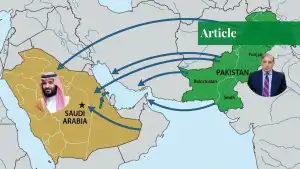
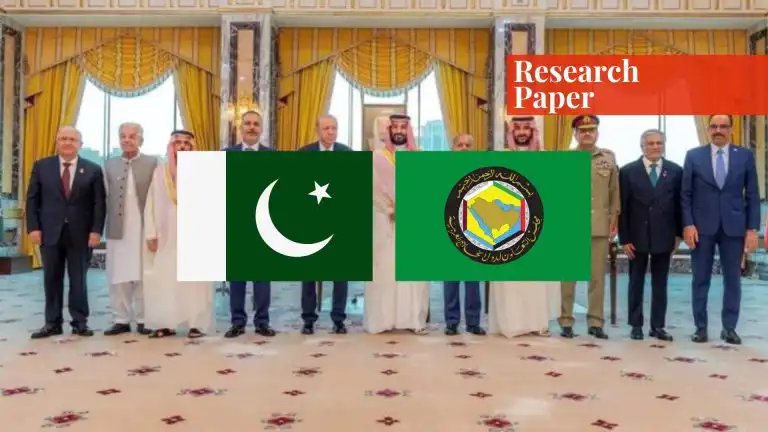
Saudi Arabia continues to be the mainstay of the Pakistani government’s security policies in the Gulf region. Pakistan has been conducting military drills and defense exchanges in Saudi since the 1970s, and they have always been holding regular military drills and defense exchanges in the Kingdom of Saudi Arabia. In 2025, the strategic relationship was further reinforced by signing the Strategic Mutual Defense Agreement, which was a result of decades of cooperation and a common desire to improve security coordination in the region (MoFA, 2020; Ulrichsen, 2016).
Pakistan has also beefed up defense ties with other Gulf countries. In 2023 Pakistan and Kuwait signed a Defense Cooperation Memorandum to enhance military training and share ideas and institutional cooperation (Ministry of Foreign Affairs, Government of Pakistan, 2023). Similarly, Pakistan and Oman have inked Military Cooperation MoU in 2020 to further promote exchanges in defense knowledge, training and professional development (Ministry of Foreign Affairs, Government of Pakistan, 2020).
In addition to the Gulf, Pakistan has also had defense relations with other countries like Jordan, Turkey, and Bahrain in various fields such as defense exchanges, training cooperation, military exercises, naval cooperation, and defense production programs (Berti & Guzansky, 2021; Fulton, 2020; MoFA, 2020).
Overall, Pakistan’s defense posture in the region is a combination of permanent military presence and defense partnership which encompasses military capabilities, experience, defense diplomacy, intelligence sharing, and defense capacity building. Today, the Gulf monarchies are seeking Pakistan’s military experience and vital support in the broader security system in the region, as they struggle with regional conflict, missile attacks, terror, and strategic competition (Berti & Guzansky, 2021; Fair, 2014; Ulrichsen, 2016).
The Strategic Significance of Pakistan’s Nuclear Capability
This is the only Muslim-majority country that can develop and possess nuclear weapons. The Pakistan-Gulf countries’ relationship has been untidy from the nuclear defense front as well because for decades the strategic deterrence capability has been a consideration in the strategic calculations of the region (Khan, 2012; Ayoob, 1995).
Pakistan’s nuclear capability adds strategic value to the Gulf countries and helps bolster its reputation as a trusted security ally (Khan, 2012; Ulrichsen, 2016). The Strategic Review of defense might occasionally mention the nuclear umbrella, but there are no formal agreements or official arrangements readily available in the public eye to support the view of the nuclear umbrella.
Therefore, Pakistan’s nuclear capability cannot be seen as a direct security assurance for the Gulf countries but as one of the elements that adds to the strategic superiority, credibility of deterrence and significance of Pakistan in the regional security sphere (Khan, 2012; Ayoob, 1995).
Shared Strategic Interests
Security interests also play an important role in the strategic importance of Pakistan in the Gulf. The Gulf monarchies are beset with a complicated security landscape characterized by regional instability, terrorism and violent extremism, threats to maritime security, protection of vital energy supply routes, missile proliferation and more general geopolitical competition with Iran (Ayoob, 1995; Berti & Guzansky, 2021; Kaplan, 2010; Ulrichsen, 2016).
Pakistan’s geographical location, military experience, and established military relations with the countries of the Gulf region have always been helpful in supporting initiatives for regional stability. It has cooperated with the Gulf countries in the areas of counterterrorism, intelligence sharing, maritime security, defense training, and diplomacy in the region (Cloughley, 2016; Fair, 2014; Kaplan, 2010; MoFA, 2020).
On the other hand, Pakistan has attempted to carve out a niche for itself as an independent country which will not be involved in any sectarian rivalry and will maintain cordial relations with all the big powers in the area. Despite the proximity of Pakistan’s geo-security relationship with the Kingdom of Saudi Arabia and other Gulf monarchies, Pakistan has made an effort to keep its diplomatic relations and dialogue with Iran on historic, geographical and economic issues (Ayoob, 1995; Hussain, 2019; MoFA, 2020).
This evenhanded strategy has contributed to Pakistan’s increased reputation as a responsible regional actor. Pakistan’s ability to maintain a security balance without falling prey to unhelpful polarization in the region is significant for the Gulf countries in combating new security threats and promoting stability in the vast Middle East (Berti & Guzansky, 2021; Ulrichsen, 2016).
Intelligence and Counterterrorism Cooperation
The other crucial aspect of the Pakistan-Gulf cooperation is counterterrorism. Pakistan has rich experience in combating the terrorist organizations and destroying the extremist networks. The experience has resulted in intelligence sharing, law enforcement cooperation, and joint security operations with the governments of the Gulf (Fair, 2014; Hussain, 2019; Jones, 2014).
Security cooperation has become more than military cooperation with the advent of the transnational nature of the security threats of today, such as the security threats of terrorism, cybercrime, organized crime, and illicit financial networks (Jones, 2014; Berti & Guzansky, 2021).
The Pakistani Diaspora: An Economic Security Bridge
Economically, the dependency on each other has further enhanced Pakistan-Gulf ties. Employment of millions of Pakistanis in various sectors of the GCC countries, including construction, healthcare, engineering and education, services, etc. Their remittances will continue to boost the economy of Pakistan, and their contributions continue to be valuable to the economy of the Gulf (IOfM, 2023; SBP, 2026). Such close people-to-people relationships give rise to mutual interests that are unrelated to security and defense cooperation (IOfM, 2023; Ulrichsen, 2016).
Religious and Political Affinity
The religious and cultural similarities have also helped strengthen the relations between Pakistan and Gulf monarchies. Pakistan and the Gulf states share historical and cultural ties, which have facilitated diplomatic and defense cooperation and people-to-people ties in the Muslim country hosting Islam’s holiest places (Al-Rasheed, 2010; MoFA, 2020; Ulrichsen, 2016). But the foreign policy of Pakistan has always been pragmatic and pragmatic in nature, with religious affinity being an accompaniment and not a replacement of strategic and national interests in Pakistan (Ayoob, 1995; Hussain, 2019).
Pakistan’s Geostrategic Location
Pakistan’s geographical location is a great asset to its strategic significance. Pakistan is a nation of South Asia, Central Asia, the Middle East, and the Arabian Sea, and it has a significant geopolitical value. Its coastline opens access to critical shipping lanes that link the Gulf to international trade, and its construction of Gwadar Port enhances its role in regional shipping, security, and energy links (Kaplan, 2010; Small, 2015; Fulton, 2020). The region’s security dynamics continue to change, and Pakistan’s strategic position will play a crucial role in the future security and economic frameworks (Kaplan, 2010; Small, 2015).
Pakistan’s Role of Security as an Additional Pillar for the Gulf
Pakistan plays a significant role in the Gulf as a security provider, but it should not be assumed that it is the sole provider of security in the Gulf. Multi-layered defense, external guarantees, in-house defense, and several partnerships are still the foundations of the security of the Gulf (Ayoob, 1995; Berti & Guzansky, 2021; Ulrichsen, 2016).
The U.S. is the world’s largest external security provider with military bases, naval deployments, intelligence sharing, and advanced defense equipment. But several regional crises have spurred the Gulf states to think again about relying on one security provider (Berti & Guzansky, 2021; Ulrichsen, 2016).
This had been shown in the 2019 attacks on Abqaiq and Khurais oil facilities in Saudi Arabia by the vulnerability of even advanced defense systems against drones and asymmetric attacks. For its part, Gulf interest in pursuing multiple security partnerships has been further bolstered by more recent regional escalations that have involved Iran, Israel, and others (Berti & Guzansky, 2021; IEA, 2026; Ulrichsen, 2016).
In this context, Pakistan is not the replacement of the United States, but another bastion of security, which will be provided through military training, defense cooperation, operational experience and strategic consultation (Cloughley, 2016; Fair, 2014; MoFA, 2020).
An Analysis of the Future of Pak-Gulf Security Relations
Pakistan-Gulf security cooperation is likely to grow beyond the traditional security cooperation with Gulf nations and into new fields emerging in view of changing security threats and technology changes. The relationship between the two will continue to include the usual areas of military cooperation, military training, and strategic coordination, but both sides will also look for new areas of cooperation (Berti & Guzansky, 2021; Fulton, 2020; Ulrichsen, 2016).
Possible future areas of cooperation involve cybersecurity, artificial intelligence applications for defense, space technologies, maritime domain awareness, defense manufacturing, drone and missile defense systems, intelligence integration, and addressing climate-related security issues (Berti & Guzansky, 2021; Fulton, 2020; Small, 2015).
In an increasingly complex and interconnected regional threat, sharing of information, preparedness, and technological capabilities will be essential in security cooperation. Pakistan is an important and reliable security partner due to its vast experience garnered in extensive military engagements, professional armed forces, strategic location, and established defense cooperation with Gulf countries (Cloughley, 2016; Fair, 2014; MoFA, 2020; Ulrichsen, 2016).
The changing security dynamics in the Gulf region will make it increasingly important for Pakistan to shift from an erstwhile role of defense cooperation to a more comprehensive one that will include technology, innovation, intelligence sharing and overall regional security (Berti & Guzansky, 2021; Fulton, 2020; Small, 2015).
Conclusion
The shift of Pakistan from being such a small security partner to a big one for the Gulf monarchies is not a recent phenomenon but rather the culmination of decades of institutional cooperation. A combination of its professional military forces, experience, defense ties, strategic location, counterterrorism capabilities, and political connections has enhanced its regional significance.
Today, however, the security of the Gulf is a matter of networks of partnerships rather than one protector. The U.S. is the key external security provider, while Pakistan is a unique country that is a trusted regional security provider.
However, with the strategic diversification of the Gulf countries under a new phase of geopolitical instability, Pakistan is expected to remain a key player in maintaining regional peace and stability through various defense cooperation efforts, military capabilities, and strategic engagements.
References
- Al-Rasheed, M. (2010). A history of Saudi Arabia (2nd ed.). Cambridge University Press.
- Ayoob, M. (1995). The third world security predicament: State making, regional conflict, and the international system. Lynne Rienner Publishers.
- Berti, B., & Guzansky, Y. (2021). The Arab Gulf states and the new regional security environment. Institute for National Security Studies. https://www.inss.org.il
- Cloughley, B. (2016). A history of the Pakistan Army: Wars and insurrections (4th ed.). Skyhorse Publishing.
- Cooper, T., & Bishop, F. (2003). Iranian F-14 Tomcat units in combat. Osprey Publishing.
- Cordesman, A. H. (2020). The Gulf military balance. Center for Strategic and International Studies. https://www.csis.org
- Davidson, C. M. (2012). After the sheikhs: The coming collapse of the Gulf monarchies. Hurst Publishers.
- Fair, C. C. (2014). Fighting to the end: The Pakistan Army’s way of war. Oxford University Press.
- Fricker, J. (1979). Battle for Pakistan: The air war of 1965. Ian Allan Ltd.
- Fulton, J. (2020). China’s relations with the Gulf monarchies. Routledge. https://doi.org/10.4324/9781003030004
- Hussain, Z. (2019). No-win war: The paradox of US-Pakistan relations in Afghanistan’s shadow. Oxford University Press.
- IEA. (2026). IEA Executive Director statement on oil markets—News. (2026, July 21). IEA. https://www.iea.org/news/iea-executive-director-statement-on-oil-markets
- IOfM (2023). Pakistan migration report 2023. International Organization for Migration, 2023. https://pakistan.iom.int
- Jones, S. G. (2014). A persistent threat: The evolution of al-Qa’ida and other Salafi jihadists. RAND Corporation. https://www.rand.org/pubs/research_reports/RR637.html
- Kaplan, R. D. (2010). Monsoon: The Indian Ocean and the future of American power. Random House.
- Khan, F. H. (2012). Eating grass: The making of the Pakistani bomb. Stanford University Press.
- Ministry of Foreign Affairs, Government of Pakistan. (2020). Pakistan–Oman military cooperation memorandum of understanding. https://mofa.gov.pk
- Ministry of Foreign Affairs, Government of Pakistan. (2023). Pakistan–Kuwait defense cooperation agreement. https://mofa.gov.pk
- Nordeen, L. O. (1985). Air warfare in the missile age. Smithsonian Institution Press.
- Rizvi, H. A. (2000). Military, state and society in Pakistan. Palgrave Macmillan.
- Siddiqa, A. (2007). Military Inc.: Inside Pakistan’s military economy. Pluto Press.
- Small, A. (2015). The China-Pakistan axis: Asia’s new geopolitics. Oxford University Press.
- SBP (2026). Workers’ remittances. State Bank of Pakistan. https://www.sbp.org.pk/ecodata/receipts.asp
- Ulrichsen, K. C. (2016). The Gulf states and the new regional order. Manchester University Press.
- Ulrichsen, K. C. (2017). The United Arab Emirates: Power, politics and policy-making. Routledge. https://doi.org/10.4324/9781315627428
If you want to submit your articles and/or research papers, please visit the Submissions page.
To stay updated with the latest jobs, CSS news, internships, scholarships, and current affairs articles, join our Community Forum!
The views and opinions expressed in this article/paper are the author’s own and do not necessarily reflect the editorial position of Paradigm Shift.