Introduction
In French literature, there is a phrase known as “le pays sans femmes,” which means “a country without women.” It represents an imaginary land where women exist but in silence. They are deprived of basic rights, including education, freedom of speech, participation in politics, and access to healthcare. A French philosopher, Simone de Beauvoir, in her book “The Second Sex,” wrote an everlasting statement that “one is not born, but rather becomes, a woman.” This statement emphasized that social norms, rather than biological ones, construct gender roles. It explained how societal norms can shape women’s identity by restricting their freedom.
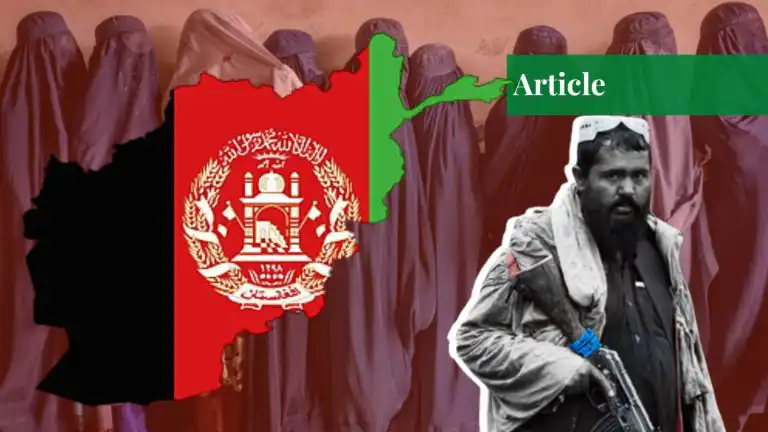
What once appeared as a literary imagination has, unfortunately, become reality. Afghanistan under Taliban rule is a real-life example of le pays sans femmes. The Taliban has implemented rules that have restricted women from participating in education, politics, etc. They saw women as mere objects. In their eyes, women have no right over men; their sole purpose is reproduction to continue the lineage. According to UNESCO, Afghanistan is the only country across the globe where girls’ education is banned, due to which approximately 2.2 million women are illiterate. Thus, the metaphor “le pays sans femmes” is no longer fictional; it has transformed into a bitter reality. Afghanistan resembles le pays sans femmes, as Taliban laws have erased women from public spheres.
Women in Afghanistan Pre-Taliban Rule
In the period 2001-2021, the literacy rate of females in Afghanistan rose. As of the year 2018, more than 3.5 million girls were enrolled in primary and secondary schools. Women were also engaged in politics. The lower house (Wolesi Jirga) was allotted 27 per cent of the seats, and the provincial councils were allotted 25 per cent of the seats that were reserved for women. It resulted in the election of the first woman vice president of Afghanistan, Fawzia Koofi, in 2014. Habiba Sarabi became the first woman to serve as governor of Bamyan Province between 2005 and 2013. Shukeria Barakzai, Malalai Joya, and Fawzia Gailani were members of parliament. They ensured the rights of women, gender equality, and education.
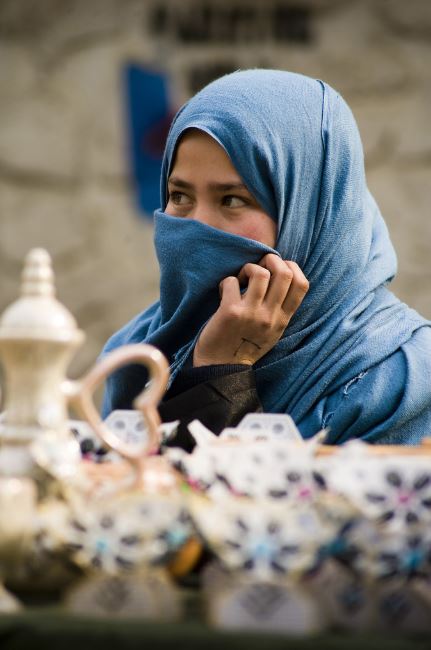
The Taliban’s return to power terminated all these developments. Girls were restricted from attending schools. Girls’ schools were destroyed. Their jobs were confiscated. They were restricted from going outside of their homes for any purpose without male guardians. The UN Secretary-General noted, “Women and girls are paying the highest price under the Taliban’s return to power, facing restrictions on education, employment, and freedom of movement.”
There are laws for the protection of women’s rights, like the Convention on the Elimination of All Forms of Discrimination Against Women (CEDAW) and the Universal Declaration of Human Rights. Afghanistan is openly violating these laws, but still it is standing like a house built on a stand, fragile yet enduring. They should remember the famous statement of Eleanor Roosevelt that “a woman is like a tea bag; you can’t tell how strong she is until you put her in hot water.”
The Taliban Policies on Women
On 4th January, the Taliban announced a new penal code known as the “Criminal Procedural Codes for Courts.” The penal code has laws that violate women’s rights. Article 32 of the code says that a husband can beat his wife with a stick. If in this act she gets wounds or bruises, her husband would get only 15 days’ imprisonment if and only if she succeeds in proving it. Psychological and sexual violence against women has not been prohibited.
Article 34 of the code restricts women from taking refuge in their parents’ house. If a woman goes to her family without taking permission from her husband and she does not return home despite her husband’s request, it would be considered a crime. The woman and her family members who prevented her from going to her husband’s home are considered criminals and would be imprisoned for 3 months.
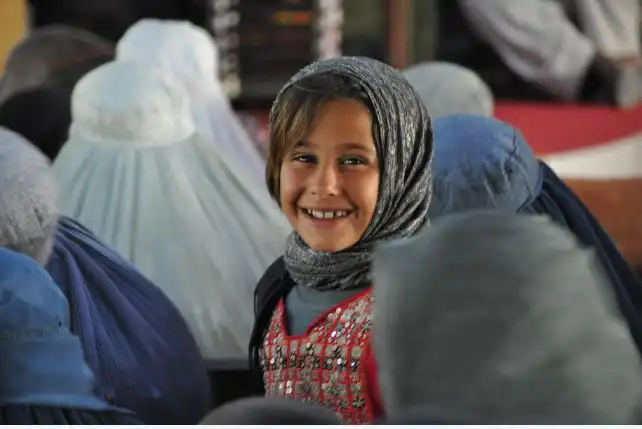
Article 19 of the code says that if anyone performs permissible acts (Amaal e Mubah), acts that are prohibited by the Taliban leader must be punished. Women’s education is also described as a permissible act according to the penal code. This law has directly violated women’s right to expression.
These laws have restricted women in every sector, whether it is education, employment, politics, etc. The sole purpose of women is to give birth to a child. If it is a baby girl, then the so-called male guardians will kill the baby girl, and if it is a boy, then they will bring him up as a future terrorist to destroy the peace of this world. Even they don’t care about women’s maternal health. After giving birth, a woman should rest for a minimum of six weeks for her physical recovery, but there is no concept of women’s health in Afghanistan, which is why the population rate is increasing.
As per reports provided by Worldometer, the Afghan population has reached 44.6 million in 2026. Even though there are laws regarding the dress code of women. It is made compulsory for Afghan women to cover their bodies from head to toe. For this purpose, they wear burqahs. So, women in Afghanistan are so controlled that they are told what they can wear, when to talk, when to meet their family, etc.
These policies resonate with les pays sans femmes, a land without women. Though there are women in Afghanistan, they are invisible, as they have no rights. Approximately half of the population in Afghanistan is women. As per reports, there are 49.51% women in Afghanistan, but still, they can’t take a stand for themselves because they are deprived of education. Education is a basic pillar of human empowerment. Napoleon Bonaparte once said, “Give me an educated mother, and I shall promise you the birth of a civilized, educated nation.”
Impacts on the State and Women
The exclusion of women from politics has weakened the Afghan governance. Before Taliban rule, they actively participated in politics, but under the Taliban government, they were restricted from participating in any sphere of life. There should be women in politics because women have a very different perspective on understanding the situation, so their decisions in state matters can bring some creative and effective policies, which could be beneficial for the state.
The exclusion of women from education, healthcare, and other businesses has a severe impact on the GDP of Afghanistan. The UNDP has said that restricting women from these sectors has cost Afghanistan billions of dollars. Due to this, the poverty level has increased to 97%. This is because half of the population is women, and they are restricted from doing jobs. The other half is the male population, out of which many are children who can’t do jobs, and the remaining have no proper education. They only get education related to Islam as per their own Sharia, which is not sufficient to achieve a qualified job.
Not only on the state, but also it has severe impacts on women. Psychologically, Afghan women face a high level of anxiety due to social isolation. Studies say that living inside a room for your whole life and acting according to your guardian can cause psychological problems. Due to this, the personal identity of women has faded in Afghanistan. Now, women have accepted the male dominance over them.
Conclusion
Les pays sans femmes have become a brutal reality in Afghanistan. There are women who exist but have been silenced, women who travel but with a male guardian, women who speak but with the permission of a male, and women who get punished for so many little things. But women can do nothing as their freedom and motivation have vanished. Men and women are two basic pillars of society. There should be a balance between them. The dominance of one can destroy society. A land without women cannot flourish. It would become a land without a future, as no society can progress by silencing half of its population.
If you want to submit your articles and/or research papers, please visit the Submissions page.
To stay updated with the latest jobs, CSS news, internships, scholarships, and current affairs articles, join our Community Forum!
The views and opinions expressed in this article/paper are the author’s own and do not necessarily reflect the editorial position of Paradigm Shift.
Syeda Farani Fatima is an undergraduate student of International Relations at the International Islamic University of Islamabad, with a strong interest in anti-corruption, counter-terrorism and geopolitics. Strongly committed to fighting corruption, terrorism, and supporting national reform through research and public service.