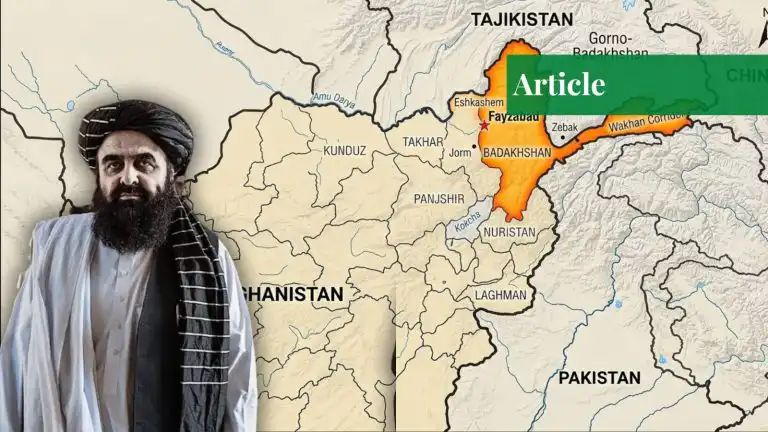
Four years after seizing Kabul and returning to power, the Taliban’s message during their new era has been simple: that Afghanistan is united and now under their dominion. But events that have happened in Badakhshan since mid-2025 question the Taliban’s claim of national unity. Badakhshan, being a strategically mountainous province in the northeast, bordering Pakistan’s Wakhan border, Tajikistan, and China, has seen growing tensions. What began as minor disagreement over mining money and local leadership has escalated, by 2026, into district takeovers, violent clashes between Taliban groups, a major rift with one of the senior northern commanders of the movement, and the first real signs of a local insurgency since 2021.
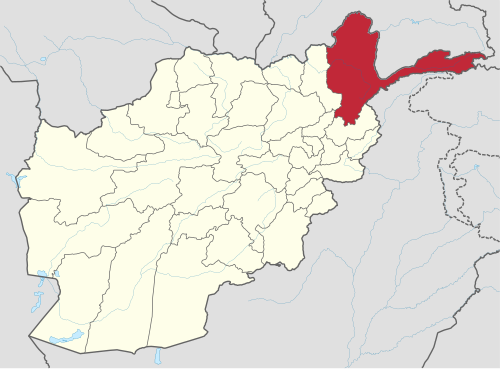
Badakhshan has resisted central rule before. During the 1990s, it was one of the few provinces that the Taliban government could not keep a tight leash on, and was under the control of the Northern Alliance led by Ahmad Shah Massoud. The rugged landscapes, predominantly non-Pashtun population, and the distance from the Taliban’s power base in Kandahar made it difficult and costly to control then, and the same tension between center and periphery has shadowed Taliban rule since 2021. The recently evolved group called Sepahiyan-e Mihan, or the Homeland Soldiers Front, briefly usurped the district center of Yaftal-e Payin in Badakhshan before withdrawing. The Taliban admitted losing control of the area for a short period and blamed the attack on fighters who infiltrated while local commanders were on leave. After some time, a claim was made by the Afghanistan Freedom Front of killing 21 Taliban fighters in a joint offensive against the Taliban bases in Zebak district. Separate attacks have also been claimed by the Islamic State-Khorasan Province and the National Resistance Front. ISKP reportedly assassinated a local Taliban culture and information official, Zabihullah Amiri, but none of these groups has the power to hold territory for long or unify into one force; the continuous spread of the fighting is new for the post-2021 period.
The case of Juma Khan Fateh, an ethnic Tajik commander from Darwaz who helped the Taliban take Badakhshan in 2021, shows how Kabul has secured its grip over the province. After being appointed administrator of Nusay district, he built both power and money through gold mining revenues in the area. However, in June 2026, the Taliban removed him from his post amid increasing dispute over control of Badakhshan’s mines. In August, a week of fighting erupted after his men refused to hand over their weapons, but Fateh surrendered only after direct talks with Taliban army chief Qari Fasihuddin Fitrat at the Nusay district center. Following his surrender, the fighters loyal to Fateh were disarmed, and he was sent to Kabul for trial. This highlights the Taliban leadership’s efforts to bring powerful local commanders and armed networks under tighter central control.
The arrest of Fateh didn’t end one chapter; it gave rise to another. Fateh and his allies had established ties with the National Resistance Front, connecting with resistance figures inside Afghanistan along with representatives in Tehran. After his arrest, many of his close aides were turned into informants by the Taliban intelligence and were offered forgiveness in exchange for sharing information with Kabul. That network led to the killing of NRF commander Hasib Panjshiri as he travelled through Salang in Parwan province. So, a mining dispute in Darwaz ended up feeding one of the year’s biggest blows against the resistance.
Kabul has chosen military response rather than political engagement. In early September, the Taliban had established a drone operations centre near Faizabad airport to counter increasing attacks. Apart from that, the Taliban have deployed special forces and initiated a province-wide disarmament campaign in which Taliban units have surrounded entire villages to seize weapons from miners and residents. Instead of addressing grievances such as representation, mining rights, and disarmament, the Taliban are tightening their control through force.
The Anti-Taliban groups carried out at least fifteen attacks across nine provinces, which shows that they are not only confined to a single part of Afghanistan. This is making it harder for Kabul to portray these groups as limited to one area. This also suggests the Taliban are not close to collapse; rather, it shows the unrest is spreading beyond Badakhshan and may be taking on a national character.
Afghanistan has always been a difficult country to rule. Its regions are far apart, heterogeneous, and accustomed to managing their own affairs; no single government can use force and control everything alone, whereas control has usually relied on agreements between the central government and local leaders, not through orders sent from the top. If any government forgets this and uses only military power, then having weapons and using force is not the same as having real authority.
What is difficult to ignore is the emerging contradiction between the Taliban’s claim of unity and the reality of their rule. They are using the same coercive methods that the earlier Afghan governments used but failed with, including forced disarmament, removal of local authorities, and close monitoring of communities, despite their promise to restore order and unity. This does not mean the government is about to collapse, but it does show the re-emergence of a former pattern of Afghan governance. When a government fails to win the trust of its people, it tries to control them by force, and control without trust rarely lasts long.
This lesson is not constrained to any one province. Afghan history shows that local problems do not stay local for long. They disseminate and gradually join bigger causes, whether based on ethnicity, belief, or money. What starts as a local dispute can become a bigger challenge for the government, and treating this unrest as only a security problem costs more in the long run.
For a government that relies only on national unity for legitimacy, this is a real weakness. Through fighting and the use of weapons, a government cannot create real unity. It has to be obtained through fair representation, fair talks, and shared power. Afghanistan’s history makes clear that any ruler who ignores this lesson does so at their own risk.
If you want to submit your articles and/or research papers, please visit the Submissions page.
To stay updated with the latest jobs, CSS news, internships, scholarships, and current affairs articles, join our Community Forum!
The views and opinions expressed in this article/paper are the author’s own and do not necessarily reflect the editorial position of Paradigm Shift.