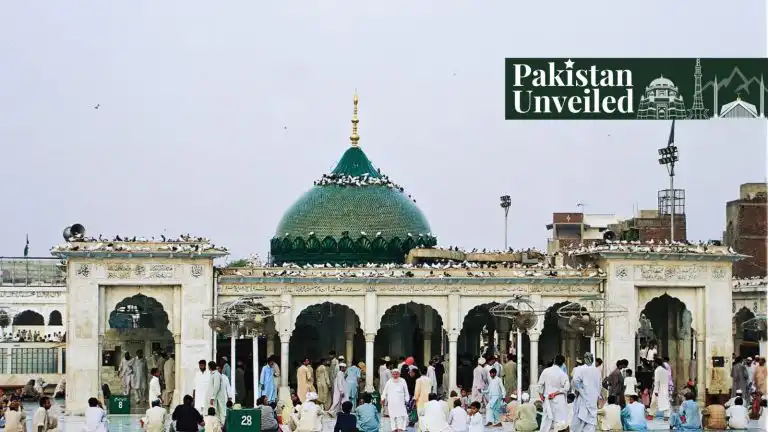
Who Was Hazrat Data Ganj Bakhsh (R.A.)?
Few names occupy as prominent a place in the spiritual history of Lahore as Hazrat Data Ganj Bakhsh (R.A.). Known historically as Abu’l Hasan Ali ibn Usman al-Hujwiri, or Ali al-Hujwiri (R.A.), he was an 11th-century Muslim mystic, theologian, and preacher from Ghazni. He eventually settled in Lahore, where his shrine, Data Darbar, became one of South Asia’s most significant Sufi shrines. For centuries, generations of Muslims across South Asia have associated Data Ganj Bakhsh (R.A.) with spiritual learning, devotion, generosity, and the spread of Islamic scholarship.
However, his influence extends beyond the shrine that bears his name. His most important surviving work, Kashf al-Mahjub (The Unveiling of the Hidden), remains a fundamental work of Persian-language Sufi literature. Understanding Hazrat Data Ganj Bakhsh (R.A.) therefore means looking beyond the famous shrine in Lahore. His life, writings, and teachings offer an important window into the development of early Sufism and the emergence of Lahore as a major center of Islamic spirituality.
Data Ganj Bakhsh and Ali Hajveri: Are They the Same Person?
The names Data Ganj Bakhsh and Ali Hajveri refer to the same historical figure. His full name is generally given as Abu’l Hasan Ali ibn Usman al-Hujwiri al-Ghaznawi. In the Indian subcontinent, however, he became widely revered as Hazrat Data Ganj Bakhsh (R.A.), often shortened to Data Sahib. The title “Ganj Bakhsh” is commonly understood in the sense of “bestower of treasure,” reflecting the saint’s popular association with spiritual generosity. The Punjab Auqaf Department describes him as a Ghaznian-Persian Sunni mystic, theologian, and preacher who became famous for his Sufi writings. Thus, when people search for Hazrat Ali Hajveri, Data Sahib, Ali al-Hujwiri, or Data Ganj Bakhsh, they are searching for different names for the same influential Sufi figure.
The Early Life of Hazrat Ali Hajveri (R.A.)
Hazrat Ali Hajveri (R.A.) was born in Ghazni, in present-day Afghanistan, around the beginning of the 11th century. The exact details of his birth and early life are not known with complete certainty, but his own writings provide important information about his intellectual and spiritual journey. According to the Punjab government’s account, he travelled extensively across the Islamic world, including Baghdad, Nishapur, and Damascus. During these journeys, he encountered prominent scholars and Sufis of his era.
His education combined religious scholarship with spiritual training. He studied Islamic jurisprudence within the Hanafi tradition and developed connections with established Sufi chains of the period. These journeys were significant because the Islamic world of the 11th century was an extensive intellectual network. Scholars, jurists, and mystics travelled between cities, exchanged ideas, and studied under different teachers. Hazrat Ali Hajveri’s later writings reflect this broad intellectual exposure.
How Did Data Ganj Bakhsh (R.A.) Come to Lahore?
One of the most important chapters in Hazrat Data Ganj Bakhsh (R.A.)’s history is his arrival and settlement in Lahore, Pakistan. After travelling through different parts of the Muslim world, he eventually settled in Lahore. He spent the latter part of his life as a teacher and preacher, becoming associated with the city’s religious and intellectual life. He died in Lahore in approximately 1072 CE.
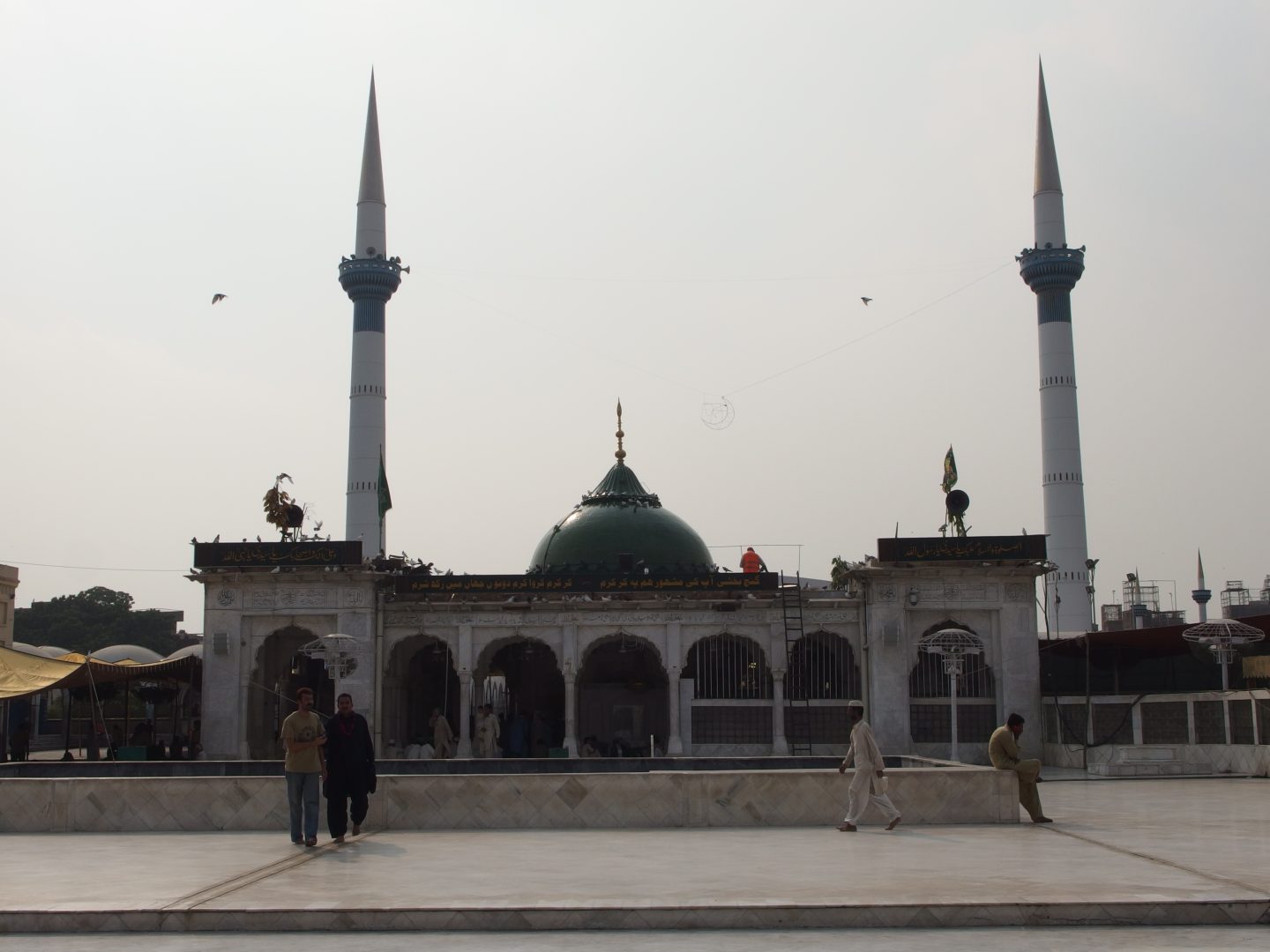
Lahore itself was already an important city in the Ghaznavid period. The city’s historical significance would grow considerably over subsequent centuries, eventually making it one of South Asia’s major centers of culture, literature, and Islamic scholarship. Hazrat Ali Hajveri (R.A.)’s presence became an important part of that spiritual history. Over time, his tomb developed into what is now known as Data Darbar Lahore.
Data Darbar Lahore: From Tomb to Major Sufi Shrine
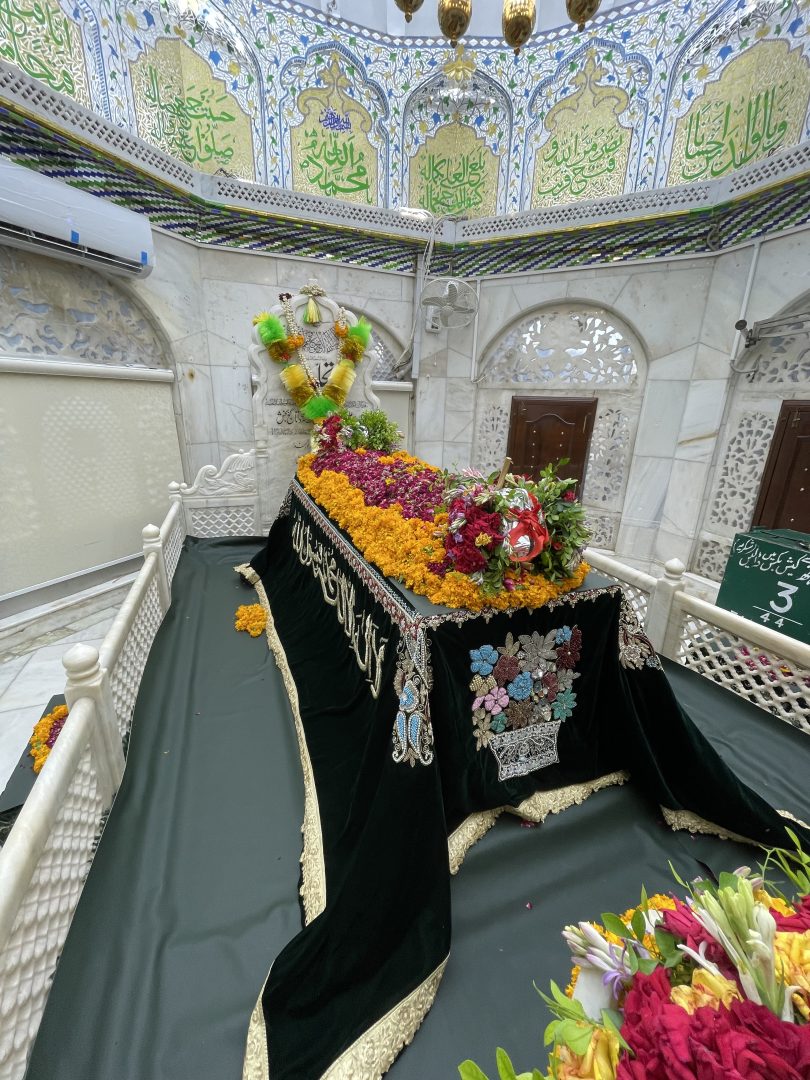
Data Darbar is the shrine of Hazrat Ali Hujwiri (R.A.) in Lahore. The Punjab government regards the shrine as one of the city’s most important religious and cultural landmarks. The Lahore Division describes Data Darbar as the largest Sufi shrine in South Asia and notes the enormous number of visitors it attracts, particularly during the annual urs. The Lahore Museum similarly identifies the tomb of Hazrat Data Ganj Bakhsh (R.A.) as one of the most sacred sites.
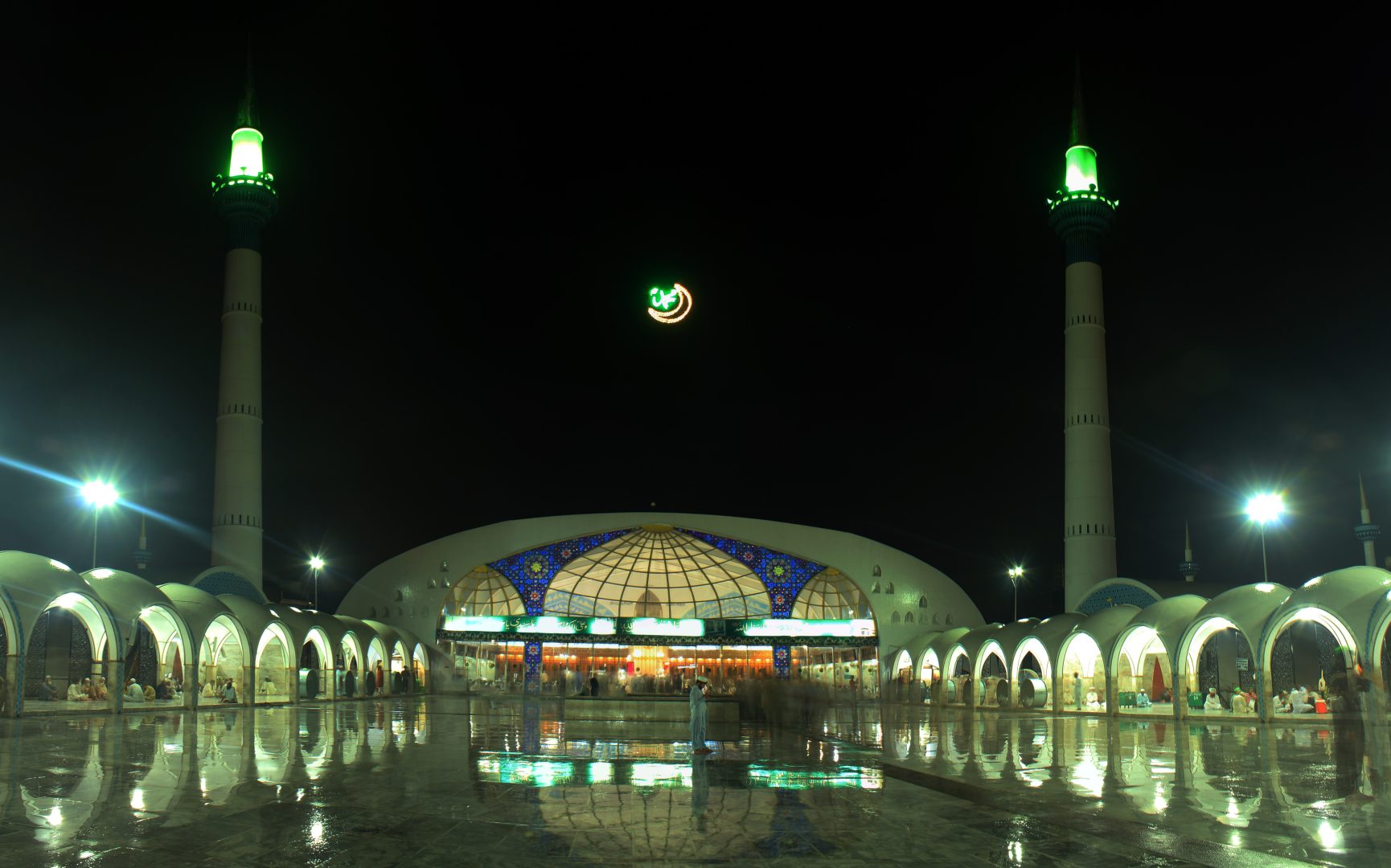
The modern Data Darbar complex is much larger than the original tomb. Government planning documents describe the complex as including the main shrine, a mosque, a Sama’a hall, Jamia Hujveria, a library, seminar facilities, and other infrastructure. The shrine was nationalized in 1960 and is currently administered by the Auqaf & Religious Affairs Department of Punjab. Its significance is therefore not merely historical. Data Darbar remains a living religious institution visited by large numbers of devotees throughout the year.
What Is Kashf al-Mahjub?
Perhaps the greatest intellectual legacy of Data Ganj Bakhsh is Kashf al-Mahjub, usually translated as “The Unveiling of the Hidden.” Written in Persian, the book discusses Sufi beliefs, practices, spiritual states, and the lives and teachings of earlier mystics. The Lahore government’s historical information describes it as an important early formal treatise on Sufism in Persian. Kashf al-Mahjub is significant partly because it presents Sufism in a systematically organized manner. Rather than presenting spirituality simply as a collection of stories about saints and miracles, Hazrat Ali Hajveri (R.A.) addresses questions concerning:
- the meaning of Sufism
- spiritual discipline
- the relationship between religious law and spirituality
- the qualities of a spiritual seeker
- the lives of earlier Sufis
- spiritual knowledge
- sincerity and devotion
- the role of teachers and disciples
For students of Islamic intellectual history, Kashf al-Mahjub is consequently much more than a religious text. It is also a valuable source for understanding how Sufism was conceptualized in the medieval Islamic world.
What Were the Teachings of Hazrat Ali Hajveri (R.A.)?
Hazrat Syed Ali Hajveri (R.A.)’s teachings, preserved in Kashf al-Mahjub, emphasize genuine spiritual transformation rather than outward appearance. A recurring theme in Sufi thought is purifying the self. For Hazrat Data Ali Hajveri (R.A.), religious life could not be separated from sincerity, ethical conduct, and spiritual discipline. His approach also illustrates the relationship between Shariah and Sufism in classical Sunni Sufi thought.
His background in Islamic jurisprudence and his engagement with Sufi traditions demonstrate that spiritual development was not necessarily presented as an alternative to religious law. Instead, the two were understood as interconnected dimensions of religious life. This is one reason Hazrat Ali Hajveri (R.A.) remains significant for discussions about the intellectual history of Sufism in Pakistan and South Asia.
Hazrat Khawaja Moinuddin Chishti (R.A.) and Hazrat Data Ganj Bakhsh (R.A.)
The spiritual legacy of Hazrat Data Ganj Bakhsh (R.A.) is closely associated in South Asian Sufi tradition with Khawaja Moinuddin Chishti (R.A.), the renowned Chishti saint of Ajmer. Traditional accounts state that Hazrat Moinuddin Chishti (R.A.) visited Lahore and spent time in spiritual retreat at the shrine of Hazrat Data Ali Hajveri (R.A.) before continuing his journey towards Ajmer.
The room traditionally associated with this retreat is still identified within the Data Darbar complex. According to the traditional account, Hazrat Khawaja Moinuddin Chishti (R.A.) was deeply impressed by the spiritual stature of Hazrat Data Ganj Bakhsh (R.A.). His reverence is popularly expressed through the famous Persian couplet associated with his visit:
گنج بخشِ فیضِ عالم، مظہرِ نورِ خدا
ناقصاں را پیرِ کامل، کاملاں را رہنما
The couplet describes Hazrat Data Ganj Bakhsh (R.A.) as a bestower of spiritual grace, a perfect guide for those seeking spiritual completion, and a guide for those who have already attained it. The historical details of Hazrat Moinuddin Chishti (R.A.)’s stay at Data Darbar belong primarily to the Sufi hagiographical tradition, and they should therefore be distinguished from independently documented biographical facts.
Nevertheless, the tradition is important because it reflects the enormous spiritual stature that Hazrat Data Ali Hajveri (R.A.) acquired in the memory of later Sufi communities. The association between the two saints also illustrates how Lahore became connected to the wider development of the Chishti and other Sufi traditions across South Asia.
Data Ganj Bakhsh and the Spread of Islam in South Asia
Ali Hajveri (R.A.) lived before the large-scale expansion of Muslim political rule across much of South Asia. His importance, therefore, cannot simply be explained through political power. His influence was primarily rooted in preaching, scholarship, and spiritual instruction. The Punjab Auqaf Department states that he is believed to have contributed significantly to the spread of Islam in South Asia through his preaching. His legacy also became part of a much broader pattern in South Asian Islamic history, in which Sufi scholars and spiritual figures established centers of learning and attracted communities around them. Later generations of Sufi saints would play similarly important roles in different parts of the region.
Data Ganj Bakhsh Among the Sufi Saints in Pakistan
Pakistan is home to numerous historic Sufi shrines associated with figures such as Baba Farid, Hazrat Bahauddin Zakariya, Hazrat Shah Rukn-e-Alam, Hazrat Lal Shahbaz Qalandar, and Hazrat Abdullah Shah Ghazi (R.A.). Yet Hazrat Data Ganj Bakhsh (R.A.) occupies a particularly important position because of the antiquity of his association with Lahore and the intellectual significance of Kashf al-Mahjub.
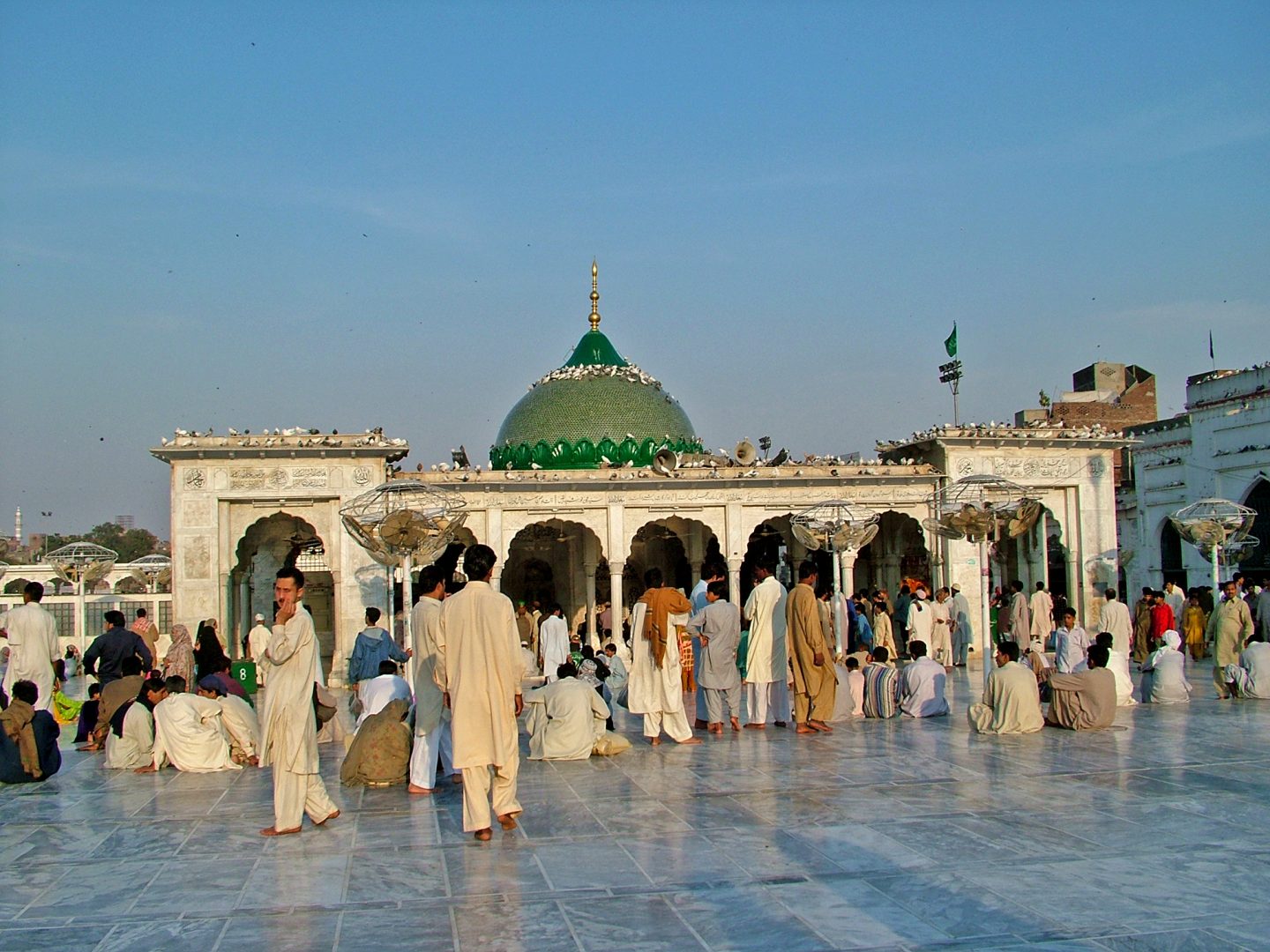
His shrine is also part of Lahore’s broader religious landscape, which includes the tombs and shrines of numerous influential scholars, mystics, and poets. The official Lahore government website lists the Tomb of Hazrat Data Ali Hujwiri (R.A.) among the city’s important mausoleums and shrines. For this reason, his legacy is simultaneously religious, intellectual, cultural, and historical.
Allama Iqbal’s Reverence for Hazrat Data Ganj Bakhsh (R.A.)
The influence of Hazrat Data Ganj Bakhsh (R.A.) extended far beyond the medieval period. Centuries after his death, Allama Muhammad Iqbal (R.A.) developed a deep admiration for the saint and his spiritual legacy. Accounts of Iqbal’s life record that he regularly visited the shrine of Hazrat Data Ganj Bakhsh (R.A.), sometimes going there before the morning prayer. For Iqbal, Data Sahib (R.A.) represented a form of spirituality rooted in knowledge, religious devotion, and the moral transformation of individuals and society.
Iqbal’s reverence for Hazrat Data Ali Hajveri (R.A.) is particularly evident in his Persian poetry. In Asrar-e-Khudi (The Secrets of the Self), Iqbal includes a hikayat devoted to Sayyid Ali Hujwiri, beginning with the words “سید ہجویر مخدوم امم.” Rather than portraying Hujwiri simply as a saint associated with a shrine, Iqbal (R.A.) presents him as a major spiritual figure whose influence had profound consequences for the Indian subcontinent.
One of the most striking lines in the passage is:
در زمین ہند تخم سجدہ ریخت
which can be translated as: “He sowed the seed of prostration in the land of India.”
Iqbal later writes:
خاک پنجاب از دم او زندہ گشت
meaning: “The soil of Punjab came alive through his spiritual breath.”
These verses reveal how Iqbal understood the historical importance of Hazrat Data Ali Hajveri (R.A.). In his poetic imagination, Hazrat Data Ganj Bakhsh (R.A.) was not merely a mystic who withdrew from worldly affairs. He was a spiritual force whose teachings helped shape the religious and cultural landscape of Punjab and the wider subcontinent.
Iqbal’s admiration is especially significant because his own approach to Sufism emphasized self-purification, spiritual vitality, knowledge, and action. His respect for Hazrat Data Ali Hajveri (R.A.) therefore reflected his appreciation for a Sufi tradition that combined inner spirituality with religious and intellectual discipline. Through both his visits to Data Darbar and his poetry, Iqbal helped carry the memory of Hazrat Data Ganj Bakhsh (R.A.) into the intellectual world of modern South Asia.
Why Is Data Darbar Important Today?
The significance of the Data Darbar shrine demonstrates how medieval religious heritage remains connected to contemporary Pakistani society. The shrine serves as a place of worship and devotion, while the surrounding complex provides religious and community-oriented facilities. Its enormous visitor numbers have also created practical challenges.
A Punjab government planning document says the shrine can receive tens of thousands of visitors on an average day and identifies issues involving facilities, security, traffic management, and long-term planning. This highlights an important reality: preserving Pakistan’s Sufi heritage is not simply about maintaining historic buildings. Major shrines are also functioning religious spaces that must accommodate large contemporary communities.
The Legacy of Data Sahib (R.A.) in Lahore
For Lahore, Hazrat Data Ganj Bakhsh (R.A.) represents much more than a historical personality. His name has become deeply embedded in the city’s cultural identity. The shrine is regularly described by government sources as one of Lahore’s most important sacred places, while the city’s historical institutions continue to identify Data Darbar as a major heritage landmark. The endurance of his legacy is particularly remarkable considering that almost a millennium separates modern visitors from the period in which Hazrat Ali bin Usman Hajveri (R.A.) lived. His physical tomb remains a destination for devotees, while his written work continues to attract students of Islamic thought and Sufism.
Why Does Hazrat Data Ganj Bakhsh (R.A.) Still Matter?
The legacy of Hazrat Data Ganj Bakhsh (R.A.) is ultimately larger than Data Darbar itself. He represents an era when scholars and mystics travelled across the Islamic world, exchanged knowledge, and established intellectual traditions that crossed political boundaries. His Kashf al-Mahjub preserves an important record of early Sufi thought, while his association with Lahore helped establish a spiritual legacy that has endured for centuries.
For modern Pakistan, Data Darbar is simultaneously a religious shrine, historical monument, cultural landmark, and center of living spiritual tradition. That combination explains why Hazrat Data Ganj Bakhsh, Ali Hajveri, and Data Sahib (R.A.) remain familiar names nearly a thousand years after his death. His story is not only the story of one of the famous Sufi saints in Pakistan. It is also part of the longer story of how Islamic scholarship, spirituality, and culture developed in South Asia.
Conclusion
Hazrat Data Ganj Bakhsh, or Ali al-Hujwiri (R.A.), was much more than an 11th-century mystic whose tomb eventually became one of Lahore’s most important shrines. Born in Ghazni and shaped by extensive travel and Islamic scholarship, he brought a rich intellectual and spiritual tradition to Lahore, where his teachings continued to influence generations of Muslims. His greatest intellectual legacy, Kashf al-Mahjub, remains an important source for understanding the development of early Sufi thought. At the same time, the traditions surrounding his shrine demonstrate the extraordinary place he came to occupy in the spiritual imagination of South Asia.
The association of Khawaja Moinuddin Chishti (R.A.) with Data Darbar, although preserved primarily through later Sufi tradition, reflects the continuing reverence accorded to Hazrat Data Ali Hajveri (R.A.) by subsequent generations of mystics. Centuries later, Allama Iqbal’s devotion to him added another remarkable chapter to this legacy. By visiting his shrine and praising him in Asrar-e-Khudi, Iqbal presented Ali Hajveri (R.A.) as a spiritual figure whose influence extended beyond his own lifetime and helped shape the religious consciousness of the subcontinent. Today, Data Darbar Lahore remains a living symbol of this enduring legacy.
For devotees, it is a place of spiritual connection; for historians, it represents an important chapter in Lahore’s past; and for students of Islamic thought, the works of Hazrat Ali Hajveri (R.A.) provide an invaluable window into the intellectual foundations of Sufism. Nearly a thousand years after his lifetime, the name Data Ganj Bakhsh continues to resonate across Pakistan and beyond. His legacy survives not only in the shrine that bears his name but also in the writings, traditions, and spiritual memory of generations who have regarded Ali Hajveri (R.A.) as one of the most influential Sufi saints in South Asian history.
If you want to submit your articles and/or research papers, please visit the Submissions page.
To stay updated with the latest jobs, CSS news, internships, scholarships, and current affairs articles, join our Community Forum!
Find our FREE quizzes and MCQs here!
The views and opinions expressed in this article/paper are the author’s own and do not necessarily reflect the editorial position of Paradigm Shift.

Muhammad Hamza Tanveer is a political analyst specialising in South Asian and Middle Eastern affairs. His work focuses on religious nationalism, regional security, and minority rights. He has been featured in Stratheia, Pakistan Today, Pakistan Observer, and the Asian Mirror. He is also working as a research analyst and political commentator for Paradigm Shift and contributes to the monthly magazine of Nearpeer.