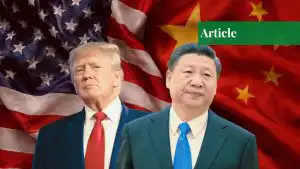
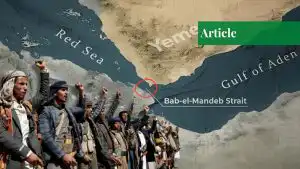
For most of the last two decades, China’s role in the Middle East was perceived narrowly, with its economic interests and building infrastructure as the dominant themes. With the Belt and Road Initiative, China created a strong economic presence by funding and building ports or roads, and energy corridors throughout the region. That period of engagement is now changing rapidly. Beijing’s power now reaches far beyond cement and steel. It now entails expanding diplomatic intermediation, military collaboration, and an aggressive expansion into digital infrastructure and surveillance technologies. This represents a profound change in China’s regional policy, marking a more expansive and multifaceted presence in a region long dominated by Western powers.
China’s early economic strategy was pragmatically based. The Middle East provided bountiful oil and gas to supply China’s increasing energy needs, while regional governments accepted Chinese investment with minimal political strings. Infrastructure schemes in nations like Egypt, Iran, Saudi Arabia, and the United Arab Emirates were frequently put forward as win-win, free of the political strings included in Western aid. This helped make China a desirable partner. It allowed Beijing to gain access and trust without having a very high geopolitical profile. But this was only the starting point for infrastructure. These economic investments opened the door to greater strategic engagement.
At the diplomatic level, China is now framing itself as a neutral and credible mediator in regional conflicts. Most important among the developments of recent years was Beijing’s successful mediation of the Saudi-Iran rapprochement in 2023. That Beijing-set agreement was a milestone not only in Gulf politics but also in international perceptions of China’s mediating role in conflict resolution. While the United States is deeply enmeshed in regional alignments, China’s strategy has been to talk to all players without taking any public stands on contentious matters. This enables Beijing to have diplomatic relations with competitors throughout the region, including with Iran and Israel, Saudi Arabia and Syria, and the Palestinian Authority and Hamas.
This policy of balanced diplomacy is boosted by a series of high-level interactions and regional dialogues. The China and Arab States Summit, for example, reaffirmed Beijing’s pledge to enhance political exchanges and economic cooperation. While Washington seems to be reassessing its Middle East policy and de-escalating its military presence, China is filling the vacuum not with guns but with diplomacy and commerce. It is wooing governments that are looking for unobtrusive partners without interference in local issues.
In the defense industry, China is starting to grow its role in quieter but equally important ways. It is emerging as a major exporter of military technology to some nations in the region. Chinese-produced drones have been sold to Saudi Arabia and the United Arab Emirates, especially after the United States imposed restrictions on exporting similar systems. Iran, under Western sanctions, has also bolstered its defense relationships with China, engaging in bilateral naval exercises with Russia. China has shunned establishing military bases or formal alliances, but these collaborations reflect increased familiarity with security collaboration, if on its own terms.
China’s most ambitious and potentially revolutionary engagement in the region is occurring in the digital sphere. Technology firms like Huawei have taken a strong foothold in many nations, constructing fifth-generation mobile networks and investing in high-tech urbanization schemes. NEOM, the kingdom’s planned mega-city of the future, features important Chinese participation in its digital infrastructure. In addition to connectivity, China is also selling surveillance technologies, facial recognition software, and artificial intelligence platforms that are frequently applied to internal security needs. Exports such as these are not merely business transactions. They bring with them a framework of government that favors state authority over individual privacy, calling into question the long-term implications for regional civil liberties and digital sovereignty.
Soft power is also becoming a more significant element in China’s approach. With state-sponsored media in Arabic, educational exchange initiatives, and cultural diplomacy, China is working proactively to build its image among Middle Eastern citizens. It has platforms such as TikTok and services from Chinese technology companies widely used, particularly by the younger population. It aims not merely to facilitate trade but also to create an image of China as a fair and benevolent world leader. This initiative supports its general approach of countering the Western narrative without challenging it head-on.
What emerges is a picture of China that is becoming a full-spectrum power in the Middle East. Unlike the United States, which often combines military dominance with political advocacy, China offers a more transactional and adaptable model. It provides investment without demanding political reform. It offers technology without pressing for alignment. And it promotes stability while avoiding traps in local conflicts. This approach is appealing to governments in the region that value sovereignty and are increasingly seeking alternatives to traditional Western partnerships.
Yet this increasing influence is not challenge-free. Middle Eastern governments now have to operate in a more complicated geopolitical landscape in which Chinese engagement has the potential to trigger alarm in Washington or Brussels. Meanwhile, added dependence upon Chinese technology does pose such questions as how to guarantee data privacy, be less cyber-dependent, and what the long-term strategic price of digital integration with a rising autocratic power actually is.
China is not supplanting the United States in the Middle East, at least not yet. But it is quietly constructing a new type of influence, one that is based on infrastructure but grows through diplomacy, security partnerships, and digital connectivity. This influence is less tangible than aircraft carriers or military bases, but no less potent. As geopolitics gravitates towards the Middle East, the region is becoming a beneficiary as well as a laboratory for China’s international expansion. The West would be remiss in seeing this as economic expansion alone. It is a change of strategy that is reshaping the regional order in quiet but profound ways.
If you want to submit your articles and/or research papers, please visit the Submissions page.
To stay updated with the latest jobs, CSS news, internships, scholarships, and current affairs articles, join our Community Forum!
The views and opinions expressed in this article/paper are the author’s own and do not necessarily reflect the editorial position of Paradigm Shift.

Muhammad Subhan Zuberi is an undergraduate student of International Relations at Bahria University, Islamabad. My research interests lie in International Relations, Great Power Relations, and Public Policy.