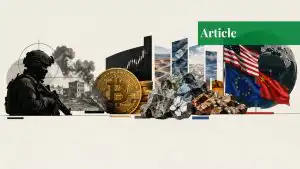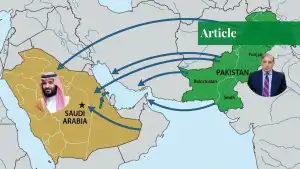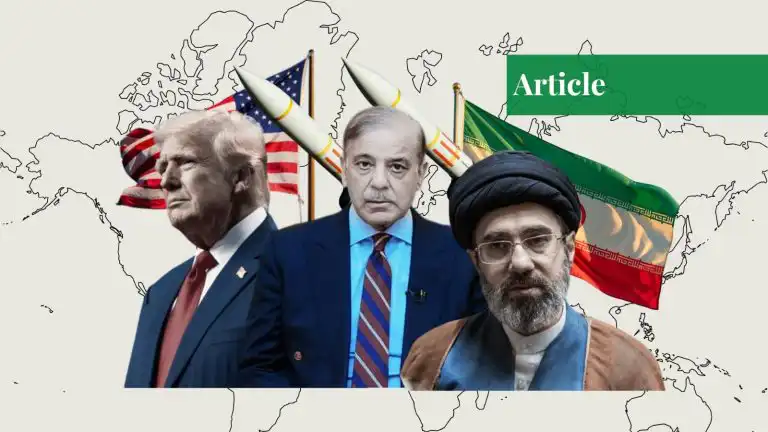
The Iran-US-Israel conflict is far more than merely a regional military conflict. It is a pivotal moment in reshaping the Middle East’s geopolitical and economic landscape. While missile and military operations emerge as a dominating headline, the war’s most enduring consequences could come in the form of disruptions to trade networks, upheavals in energy markets, shifting alliances, and the realignment of regional economic partnerships. The real threat for Pakistan, which has not been involved in the Iran War militarily, is not yet on the field but on the economy.
The recent volatility in oil prices, inflation, exchange-rate pressures, trade disruption, and financial markets has revealed the structural weaknesses of Pakistan. However, it has provided historic opportunities as well. If approached strategically, the new order in the Middle East can help Pakistan to boost its economy, increase regional trade, and redefine itself as a pivotal geoeconomic partner of the Gulf.
Energy Dependence and the Strait of Hormuz
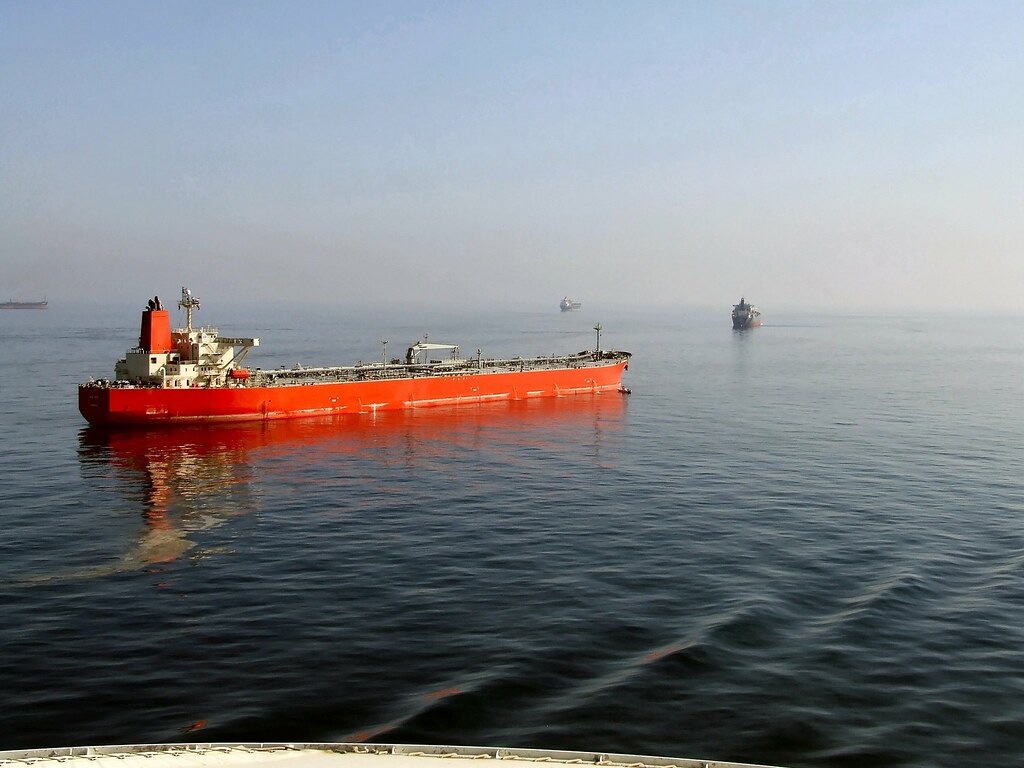
The most significant economic impact begins with Pakistan’s high dependency on imported energy from the Gulf countries. As mentioned in “The Middle East Crisis Impact on Pakistan’s Trade,” a policy viewpoint on PIDE’s site, Pakistan imports a considerable amount of crude oil from the Gulf countries, a considerable portion of which transits via the Strait of Hormuz.
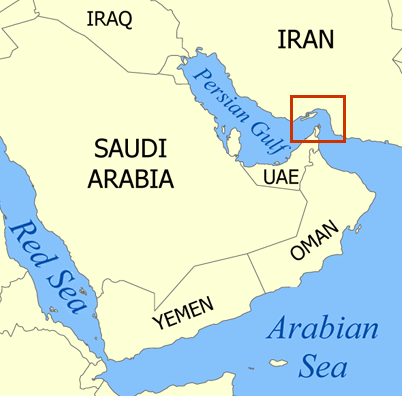
The disruptions to this strategic waterway will instantly raise the cost of shipping, insurance prices, and global oil prices. These shocks lead to increased import bills, strain on foreign exchange reserves, and growing fiscal and current account deficits. The study rightly states that the real problem of Pakistan is not just conflict exposure but too much reliance on imported energy sources. The study is correct to highlight that the real problem with Pakistan is energy dependency and not conflict exposure.
Financial Markets and Investor Confidence
More significant is the economic impact of regional instability. Dr. Ahmad Fraz, in his policy viewpoint “From the Strait of Hormuz to the PSX: What the Iran–Israel War Reveals About Pakistan’s Economic Vulnerability,” has illustrated the pace at which geopolitical tensions have an impact on investor trust and financial markets. The Pakistan Stock Exchange responds promptly to Middle East events, even before official data on the economy. This is a reflection of the globalization of markets. Modern conflicts no longer impact only adjacent nations but rather trigger financial hits that are transmitted instantaneously between economies interconnected with global commerce and energy markets.
A Gulf Region Moving Beyond Oil
However, the economic costs are only part of the picture. The Middle East is in a period of dramatic change. This is because Gulf nations are increasingly shifting their focus away from oil and into logistics, renewable energy, technology, manufacturing, tourism, and digital infrastructure. These are all reforms undertaken by ambitious national development programs, including Saudi Vision 2030 and other similar ones in the Gulf, which show the region is transitioning from an oil-based economy to a diversified geoeconomic one.
From Labor Export to Contract Export
This change is the core of the argument in “Capturing the Middle East Recovery” by Dr. Nasir Iqbal, suggesting that Pakistan ought to consider revisiting the traditional approach to the Gulf. The Pak-Gulf ties have been primarily based on labor and remittances for decades now. Remittances are a critical component of bilateral economic relations, but a major share of them must not be the sole basis for such relations.
Rather, Pakistan needs to make a case for providing engineering services, construction expertise, information technology, logistics, agricultural products, healthcare, education, and industrial products. There are opportunities in the Gulf that Pakistan is yet to fully capitalize on, due to the region’s growing infrastructure investment through various mega-projects, such as Saudi Arabia’s Vision 2030, and reconstruction projects following the conflict.
A More Multipolar Middle East
Additionally, an analysis by Khalid Al-Jaber, titled “The Iran War and an Emerging Geopolitical Order,” looks at the evolution of the order in the region in greater detail, suggesting that the recent war is playing a major role in fostering a multipolar Middle East. Gulf countries have become more pragmatic about foreign policy and have a policy of maintaining strong relations with the United States, China, Europe, and regional powers at the same time. They are no longer solely focused on security but are increasingly prioritizing economic resilience, strategic investment, regional connectivity, and diversified partnerships. In the changing landscape, there is room for middle powers like Pakistan to build up their economic diplomacy while balancing the competing regional powers.
The Inflationary Transmission Channel
Another area of Pakistan’s weakness is domestic inflation. A case study, “World Oil Price Volatility, Middle East Geopolitics, and Pakistan’s Inflation Dynamics” by Dr. Abuda Naurin, illustrates how these price changes in a matter of seconds are reflected in rising transportation costs, electricity tariffs, food prices, and inflation in the country. Because energy is an input in virtually every sector of the economy, oil price shocks affect the purchasing power of the economy, its production costs, and macroeconomic management. Unless Pakistan diversifies its energy resources and enhances economic resilience, the study says, the same kind of geopolitical crisis will see repeated inflationary pressures.
Pakistan’s Structural Vulnerabilities
Combined together, these five studies have a united message that Pakistan’s biggest problem is not the external conflict but the fragile condition of the domestic economy. Every geopolitical crisis exposes the underlying structural weaknesses, such as over-reliance on imported energy, low export diversification, lack of competitiveness of industry, inadequate logistics infrastructure, and a lack of economic policy consistency. External shocks become crises because domestic resilience remains weak.
Turning Strategic Location into Opportunity
Interestingly, the same conflict also brings in new opportunities. The Gulf countries are transitioning to a more diversified economy, which necessitates a secure base of supply in the areas of logistics, food security, technology, manufacturing, higher education, healthcare, infrastructure, etc. Pakistan has some comparative advantages that are not being tapped. It is strategically located between the Middle East, Central Asia, Western China, and South Asia. The infrastructure offered by the Gwadar Port and the overall China-Pakistan Economic Corridor (CPEC) may enable regional trade and supply chains. Pakistan is also endowed with a young workforce, digitally competent, competitive agriculture, and budding entrepreneurship.
From Geography to Geoeconomic Strategy
An important thing to remember here is that it is not just the location that makes an economy successful. The advantage of strategic location cannot be fully exploited without effective institutions, confidence, good governance, and political stability. This means Pakistan needs to move from a reactive foreign policy to a proactive geoeconomic policy. Instead of addressing each regional crisis separately, it is important for policymakers to formulate long-term regional strategies and provide special attention to economic diplomacy, export orientation, industrial upgrading, and regional connectivity.
Five Strategic Lessons for Pakistan
Several strategic lessons emerge from the current crisis. Pakistan’s first step is to substantially cut reliance on imported fossil fuels by speeding up investment in renewable energy, domestic gas production, hydroelectricity, and strategic petroleum reserves. Energy security must be a part of national security.
Second, Pakistan’s relations with the Gulf countries must be extended beyond the export of labor. Joint ventures, technology transfer, industrial investment, tourism, agriculture, digital services & value-added exports need to be the priorities of bilateral cooperation. There is a great need to actively compete for contracts with Pakistan’s firms associated with the expansion and reconstruction initiatives of the Gulf countries.
Third, Gwadar and CPEC should be redefined as regional commercial corridors and not limited to infrastructure projects. Better customs processes, digital trade facilitation, integrated logistics networks, industrial clusters, and other means could make Pakistan a gateway between the Gulf economies and Central Asia and Western China.
Fourth, Pakistan should follow a pragmatic and balanced foreign policy. The new Middle Eastern posture is one of being flexible, rather than being bound in alliances. Pakistan needs to have good relations with Iran, Saudi Arabia, the UAE, Qatar, Türkiye, China, and Western countries at the same time but refrain from being involved in the regional rivalry and war. This diplomatic balance would ensure the highest economic possibilities, without sacrificing national interests.
Lastly, there is a need for domestic governance reform, which continues to be a must. In order to attract investments from the Gulf, regulatory certainty, minimal bureaucracy, the rule of law, investor protection, and policy continuity are essential. Bad domestic institutions cannot be made good by any amount of geopolitical opportunity.
A Strategic Warning—and a Choice
Thus, the Iran–US–Israel conflict cannot be viewed solely in terms of security concerns but as a strategic warning as well. It brings the price of economic dependency and the advantages of economic resilience to light. Pakistan has no control over the geopolitical scenario in the Middle East, but it can prepare to respond to the effects of the Iran War. What matters more for the country’s future prospects is its capacity to turn geographical advantage into long-term economic power rather than the factors outside itself.
Conclusion: Seize the Opportunity
History tends to be kind to states that know how to seize opportunity in times of uncertainty. The Middle East is moving into a new geoeconomic phase, and Pakistan is at a crossroads to either be a resistance force to all the shocks in the region or to take active measures to become a part of the region’s economic transformation through structural changes. The decisions made today will make or break Pakistan’s ability to survive a crisis in the future or to become stronger.
If you want to submit your articles and/or research papers, please visit the Submissions page.
To stay updated with the latest jobs, CSS news, internships, scholarships, and current affairs articles, join our Community Forum!
The views and opinions expressed in this article/paper are the author’s own and do not necessarily reflect the editorial position of Paradigm Shift.

Rehman Yar is a student of public policy and governance at Government College University Lahore.