“The masses have never thirsted after truth. They turn aside from evidence that is not to their taste, preferring to deify error if error seduces them.”
– Gustave Le Bon
Where does freedom of expression end, and where does digital terrorism and populism begin? Is the right to speak an unqualified invitation to spread fear, hatred, and misinformation? These are not merely philosophical questions—they are the defining issues of our time.
Social media was once heralded as a democratizing force, a platform for diverse voices. However, it has transformed into the perfect tool for populists and fascists, enabling them to manipulate reality. In this digital age, truth is irrelevant. The power lies in repetition: a false claim propagated enough times will flood timelines, stir emotions, and eventually be accepted as truth. As Le Bon aptly warned, the masses do not seek facts—they react, they feel, they follow. And it is in such an environment that the demagogue thrives.
History offers ample evidence of this pattern. The masses do not simply choose their leaders; they deify them. When a populist taps into collective fears, frustrations, and aspirations, he is no longer merely a politician—he becomes a symbol. And therein lies the danger. When mass approval evolves into mass submission, fascism is merely a step away.
This dynamic is not new. Chomsky warned of manufactured consent. Adorno analyzed how authoritarian personalities manipulate power. Gramsci emphasized that culture, not merely laws, sustains hegemony. The difference today is that the modern dictator no longer requires boots on the ground. They wield algorithms, trolls, and an audience that readily embraces the lie.
Pakistan is mired in a digital quagmire. Every day, countless posts, tweets, and WhatsApp forwards disseminate half-truths, fabricated statistics, and doctored images. However, this is not a random occurrence—it is a deliberate strategy.
Consider the disinformation campaign surrounding the mineral resources of Balochistan. A narrative has been pushed claiming that local wealth is being pilfered by outsiders, inciting ethnic grievances. Yet, who stands to gain from this? Certainly not the people of Balochistan, nor Pakistan as a whole. Instead, it is foreign-backed networks that stoke division, ensuring that the nation remains trapped in a state of perpetual distrust and discontent.
This is not merely a domestic issue. Hybrid warfare has evolved beyond tanks and missiles—today, the battleground is digital, and the weapon is narrative control. Ethnic tensions, political instability, and economic despair are amplified online, destabilizing national cohesion. The weaponization of misinformation is now an integral component of contemporary warfare.
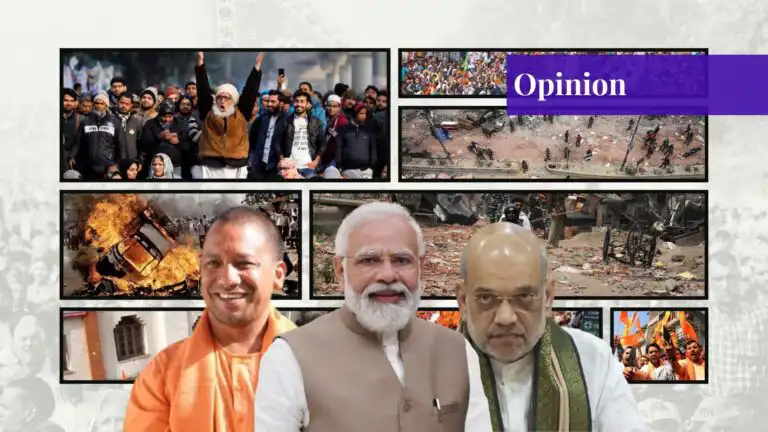
If any nation has perfected digital fascism, it is India under the rule of the Bharatiya Janata Party (BJP). The party’s IT cell operates as a highly efficient propaganda machine, running disinformation campaigns around the clock. WhatsApp forwards have supplanted history books, and social media trends now dictate who is considered a patriot and who is branded a traitor.
The narrative is simplistic yet effective: majoritarian rule masquerading as democracy. Under Modi’s vision of India as a “Vishwaguru” (world teacher), the nation is presented not just as a country, but as a civilizational project. To achieve this, history must be rewritten, minorities demonized, and dissent silenced.
The role of Bollywood in this narrative is particularly telling. Films such as Chhava unnecessarily vilify historical figures like Aurangzeb, reducing him to a one-dimensional tyrant reinforcing the trope of the “evil Muslim ruler.” Why? Because such historical revisionism aligns with the BJP’s nationalist agenda. In this new reality, art ceases to be art—it becomes a political tool.
The result? A population increasingly willing to accept the narratives it receives through social media, convinced that its anger is justified. Mob lynchings, riots, and hate crimes are not spontaneous; they are carefully engineered by digital manipulation.
This trend is not confined to Pakistan or India; it is a global phenomenon.
In the United States, Donald Trump’s MAGA movement transformed social media into his personal propaganda apparatus. By bypassing traditional media channels, he didn’t just communicate; he dictated reality. His tweets—often false or absurd—became gospel for millions, and mainstream media either amplified his messages or scrambled to counter them. In either case, the narrative was shaped by him.
Similarly, in France, Marine Le Pen capitalized on anti-immigrant sentiment to push a xenophobic agenda. In Italy, Giorgia Meloni has repackaged far-right nationalism into populist rhetoric, while in Hungary, Viktor Orbán has hollowed out the democratic process, ensuring that while elections are held, power remains firmly in the hands of the ruling elite.
In Brazil, Jair Bolsonaro, in Turkey, Recep Tayyip Erdoğan, and in Israel, Benjamin Netanyahu, all follow the same playbook. They flood digital spaces with propaganda, inflame emotions, foster an “us vs. them” mentality, and consolidate power while the public remains distracted by the manufactured chaos.
Pop culture is never neutral. Today, both Hollywood and Bollywood play pivotal roles in shaping ideological biases—sometimes subtly, sometimes aggressively. Films, music, TV shows—they are no longer just entertainment. They have become tools of political conditioning.
In India, corporate giants such as Adani and Ambani do more than control the economy, they fuel the BJP’s political machinery. When business interests align with majoritarian politics, the result is an ecosystem where capital shields power, and power rewards capital. Dissent is suppressed, and alternative voices are silenced.
The most alarming part of this reality is that the masses do not resist. Instead, they celebrate their own submission. Fascism today does not manifest in the form of jackboots or military coups. It arrives in the guise of trending hashtags, viral tweets, blockbuster films, and algorithm-driven outrage. It does not require coercion. It manufactures consent by flooding the public with emotionally charged misinformation.
We have reached a point where mass approval does more than legitimize leaders—it deifies them. Once this happens, there is no room for dissent, no space for truth, and no possibility for democracy to function.
So, what is the way forward? Regulation of digital spaces? Media literacy programs? Stricter laws against disinformation? These may be part of the solution. But the real answer is simpler—and far harder: people must think. They must not react impulsively, blindly believe, or get swept away by what feels good to hear.
In the end, it is not the populists who create fascism, it is the people who passively allow it to happen.
If you want to submit your articles and/or research papers, please visit the Submissions page.
To stay updated with the latest jobs, CSS news, internships, scholarships, and current affairs articles, join our Community Forum!
The views and opinions expressed in this article/paper are the author’s own and do not necessarily reflect the editorial position of Paradigm Shift

Mohammad Zain is an International Relations student at NUML, Islamabad. With an associate degree in English Literature and Linguistics and a BS in International Relations, he brings a unique blend of analytical and literary skills to his writing.