A Call for a European Army
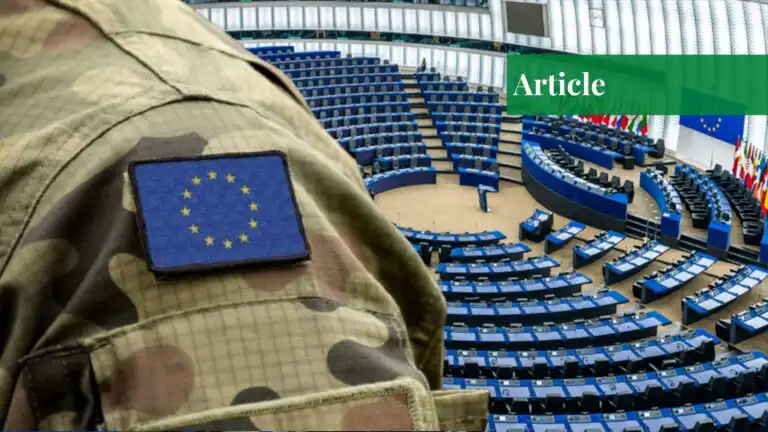
Over the last few years, the geopolitical stage has changed significantly within Europe on account of escalating global politics, alliances, and security concerns. It is against this backdrop that the idea of a common European army has assumed more significant proportions, coming from French President Emmanuel Macron’s calls for much stronger European defense frameworks. At that point, the EU faced all the current challenges of instability in a global environment. However, political and military efforts over many decades have never come close to establishing a proper European army. This article will analyze the prospects of a united European Union army by looking at the defense policies of the EU, cooperation efforts, and partnership with NATO.
Prospects of a Unified European Military Force
The military ambitions of the European Union date back to World War II, although security was one of the primary concerns of Europe in the post-war period, which allowed room for early initiatives into military integration. Eisenhower’s administration convinced the Europeans to create its defiance system that was thwarted by the French parliament. One of these early attempts was the Brussels Treaty of 1948, which paved the way for other defense endeavors. Yet, a single European Union army has always, until now, avoided realization. German defense analyst Ulrike Franke described the EU army as the “ghost in the system of the European Defense debates.” However, it must be created as the US is no longer interested in European security.
Political complexity and its related inability are among the main challenges to the militarization of the EU. Military and defense matters remain within the control of the individual member states. Moreover, even though some of the EU member nations, principally France, have urged the need for a European Union army, there still exist countries that are not convinced, such as the United Kingdom (pre-Brexit). Certain Eastern European nations would rather rely on NATO security assurances than seek an independent European defence agency (via cost-benefit analysis). Conversely, France treats the European army as a necessary step for further autonomy in defense, particularly within the changing geopolitics owed to an anticipated decline of America’s commitment to European security under Trump’s administrations.
For the EU, logistical and legal barriers are another challenge in creating such a force. Above all is political will. A common military force would not only require the will of the EU member states but also a radical transformation in favor of a wider perception of defense under the EU umbrella. A legal framework is another challenge. There is no basis in the existing treaties of the EU (Maastricht and Lisbon Treaties) to form a European army.
Although the EU has gradually developed military capabilities through initiatives like the Common Security and Defense Policy (CSDP) and the European Spatial Development Perspective (ESDP), these remain part of an intergovernmental framework, with member states retaining control over their content and implementation. Such a move towards a unified European Union army would require major amendments to the EU treaty, such as shifting from the federal approach to defense policy formulation.
Apart from that, the variety of military doctrines, training standards, and military equipment diversification further pose logistical challenges. The former Belgian prime minister, Marc Eyskens, famously referred to the European communities as an economic giant, a political dwarf, and a military worm. This metaphor highlights the EU’s strong economic presence but also emphasizes its inability to project military power due to a lack of cohesive foreign policy, which prevents the EU from speaking and acting with a unified political and strategic voice. European armies would have standards in many factors, including military technology, operational procedures, and even common language. Because of many national priorities as well as the differences concerning the levels of military capability, harmonizing these will be complicated and long in process.
Future of European Defense Cooperation Initiatives in Europe
Permanent Structured Cooperation (PESCO)
The EU has already taken significant steps to advance defense cooperation among its member states through Permanent Structured Cooperation (PESCO) and the European Defense Fund (EDF). European defense cooperation was given another thrust by the establishment of PESCO in 2017. Under this, the EU members would deepen their military collaboration through joint defense projects and the effectiveness of European forces. By joining PESCO, the EU countries committed themselves to investment in defense capabilities, military readiness, and joint research and development in defense under the PESCO umbrella. It is important to know that PESCO does not create a European army, but instead, it lays the groundwork for future military dimensions among EU members, which may even lead to a situation with a more integrated defense structure.
European Defense Fund Initiatives
The European Defense Fund (EDF), with a total budget of €7.3 billion for 2021-2027, also plays a primary role in increasing the efforts towards the formation of European defense capabilities. Financial resources from the EDF will complement defense research, development, and joint defense projects with the aim of promoting autonomous effects in the area of military capabilities within the EU. In this sense, it is expected that, in the future, the EU will invest more in advanced technologies so as to be able to reduce its dependency on the outside world for defense equipment and improve the capabilities of the forces themselves.
EU Rapid Deployment Capacity (RDC)
The rapidly developing deployment ability of the EU coherently encompasses progress in other areas as well. One coherent aspect is the so-called EU Rapid Deployment Capacity, which is based on, among other assets, the EU battlegroups’ multinational units of 5000 troops designed for rapid intervention. This unit is now being put together and has not yet been employed in actual combat operations; nevertheless, it constitutes a significant part of the military capabilities of the EU. This group could be used in Armenia, Moldova, Georgia, or Ukraine. However, it is hard to imagine that EU member states would be willing to deploy the RDC against Russia (a nuclear power).
The battlegroups will comprise around 1,500 soldiers and be provided for quick stabilization of areas in conflict, humanitarian missions to carry out, as well as peacekeeping operations. However, the EU battlegroups are not intended to substitute a full-fledged European army. They indicate that the EU is serious about improving its defense and security capacity. By increasing the scope and capabilities of these units, the EU would acquire a more flexible and effective tool for managing future crises.
NATO and EU Defense Collaboration
The NATO-EU relationship occupies a central position in the European defense strategy. NATO is the main body of collective defense in the European territories; the EU, on its part, is hoping to stake a claim for its role in security and defense more frequently. Relations are regulated by the Berlin Plus Agreement 1996, which sets conditions for cooperation between NATO and the EU and stipulates that joint crisis management and peacekeeping operations can actually be undertaken conjointly. The practicality of this cooperation is fundamental in ensuring the safety and stability of Europe (an example is Operation Althea 2004 to secure peace in Bosnia) against external danger.
However, tensions may almost be a given where the subject of the EU’s defense ambitions has arisen, and, unfortunately, if the EU seeks to carve out an increased autonomy in defense, there could be such tensions if the EU and NATO cannot recognize their respective roles for the hand-in-hand negotiation. Therefore, both organizations could do with the balance to ensure regional stability and be efficient in European defense collaboratively with NATO.
Conclusion
The creation of a European Union army is still far in the future and comes with several challenges. There is some progress with defense cooperation; however, this will remain a long road toward a cohesive military force. It will strengthen deterrence on the one hand and complicate the existing EU-Russia relations on the other. Finally, Europe’s defense autonomy would shape its relationship with China. The EU deepening defense cooperation and working through its complicated relationship with NATO means that whatever happens with a European defense will involve a blend of joint military operations, strategic autonomy, and continued engagement with partners in the coming years. The European army remains an enchanting idea for now, a dream that will turn into reality when the defense order permits it.
If you want to submit your articles and/or research papers, please visit the Submissions page.
To stay updated with the latest jobs, CSS news, internships, scholarships, and current affairs articles, join our Community Forum!
The views and opinions expressed in this article/paper are the author’s own and do not necessarily reflect the editorial position of Paradigm Shift.

He is a student of international relations at NUML Islamabad and a research intern at the Islamabad Policy Research Institute (IPRI), Islamabad. His areas of interest are Asian geopolitics, the South China Sea, territorial disputes, the rise of China, and U.S. foreign policy in Asia.
LinkedIn: //www.linkedin.com/in/muhammad-salman-1a77b8319?utm_source=share&utm_campaign=share_via&utm_content=profile&utm_medium=android_app