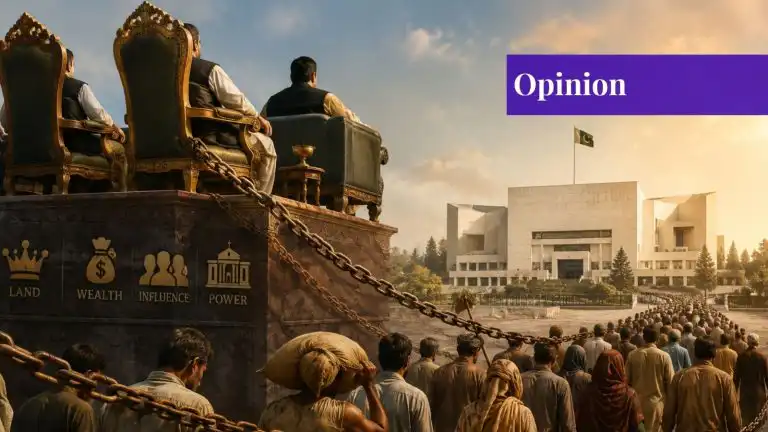
After decades of democratic change, feudalism is still present in every facet of politics, economics, and society in Pakistan. Elections have been held, and democratic institutions have been developing, yet in many rural areas, power is still held by waderas, also called landlords, who are of great influence. They have much more power than simply owning or being on the land and affect political representation, access to justice, and economic opportunity. This system has not been eradicated by modernization; instead, it has remained present, and structures of dependency have been left intact, which remain a threat to democratic governance in contemporary politics.
Three interrelated mechanisms help perpetuate the endurance of this system: economic dependency, political patronage, and limited access to education. They are all linked in a vicious cycle that leads to poverty-inducing political dependence, which, in turn, leads to poverty.
Feudal influence is still based on economic dependence. The large landholders and the tenant farmers rent the agricultural land to each other, but the tenant farmer does not have formal banking services or institutional credit. These farmers often take loans from landlords when they are in trouble due to any medical emergency, marriage, or crop failure. This borrowing is not usually done for just one crop.
Low productivity, high indebtedness, and unequal bargaining power can render tenants vulnerable to dependency and entrench them in the cycle of dependency from generation to generation. Financial aid can turn into a cycle of successive generations of poverty, which restricts social mobility and strengthens the landlord’s power.
The second pillar has to do with political influence. Electoral competition is also not limited to that of individual candidates or political parties in many rural areas. Many rural constituencies feature electoral competition that lasts beyond the individual and political party level. Social network and economic power can influence voting behavior in one’s community, and influential landlords may have this power.
Local elites who can mobilize (or pressure) large voting blocs are a handy resource for political parties that want to win elections. The relationships can also yield landlords increased access to state institutions, administrative influence, and political protection in return. Although the democratic process is formally in place, it is local power imbalances that can undermine democratic competition and diminish citizens’ accountability.
The third and likely most important means of maintaining feudal control is through education. Quality education enables citizens to criticize authority, to know their rights, and to strive for their economic independence. However, the situation in rural areas remains challenging due to low attendance rates, poor infrastructure, low teacher attendance, and low-quality schools. In these contexts, children’s education is frequently less of a realistic way out of poverty. If there is no education, and people are unable to get into the jobs they want, there is a vicious cycle where they are stuck in poverty and working for the landlords of the area, and this is passed down from generation to generation, which doesn’t require force.
Classical feudalism has been slowly fading due to the growth of cities, industrialization, and the formation of the new class of businessmen in Pakistan, some scholars say. This is a good point to make. The landed aristocracy is not as dominant as it used to be. But although the actors have changed, the basic rules are remarkably the same. Local governance remains and is often determined by patron-client relationships, economic dependency, and political influence, whether in the hands of hereditary landlords or newer political and economic elites. The “appearance” of the structure of dependence has changed, but not its structure.
Solving these problems cannot be done in political terms. Sustainable reform needs to be directed towards strengthening institutions that decrease citizens’ reliance on local power holders. Access to cheap agricultural credit would be improved through the formal credit system, thus decreasing informal credit. The modernization of land administration and greater transparency in land record-keeping could contribute to greater accountability and less land exploitation. Moreover, adequate investment in rural education, including the development of infrastructure, teachers’ qualifications, and monitoring systems, is crucial. Education is one of the best long-term instruments for overcoming inherited inequalities.
Economic dependency does not foster political participation; it is essential that it be based on free choice if democracy is to thrive. The key to Pakistan’s democratic future is not just holding elections but also guaranteeing political rights for the people without any coercive or structural hurdles. Its aim is to destabilize entrenched systems of patronage through institutional change to create opportunities for economic growth, access to education, and good governance. These existing power dynamics can constrain representation and social mobility and will persist if these underpinning dynamics are not resolved, despite democratic institutions.
After decades of democratic change, feudalism is still present in every facet of politics, economics, and society in Pakistan. Elections have been held, and democratic institutions have been developing, yet in many rural areas, power is still held by waderas, also called landlords, who are of great influence. They have much more power than simply owning or being on the land and affect political representation, access to justice, and economic opportunity. This system has not been eradicated by modernization; instead, it has remained present, and structures of dependency have been left intact, which remain a threat to democratic governance in contemporary politics.
Three interrelated mechanisms help perpetuate the endurance of this system: economic dependency, political patronage, and limited access to education. They are all linked in a vicious cycle that leads to poverty-inducing political dependence, which, in turn, leads to poverty.
Feudal influence is still based on economic dependence. The large landholders and the tenant farmers rent the agricultural land to each other, but the tenant farmer does not have formal banking services or institutional credit. These farmers often take loans from landlords when they are in trouble due to any medical emergency, marriage, or crop failure. This borrowing is not usually done for just one crop.
Low productivity, high indebtedness, and unequal bargaining power can render tenants vulnerable to dependency and entrench them in the cycle of dependency from generation to generation. Financial aid can turn into a cycle of successive generations of poverty, which restricts social mobility and strengthens the landlord’s power.
The second pillar has to do with political influence. Electoral competition is also not limited to that of individual candidates or political parties in many rural areas. Many rural constituencies feature electoral competition that lasts beyond the individual and political party level. Social network and economic power can influence voting behavior in one’s community, and influential landlords may have this power.
Local elites who can mobilize (or pressure) large voting blocs are a handy resource for political parties that want to win elections. The relationships can also yield landlords increased access to state institutions, administrative influence, and political protection in return. Although the democratic process is formally in place, it is local power imbalances that can undermine democratic competition and diminish citizens’ accountability.
The third and likely most important means of maintaining feudal control is through education. Quality education enables citizens to criticize authority, to know their rights, and to strive for their economic independence. However, the situation in rural areas remains challenging due to low attendance rates, poor infrastructure, low teacher attendance, and low-quality schools. In these contexts, children’s education is frequently less of a realistic way out of poverty. If there is no education, and people are unable to get into the jobs they want, there is a vicious cycle where they are stuck in poverty and working for the landlords of the area, and this is passed down from generation to generation, which doesn’t require force.
Classical feudalism has been slowly fading due to the growth of cities, industrialization, and the formation of the new class of businessmen in Pakistan, some scholars say. This is a good point to make. The landed aristocracy is not as dominant as it used to be. But although the actors have changed, the basic rules are remarkably the same. Local governance remains and is often determined by patron-client relationships, economic dependency, and political influence, whether in the hands of hereditary landlords or newer political and economic elites. The “appearance” of the structure of dependence has changed, but not its structure.
Solving these problems cannot be done in political terms. Sustainable reform needs to be directed towards strengthening institutions that decrease citizens’ reliance on local power holders. Access to cheap agricultural credit would be improved through the formal credit system, thus decreasing informal credit. The modernization of land administration and greater transparency in land record-keeping could contribute to greater accountability and less land exploitation. Moreover, adequate investment in rural education, including the development of infrastructure, teachers’ qualifications, and monitoring systems, is crucial. Education is one of the best long-term instruments for overcoming inherited inequalities.
Economic dependency does not foster political participation; it is essential that it be based on free choice if democracy is to thrive. The key to Pakistan’s democratic future is not just holding elections but also guaranteeing political rights for the people without any coercive or structural hurdles. Its aim is to destabilize entrenched systems of patronage through institutional change to create opportunities for economic growth, access to education, and good governance. These existing power dynamics can constrain representation and social mobility and will persist if these underpinning dynamics are not resolved, despite democratic institutions.
If you want to submit your articles and/or research papers, please visit the Submissions page.
To stay updated with the latest jobs, CSS news, internships, scholarships, and current affairs articles, join our Community Forum!
The views and opinions expressed in this article/paper are the author’s own and do not necessarily reflect the editorial position of Paradigm Shift.

Shehroz Hussain is an emerging international relations scholar and independent researcher focusing on governance, democratic institutions, and political economy in South Asia.