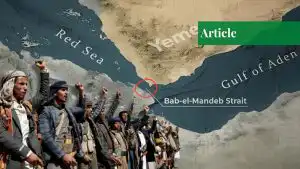

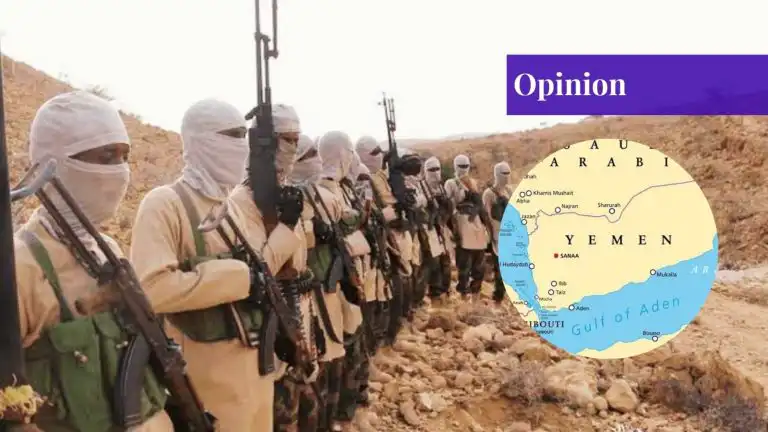
The Red Sea has emerged as one of the major chokepoints of the 21st century. Houthis are frequently attacking commercial ships, disrupting global trade. Shipping companies are now considering the Cape of Good Hope for their safe maritime trade. These developments have drawn attention towards the ability of non-state actors to challenge regional security. Today, the whole attention of the world is on the Red Sea crisis, while on the other hand another non-state actor is strengthening its position on the opposite sides.
In the Horn of Africa, ISIS-Somalia has maintained strong footholds. ISIS-Somalia is a splinter faction of al Qaeda’s al-Shabaab group. ISIS-Somalia is smaller than al-Shabaab but has its foot on the maritime chokepoint known as the Gulf of Aden. The Gulf of Aden links the Indian Ocean with the Red Sea and also serves as the maritime gateway to the Suez Canal. Approximately 11% of the world’s seaborne petroleum passes through this gulf. European countries, Asian states, the US, and even the Middle East rely on the Gulf of Aden.
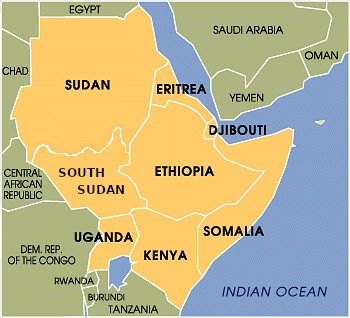
This article will explain whether ISIL-Somalia can extend its extremist activities into the Gulf of Aden. This article will explore how states can prevent this near-to-possible crisis and what alternatives they can use.
Could ISIS-Somalia Expand into the Maritime Domain?
Currently, ISIS-Somalia cannot become a maritime threat, but one should not forget that it works under the broader umbrella of ISIS, which is a financially strong terrorist organisation. Also, due to its strategic location on the Gulf of Aden, ISIS-Somalia is actively involved in smuggling and human trafficking. By these illegal financial routes and the support of ISIS, it is possible for ISIS-Somalia to acquire maritime dominance in the Gulf of Aden.
Other than this, to maintain its dominance, ISIS-Somalia can attack ports such as Bosaso and Mogadishu. These ports cover the northern and eastern parts of the Horn of Africa. In the past, ISIS has conducted suicide bombings near Bosaso and has conducted assassinations and IED attacks near Mogadishu. By these attacks, one can analyse that ISIS-Somalia persists as a great threat towards these ports in the future.
Another scenario for the development of ISIS-Somalia in the future would involve not piracy but other illegal activities in the Gulf of Aden. The area is known for its hotspots of criminal behaviour, and non-state actors are flourishing there due to weak security and lax control of the borders. It is possible that ISIS-Somalia would attempt to complement its income by participating in these criminal activities on a large scale. Such actions would allow it to gain additional resources, which could fund its operations. Even though the scenario of ISIS-Somalia becoming involved in piracy seems implausible, states should be concerned about potential threats. At this point, there is a lack of evidence of ISIS-Somalia’s presence in illegal economic activity, but eliminating such threats would be critical in countering terrorism.
Geopolitical Implications
The Gulf of Aden is merely a waterway but an intersection of the world’s islands. The following are the geopolitical implications for the states using it as a maritime route:
- The African Union (AU) and Intergovernmental Authority on Development (IGAD) will face international pressure to strengthen counterterrorism strategies.
- Gulf states have also invested in the ports of northeastern Africa. Any disruption in the Gulf of Aden can also disrupt the ties between Africa and the Gulf region.
- The Gulf of Aden connects with the Indian Ocean. Approximately half of the world has direct access to the Indian Ocean, and any violence in the Gulf of Aden can impact global trade.
Preventing a Future Maritime Threat
The following are recommendations to counter the emerging threat of ISIS-Somalia in the Gulf of Aden:
- Initiatives like Combined Maritime Forces (CMF), European Union Naval Force (EU NAVFOR), and US Africa Command (AFRICOM) can be beneficial in surveilling unusual movements in the Gulf.
- Investing in the protection of ports like Mogadishu and Bosaso can help prevent any attack by non-state actors. This investment will serve as a defensive shield against ISIS-Somalia from entering the Gulf of Aden.
- Djibouti, Kenya, and Ethiopia can play a major role by intelligence sharing, as these states border Somalia. Long-term security will depend on intelligence sharing and Confidence-Building Measures (CBMs).
Conclusion
Currently, ISIS-Somalia cannot pose any threat, as it lacks resources, but it is an emerging threat that has several geopolitical implications, specifically for the world’s islands. If ISIS financially supports it and it engages in piracy, then it will cause a serious concern for the Gulf and African states. Houthis have created an alarming situation in the Red Sea; likewise, ISIS-Somalia can follow their footsteps and disrupt the Gulf of Aden. And if it does so at this critical time, the whole world will face various economic and political consequences. States should act preemptively to prevent the emerging threats from ISIS-Somalia.
If you want to submit your articles and/or research papers, please visit the Submissions page.
To stay updated with the latest jobs, CSS news, internships, scholarships, and current affairs articles, join our Community Forum!
The views and opinions expressed in this article/paper are the author’s own and do not necessarily reflect the editorial position of Paradigm Shift.

Syeda Farani Fatima is an undergraduate student of International Relations at the International Islamic University of Islamabad, with a strong interest in anti-corruption, counter-terrorism and geopolitics. Strongly committed to fighting corruption, terrorism, and supporting national reform through research and public service.